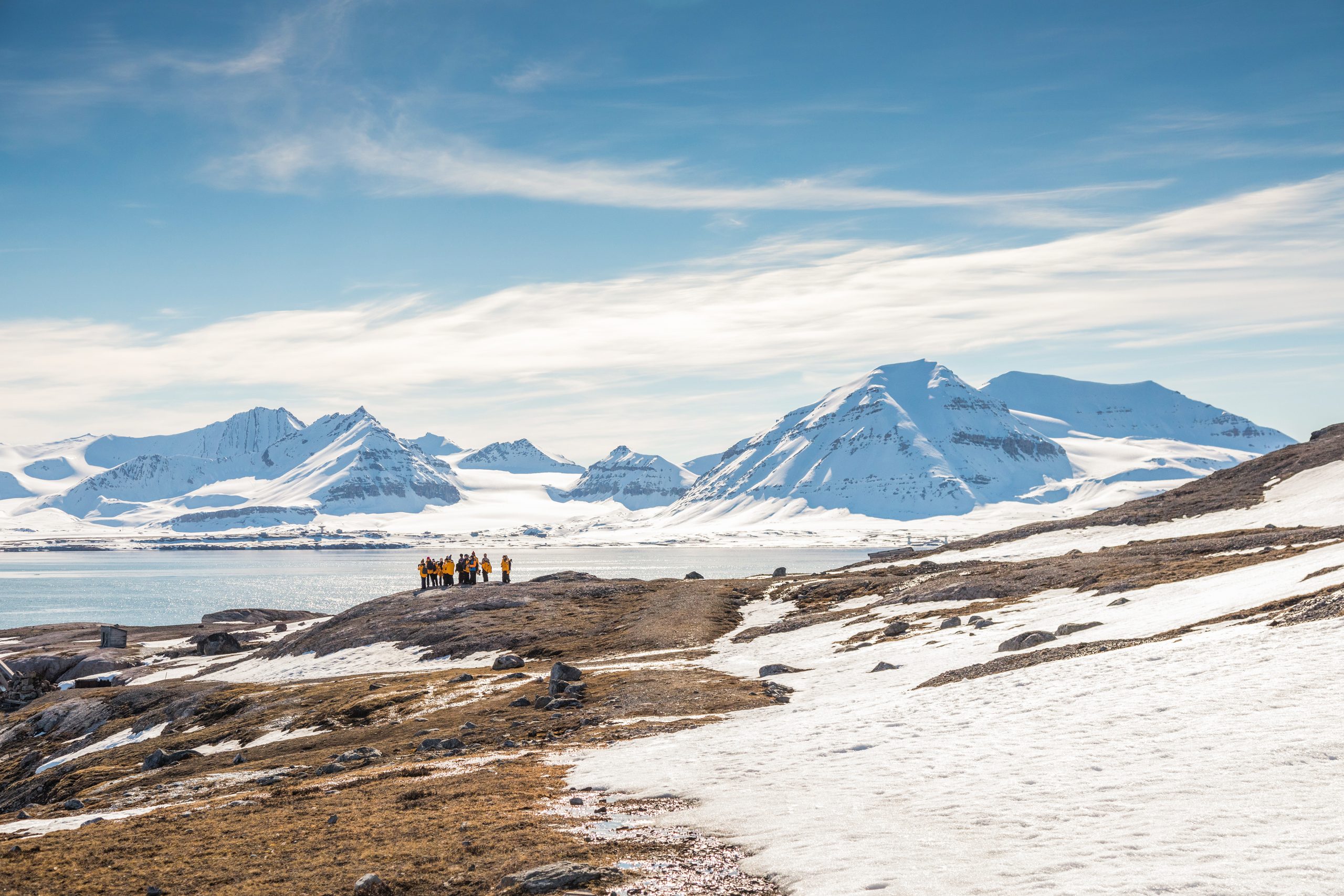
The stunning landscape of Svalbard Svalbard vs. Greenland: Two Arctic Expedition Experiences


Ask most people to picture the Arctic and they’ll describe something close to Svalbard: pack ice, a polar bear, mountains rising straight out of a frozen sea. Ask them again after they’ve been to Greenland and they’ll describe something entirely different; an iceberg the size of a cathedral drifting past a village of red and yellow houses.

At Wildfoot Travel, three decades of guiding travellers to the world’s great wilderness destinations has taught us that Svalbard and Greenland get grouped under the same three-word heading far more often than they deserve to be.

Both sit well inside the Arctic Circle. Both deliver ice, wildlife and midnight sun. But we’ve come to think of them less as alternatives and more as two different chapters of the same story, and there’s a good case for reading them in order.

Here’s how they actually differ, and which one we’d send you to first.

Svalbard: The Quintessential Arctic

Svalbard is the Arctic doing exactly what you hoped it would.

You land at Longyearbyen, a three-hour flight from Oslo, which is part of the appeal and the transition is immediate. This is a working Arctic town at 78° north, ringed by glaciers, where the road out of the settlement ends at a polar bear warning sign and everything beyond it is wilderness. There is no gradual approach. You are simply there.

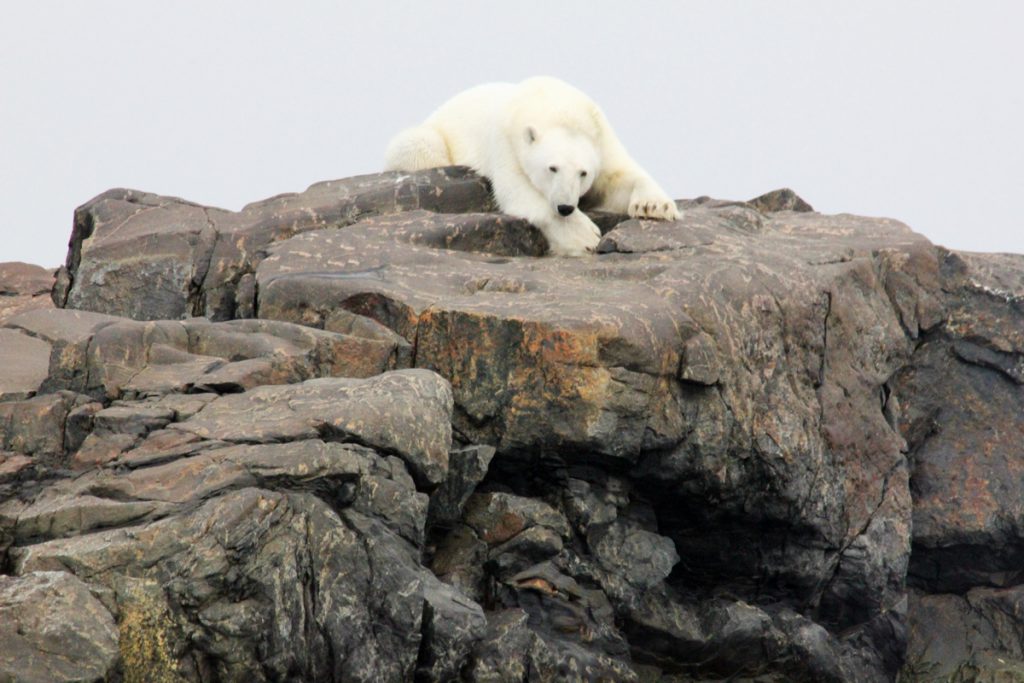
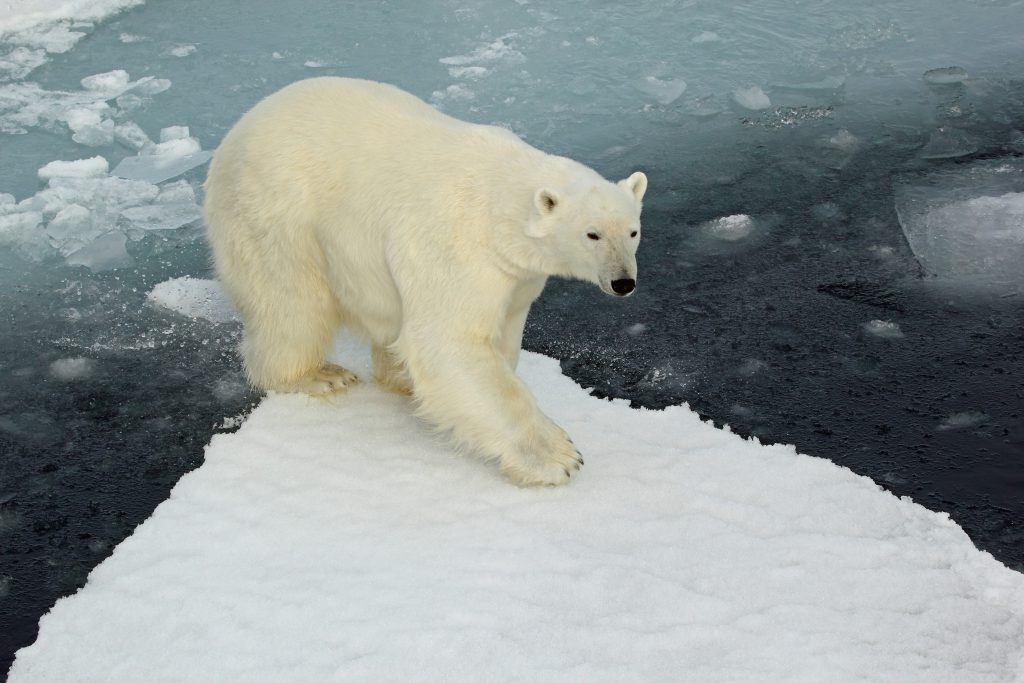
What follows is one of the richest concentrations of wildlife in the European Arctic. Polar bears are the headline, and Svalbard offers the best chance anywhere of seeing one in its true element, out on the pack ice, though nobody who knows the region will promise you a sighting.

Around 300 bears live on the archipelago year-round, part of a wider Barents Sea population of roughly 3,000 that ranges north onto the sea ice and east into Russian territory.

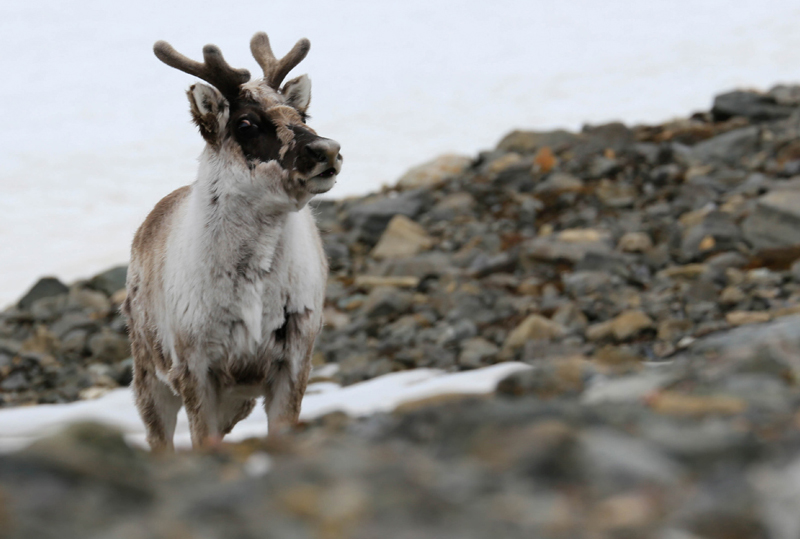
Around them is a supporting cast that few destinations can match: walrus hauled out in their hundreds, Arctic fox working the base of the bird cliffs, and a reindeer subspecies found nowhere else on the planet, stockier and shorter-legged than its mainland cousins. In the fjords, beluga, humpback, minke and fin whales feed through the summer, with blue and bowhead whales turning up on rare and memorable occasions.
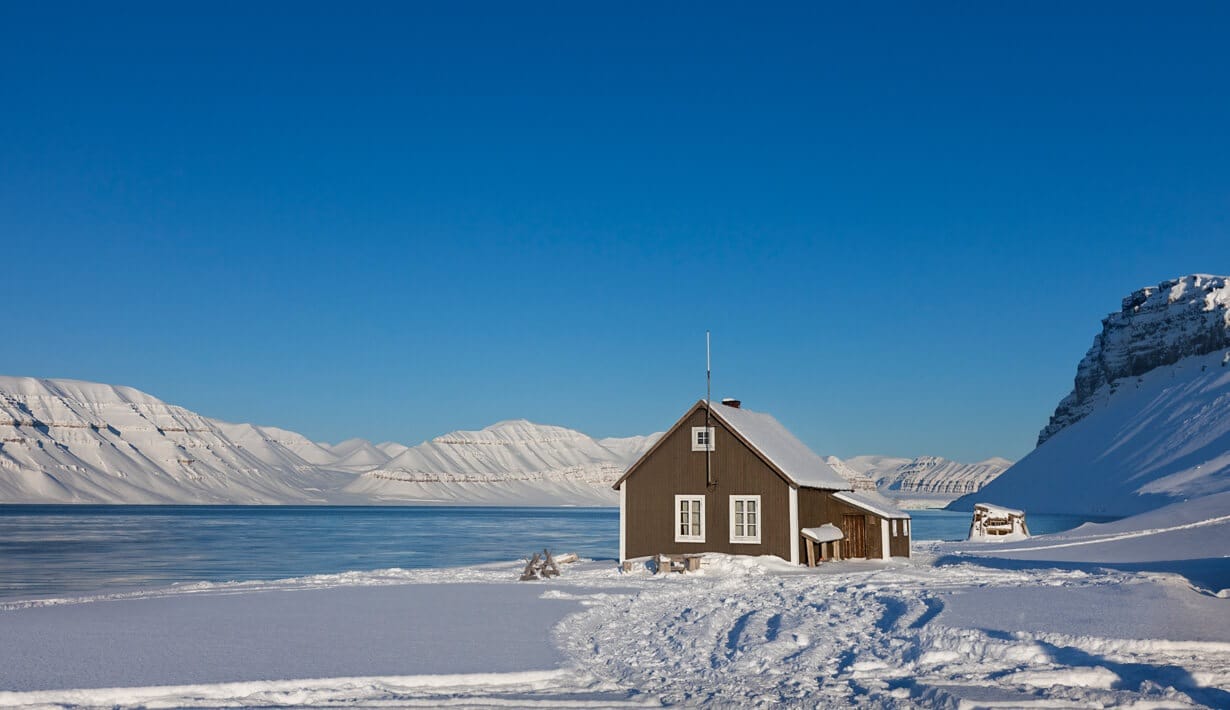
Unforgettable landscapes of Svalbard

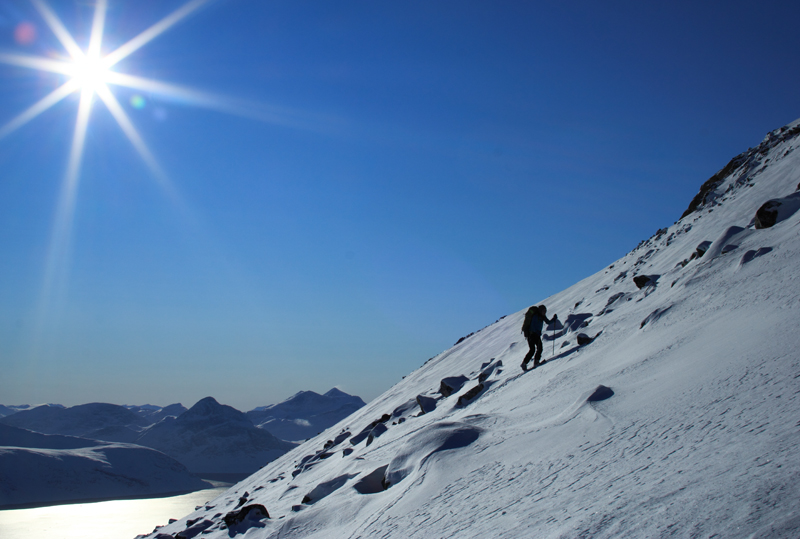
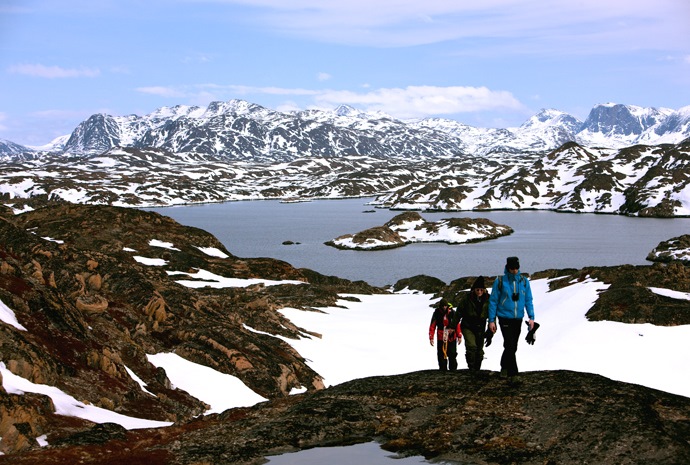
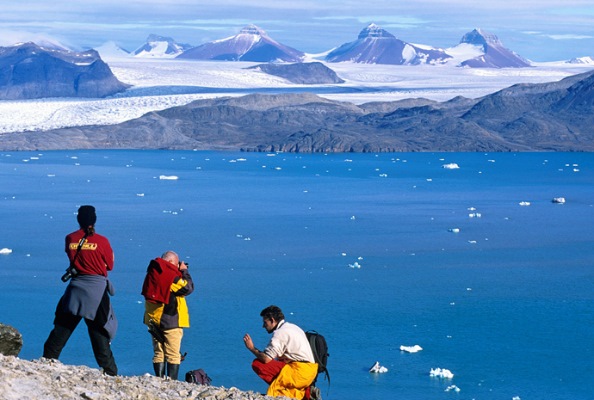
The landscape holds its own against any of it. This is classic High Arctic scenery, ice-capped peaks dropping into black water, glacier fronts calving into fjords. On a full circumnavigation you push north to the pack ice at 80°, which is about as far as most travellers will ever get toward the pole.

And then there’s the human layer, which surprises people. Svalbard has no Indigenous population and never has, but it has an extraordinary history of people trying, and often failing, to make something of it. Pyramiden sits abandoned since the Cold War, a Soviet mining town frozen mid-sentence.

Somewhere on the ice north of here, S. A. Andrée launched a hydrogen balloon in 1897 in an attempt to reach the North Pole; the expedition’s fate wasn’t known for thirty-three years. And beneath the permafrost outside Longyearbyen, the Global Seed Vault holds the backup copy of the world’s crops. It’s a place that has always attracted people with slightly outsized ideas.

Greenland: The Scale of Things

Greenland is not a bigger version of Svalbard. It’s a different proposition altogether.

Start with the obvious: this is the world’s largest island, roughly 80% of it buried beneath an ice sheet up to three kilometres thick. The Northeast Greenland National Park alone is the largest national park on earth. Scale isn’t a feature of a Greenland trip, it’s the entire subject.

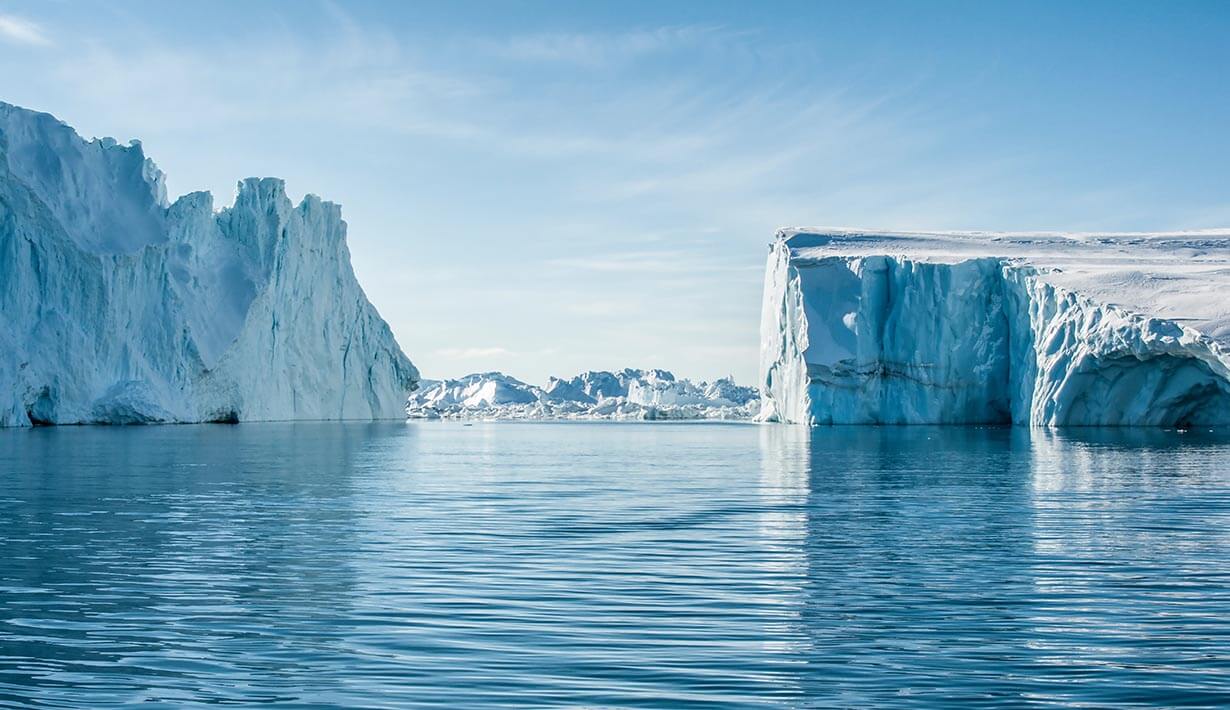
That scale shows up most dramatically in the ice. At Ilulissat, the glacier Sermeq Kujalleq, one of the fastest and most productive in the Northern Hemisphere, calves icebergs into Disko Bay at a rate that has made the icefjord a UNESCO World Heritage Site. On the east coast, Scoresby Sund opens into the largest fjord system in the world, where the red rock of Røde Ø rises above water crowded with ice.

For me, Greenland is all about scale. There’s something about the icebergs there — in my mind, they felt even larger than Antarctica’s. Set against the colourful tundra and red rock of Røde Ø in Scoresby Sund, the contrast is magnetic for photographers; the ice seems to pop right off the landscape – James Turner, Wildfoot Travel

The second thing Greenland has that Svalbard doesn’t is people, and not as a historical curiosity, but as a living culture.

Around 56,000 people live here, the great majority Greenlandic Inuit, whose ancestors have occupied this coast for thousands of years. Voyages call at settlements strung along the shoreline, painted in reds and blues and yellows against the rock.

There’s Norse history layered underneath it too: Erik the Red’s farming colonies date to around 985 CE, and their ruins are still standing in the south.

Northern Lights over the fjord in Greenland

What Greenland asks of you in return is a lower wildlife expectation. Polar bears are here, but they’re concentrated in the remote north and northeast and far less reliably seen than in Svalbard. You’ll find muskox, Arctic hare and Arctic fox ashore, and humpback, fin and minke whales offshore, with bowhead an occasional bonus. But the animals aren’t the organising principle of the trip. The landscape and the culture are, and they’re big enough to fill it.

Which brings us to the thing most people miss about Greenland’s scale, which isn’t the icebergs at all.

Scale in Greenland isn’t only about the giants — the bergs, the glaciers, the mountains. It’s just as much about getting down on your knees. In autumn the tundra turns to crimson, gold and rust, dark berries threaded through it, a carpet running as far as the eye can see. And what you’re crouching beside is a forest. These plants grow so slowly that an Arctic willow stem thickens by around a tenth of a millimetre a year — less than the width of a human hair. The dwarf birch colouring the ground around your boots can be more than a century old. That, for me, is the real scale of Greenland.” – James Turner, Wildfoot Travel

So Which One First?

If you’re likely to make more than one polar journey in your life, and most people who make one end up making two, we’d send you to Svalbard first.

The reasoning is practical as much as romantic. Svalbard is the easiest of the two to reach from the UK, the season is well defined, and the sheer breadth of what you’ll see, from bears and walrus to that endemic reindeer, makes it feel unmistakably polar from day one. It is the quintessential Arctic experience, and it sets you up beautifully for everything that follows, including Antarctica, whenever you get there.

Greenland rewards a traveller who already has a frame of reference. Once you’ve stood on a Svalbard deck watching pack ice, the sheer scale of Scoresby Sund lands differently. And if you have the time, you don’t strictly have to choose, there are itineraries that combine Spitsbergen and East Greenland in a single voyage, some of them under sail, timed for the returning Northern Lights in late summer.
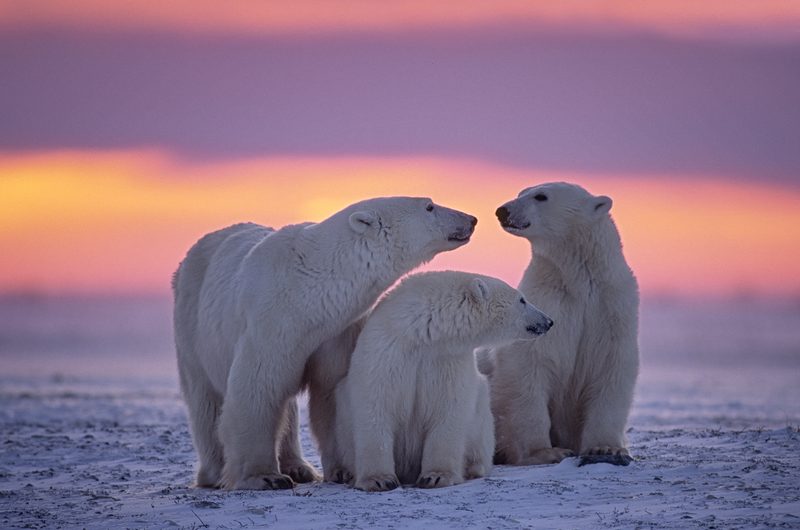
Polar Bears in Svalbard

When to Go

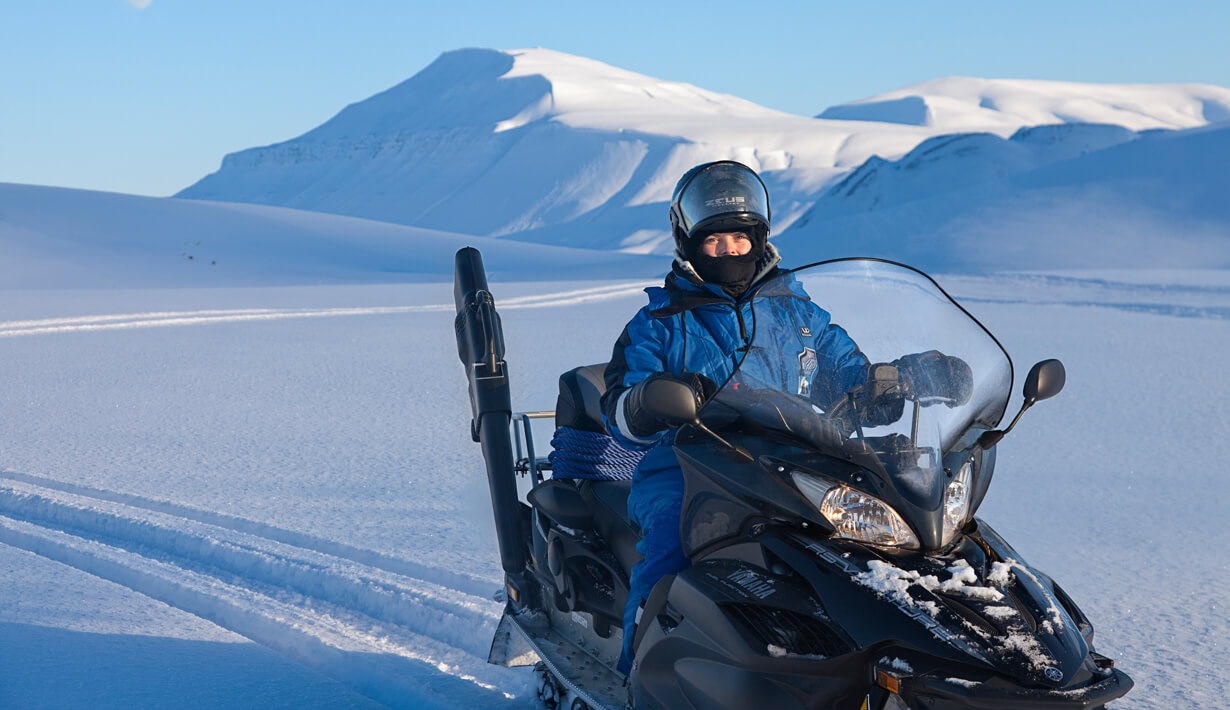
Svalbard’s cruise season runs May to August. May and June catch the pack ice still retreating, which can mean strong early-season bear encounters. June to August is the peak, under 24-hour daylight. From September the archipelago largely closes to vessel-based exploration and shifts to a land-based winter offering husky sledging and snowmobile expeditions, with the polar night running roughly November to January.

Greenland’s ship season runs June to September. June to August is the peak, with midnight sun and whales working Disko Bay. By late August and into September the sky darkens enough for the first Northern Lights of the season. Greenland also offers a completely separate winter trip: February to April, land-based around Ilulissat, built around dogsledding and aurora.

Summer temperatures in both sit comfortably between 0°C and +10°C. Good layers, not survival gear.

Getting There

Svalbard is the simpler journey by some margin: a direct or one-stop flight via Oslo or Tromsø into Longyearbyen, around three hours from Oslo, and a single straightforward embarkation point.

Greenland is more fragmented, though improving quickly. Most routings go via Reykjavik or Copenhagen, then a further connection to Nuuk, Kangerlussuaq, or seasonally direct to Ilulissat.

Nuuk’s international airport opened in November 2024 and Qaqortoq’s in April 2026, with Ilulissat’s own international airport due later in 2026, all of which is steadily shortening the journey. East and Northeast Greenland, including Scoresby Sund and the National Park, remain reachable only by expedition ship.
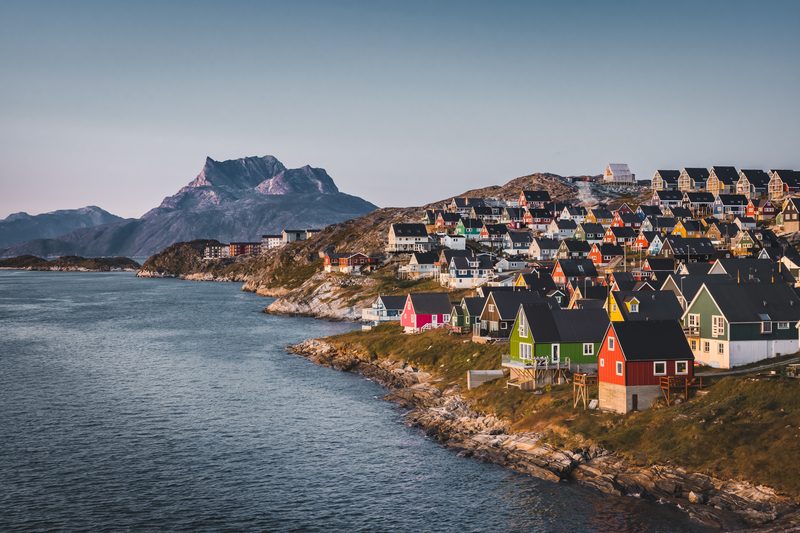
Nuuk, the capital and largest city of Greenland.

Our Arctic route options page sets out how these connect, and the Northeast Greenland voyage gives a sense of the wilder side.

What It Costs

Both destinations span a wide range depending on ship, cabin and season. Svalbard generally has the lower entry point, largely a function of the shorter, simpler journey; Greenland’s longer itineraries and more complex routing push its typical range higher.

Per personSvalbard, 8–12 daysGreenland, 8–15 days
Entry levelFrom ~£3,500–£5,000From ~£5,000–£6,500
Mid-range~£5,000–£10,000~£6,500–£13,000
Luxury£12,000–£20,000+£14,000–£24,000+

Figures are indicative per-person, twin-share fare ranges for 2026/27 season sailings, excluding international flights and gratuities unless stated. Prices vary by operator, ship, and date — get in touch for a quote against your specific dates.

Svalbard and Greenland: At a Glance

Everything above, in one place.

 SvalbardGreenland
In a phraseA mecca for wildlife and classic Arctic landscapesLandscape heaven, and a living Inuit culture
What it isNorwegian Arctic archipelago, no Indigenous populationWorld’s largest island; autonomous Danish territory and Inuit homeland
Population~2,900, mostly international residents~56,000, majority Greenlandic Inuit
SeasonMay–August by ship; winter land-based optionsJune–September by ship; separate Feb–April land season
WildlifePolar bears, walrus, Arctic fox, endemic reindeer, whalesMuskox, Arctic hare and fox, whales; polar bears a remote bonus
Headline sightPack ice at 80° north, polar bear and walrus encountersIlulissat Icefjord in the west; the giant fjords of Scoresby Sund in the east
Getting thereOne direct or short flight via Oslo or TromsøVia Reykjavik or Copenhagen, then a Greenlandic connection
CulturePolar history — whaling, mining, ill-fated expeditionsLiving Inuit communities, colourful settlements, Norse ruins
Typical cost~£5,000–£10,000pp (from ~£3,500)~£6,500–£13,000pp (from ~£5,000)
Ilulissat Icefjord in Greenland

Frequently Asked Questions

Is Svalbard or Greenland better for seeing polar bears? Svalbard, clearly. Around 300 bears live on the archipelago year-round, part of a wider Barents Sea population of roughly 3,000, and itineraries are built specifically around searching the ice edge. Greenland’s bears are concentrated in the remote north and northeast and are far less reliably encountered. Worth noting that neither offers guaranteed sightings — for that, Churchill in Manitoba is the more dependable destination, though it’s a very different style of trip.

Which should I visit first? Svalbard, if you’re likely to travel to the Arctic more than once. It’s the more accessible journey from the UK, the most complete introduction to Arctic wildlife, and an excellent foundation for both Greenland and a future Antarctic expedition.

Can you visit both on one trip? Yes — there are itineraries combining Spitsbergen and East Greenland in a single voyage, typically in August and September, some of them under sail and timed for the returning Northern Lights. It makes for a longer trip, but it’s the most efficient way to see both.
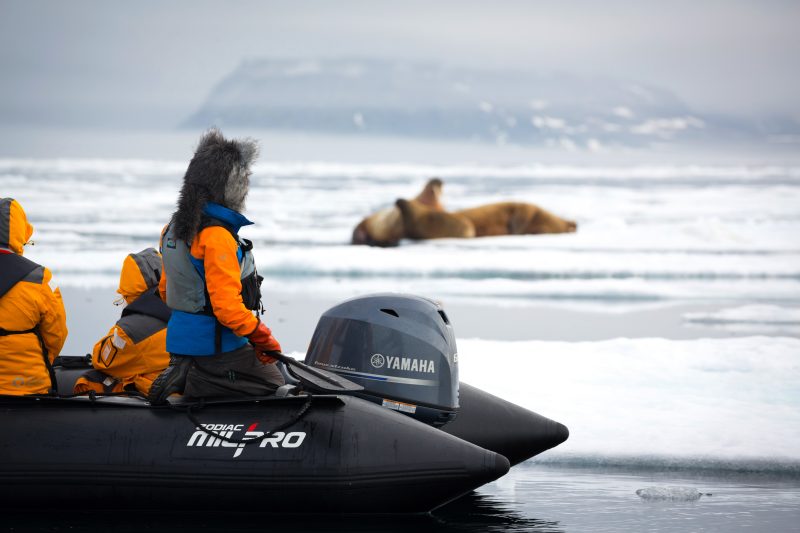
Spotting wildlife in Svalbard

Which has better Northern Lights? Neither during the main summer season, when both sit under 24-hour daylight. Greenland has the edge outside it: a dedicated winter trip to Ilulissat between February and April combines dogsledding with genuine aurora viewing. Late-season voyages to either destination in September can also catch the first displays.

Is Svalbard part of Norway? Yes, though governed under the distinct 1920 Svalbard Treaty, now honoured by 49 signatory nations, which restricts the islands to non-military use and grants visa-free access to citizens of treaty countries.

How cold does it get? Far less than people expect. Summer temperatures in both destinations typically run between 0°C and +10°C. You’ll want proper layers and a good waterproof, not expedition survival kit.

Talk to Us

There’s no wrong answer between Svalbard and Greenland. There’s only the question of which one you’re ready for, and in what order.

We’ve sailed both, and we know the details that don’t show up in a brochure — which month gives you the best chance at the ice edge, which itinerary gets you into the icefjord in the right light, which extra connection is worth making and which isn’t.

Get in touch with the Wildfoot Travel team, or start browsing our Svalbard tours and Arctic cruises.
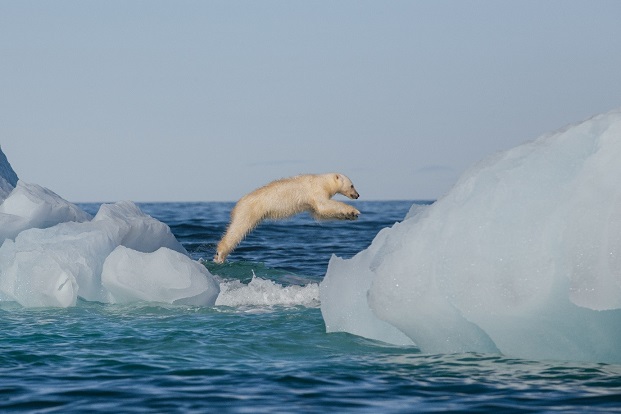
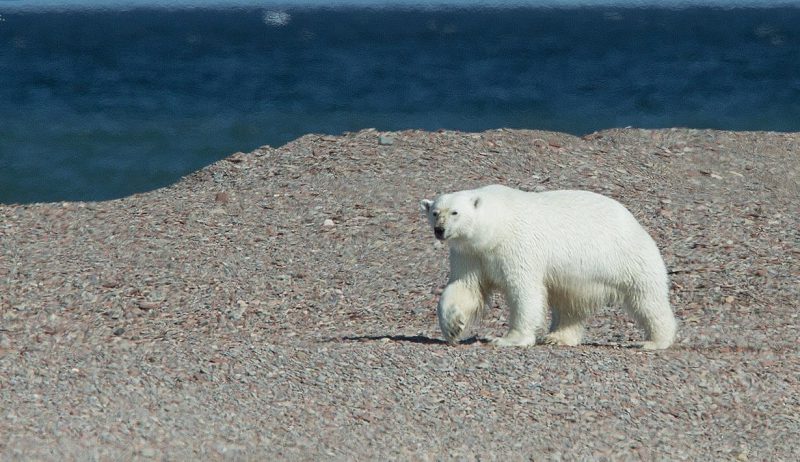
See Polar Bears in the wild in the Arctic Best Places to See Polar Bears in the Wild

At Wildfoot Travel, three decades of guiding travellers to the world’s great wilderness destinations has taught us that seeing a polar bear safely, ethically, and in a setting that does the animal justice, comes down to one decision made long before you board a plane: where, and how, you choose to look for it.

There is no single ‘best’ place to see a polar bear. The Arctic is enormous, the bears are scattered unevenly across roughly four million square kilometres of sea ice and coastline, and the destination that delivers a near-guaranteed sighting from a heated vehicle is a completely different trip to the one that delivers a hard-won, ship-deck glimpse across drifting pack ice. Both are extraordinary. They are not the same holiday.

Our specialists have stood in the Tundra Buggies of Churchill and sailed the fjords of Svalbard and the channels of the Northwest Passage. Here is our honest, unfiltered guide to the world’s genuine polar bear hotspots — and how to choose between them.

Why Method Matters: Guaranteed Sightings vs. The Thrill of the Hunt

Across the circumpolar Arctic there are an estimated 22,000 to 31,000 polar bears, split by the IUCN Polar Bear Specialist Group into 19 separately managed subpopulations. 

But bears are not spread evenly across that range, and only one destination on earth offers anything close to a predictable, season-long sighting record: Churchill, Manitoba. 

Everywhere else — Svalbard, and the Canadian Arctic Archipelago’s Nunavut and Northwest Passage region, Greenland — you are looking for bears on the bears’ terms, with a real chance of coming home with only a handful of sightings, or none at all.

This is the single most important expectation-setting conversation we have with clients, and it shapes everything else about the trip.

  • NEAR-GUARANTEED SIGHTINGS
    • Churchill, Manitoba
    • Bears gather predictably in a known seasonal window
  • HIGH-PROBABILITY, NOT GUARANTEED
    • Svalbard · Nunavut & the Northwest Passage · Greenland
    • Sightings depend on ice conditions, timing, luck, and the skill of the expedition team

1. Churchill, Manitoba: The Sure Thing

Nicknamed the ‘Polar Bear Capital of the World,’ this small Hudson Bay town sits directly in the path of the Western Hudson Bay subpopulation. 

Every autumn, as strong anti-clockwise winds push sea ice to form first along Churchill’s stretch of coastline, hundreds of bears gather on the shore to wait for the bay to freeze so they can return to hunting seals. 

Sightings in the peak window are so reliable that specialist groups routinely log 40 or more individual bears across a two-day visit. 

Our Churchill Polar Bear Adventure is built entirely around this peak gathering.

2. Svalbard, the Northwest Passage & Greenland: Wilder, Not Guaranteed

Svalbard, Norway

This High Arctic archipelago, roughly halfway between mainland Norway and the North Pole, is home to the Barents Sea subpopulation of around 2,500 to 3,000 bears, which live here year-round rather than migrating seasonally. 

The best viewing runs from May to August, scanning the retreating pack ice from the deck or a Zodiac. Regulations introduced in 2025 set minimum polar bear viewing distances of 500 metres from March to June and 300 metres from July onwards, within Svalbard’s territorial waters, so a long telephoto lens and a pair of binoculars are essential. Further out in the pack ice, where much of the best viewing happens, these limits don’t apply.

Nunavut & the Northwest Passage, Canada

Canada’s high Arctic territory offers a genuinely wild alternative, and the richest wildlife is concentrated around Tallurutiup Imanga — known in English as Lancaster Sound — the wide marine gateway at the eastern entrance to the Northwest Passage. 

Protected as one of Canada’s largest National Marine Conservation Areas, it functions as a genuine wildlife migratory highway: an estimated 6,500 narwhal, beluga, and bowhead whales pass through each year, and the retreating ice edge along its margins is prime polar bear hunting ground. 

Access is by expedition ship only, and only once the passage has cleared of winter ice — in practice, that means late August into September, sailing past Baffin Island and Devon Island and through the historic waterways of the Northwest Passage itself. Sightings here are real but unpredictable — this is a destination for travellers who value wilderness authenticity over statistical odds.

Greenland

Greenland holds a healthy population, but its bears live largely in the remote north and northeast, far from any port. Our Northeast Greenland expedition cruises along the coast do occasionally encounter them, but for a trip built specifically around polar bears, Greenland is best treated as a bonus destination rather than the main event.

polar bear encounter on an arctic wildlife cruise

De-Coding the Destinations

Understanding a little of the science behind the sightings helps set honest expectations — and explains why some destinations are far more predictable than others.

The Numbers Behind the Bears

The IUCN lists the polar bear as Vulnerable, citing sea ice loss from climate change as the single greatest threat to the species. Of the 19 recognised subpopulations, roughly four are known to be declining, four are considered stable, two appear to be increasing, and the remaining nine are too data-poor for a confident trend assessment.

The Western Hudson Bay subpopulation — the group that gathers each autumn around Churchill, and the most intensively studied bear population on the planet, has fallen by close to 50% since long-term monitoring began in the late 1970s, driven by a shorter ice season and the physical stress it places on bears during the long ice-free summer.

It remains, paradoxically, one of the best places on earth to see one: fewer bears, but a highly predictable gathering point.

When to Go: A Destination-by-Destination Snapshot

  • Churchill, Manitoba: Peak gathering mid-October to late November; a smaller, quieter mother-and-cub season in February–March around Wapusk National Park.
  • Svalbard: May to August, under 24-hour midnight sun.
  • Nunavut / Northwest Passage: Late August to September, ship-based only, timed to the seasonal retreat of the ice through Lancaster Sound.
  • Greenland: July to September, as part of a broader coastal expedition cruise.

Choosing Your Encounter: Buggy or Ship

Beyond location, how you view the bears shapes the experience just as much as where you go. Broadly, there are two viewing platforms — and each suits a different kind of traveller.

The Tundra Buggy Experience

Purpose-built, bear-proofed vehicles with elevated, tank-like chassis carry small groups across the Churchill Wildlife Management Area, bringing you within close, safe range of bears on the open tundra. 

It feels closer to a safari than an expedition: less physically demanding, highly photogenic, and well suited to travellers who want maximum sightings with minimum exertion. Some operators now run remote lodges-on-wheels, allowing multi-day stays right in the heart of bear territory.

Nothing quite prepares you for the light out there, the sun low on the horizon for hours, turning the tundra amber and pink. My advice: get yourself out onto the open-air viewing deck at the back rather than staying seated inside, you’ll hear the tundra as much as see it, and you’re ready the moment something moves. Then someone spots a shape in the distance, just a silhouette at first, and the whole buggy goes quiet, watching it slowly resolve into a polar bear ambling past your window. It’s a moment guests talk about for years. And it’s not just the bears. Churchill itself is a town genuinely built around living alongside the world’s largest land predator, right down to the unlocked cars in case someone needs to escape one on the street. Spending time there gives you a real sense of sharing this landscape, not just visiting it. – Sheena Ogley

The Small-Ship Expedition

In Svalbard, the Northwest Passage, and Greenland, bears are viewed from the deck of an ice-class expedition ship or from a Zodiac, scanning drifting pack ice and remote coastlines. 

This is a wilder, more patient style of wildlife watching — sightings can arrive after hours of scanning, at genuine distance, and always on the bear’s schedule. It suits travellers drawn to the broader Arctic ecosystem — walrus, seabirds, whales, dramatic glacial scenery — as much as the bears themselves.

Working the ice edge hour after hour, scanning white on white for a shape that shouldn’t be there, is a rhythm all of its own. My advice is to stay out on the bridge yourself rather than wait for the announcement, because under the midnight sun the daylight stretches on for hours, so there’s no rush, only patience, and out here patience is always rewarded. Long before you spot anything, the sea ice itself pulls you in, carved into geometric sculptures against navy water. The captain eases the ship right up alongside the floes, almost like a giant rib boat, until you’re close enough to feel part of the ice rather than just passing through it. Then someone calls ‘bear!’ and the whole ship comes alive. Everyone finds their own spot on the bow, plenty of room to watch in your own time, as that distant smudge slowly sharpens into an actual polar bear picking its way across the floe. The ship becomes your basecamp for it all, a proper safari, just swapping the jeep for a boat to reach ice no vehicle could ever touch. – James Turner

polar bear encounter on an arctic wildlife cruise

The Master Checklist: Matching the Destination to Your Ambitions

Before you commit to a destination, run your choice through these four filters:

  • Decide how you feel about risk: If you need to see bears — not just have a chance of seeing bears — Churchill is the only genuine guarantee. Everywhere else is a wilder bet with a different kind of reward.
  • Consider your physical comfort: Tundra Buggies and expedition ships are accessible to most fitness levels, though a Northwest Passage voyage means several consecutive days at sea reaching the region.
  • Match the season to your priority: Snow-dusted photography backdrops, mother-and-cub dens, or the drama of the autumn gathering each demand a different month — get the timing wrong and you get the wrong trip.
  •  Think beyond the bears: A Svalbard or Northwest Passage voyage bundles in walrus, whales, and seabird colonies; a dedicated Churchill trip is built almost entirely around one animal, done exceptionally well.

Talk to Us

The question of where to see polar bears rarely has a single right answer. It is a balance between how badly you need a guaranteed sighting, how much cold and physical effort you are prepared to embrace, and what kind of Arctic story you want to come home with.

We have stood in the buggies and sailed the ice edge of the operators we recommend. We know which seasons are best to visit, and the small details — a lens length, a boot choice, a departure date — that make the difference between a good trip and an extraordinary one.

Get in touch with the Wildfoot Travel team, or browse our full range of Arctic cruises, to find the right polar bear destination for you.

Wildlife Holidays in The Arctic – Everything You Need to Know

WILDFOOT is a world-class provider of Arctic cruises. We have a comprehensive range of itineraries to fantastic Arctic holiday destinations and we’re proud of our reputation for providing unique and adventurous wildlife experiences. As a company with more than twenty-five years of experience, our dedicated team of specialists supply the knowledge and passion that will help you create a memorable, once-in-a-lifetime trip to your choice of iconic Arctic holiday destinations to explore in the most exciting and fulfilling way possible.

Polar Bear Photo taken by Brian Clasper
Polar Bear Photo: Brian Clasper

It’s important to remember that this spectacular part of the world is like nowhere else on the planet you’ll ever have seen before. The wildlife, landscape and people are both unique and fascinating, and for those who take the time to learn a little more about the region before heading off on an adventure, it will be all the more rewarding. 

Taking time to prepare for your trip is crucial if your experience is to be a success, and there’s probably more to think about than most other places – but the payoff is well worth it! Our team of experts at Wildfoot have come together and collated some of the most valuable advice we can offer if you’re thinking of heading to this extraordinary part of the world with us. 

The Best Time to Travel

Of course, everyone is different – not just in terms of their physical abilities but also when it comes to their favourite season for travelling. But, broadly speaking, unless you are looking for a particularly tough challenge, it’s probably best to head to Arctic holiday destinations between the months of June and September. 

The temperatures at this time are milder (between about 3–7 degrees Celsius) and the wildlife tends to be more active. (If you travel outside this part of the year, the weather can be extreme and visibility tends to be limited.)  During the “high summer” period, the days are long and the weather is comfortable enough for your experience to be memorable for the right reasons.

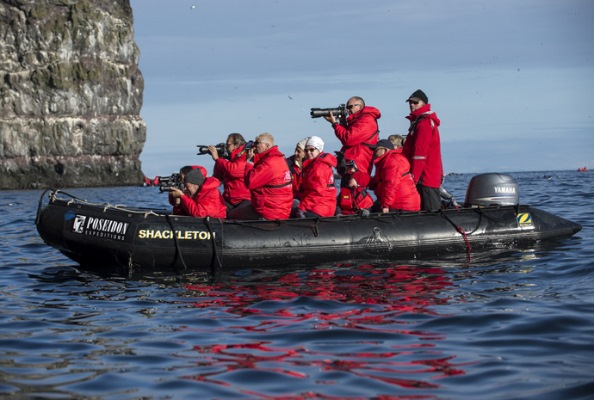
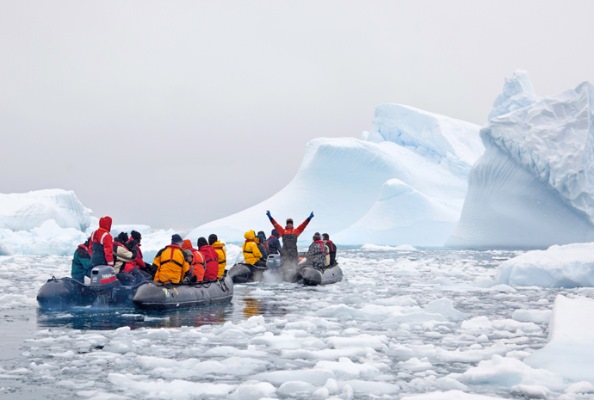
During the summer months, temperatures are usually above freezing – indeed, even double-figure temperatures are not out of the question. However, there is a wind chill factor that you’ll need to cater for especially if you join the zodiac landing excursions. Most of the vessels provide each passenger with their own polar parka jacket along with rubber boots for the beach landings. You’ll be wading through a few inches of water and there’s often some sea spray or snow flurries that make it a good idea to pack waterproof trousers.

Another important aspect is that the ships are able to travel further north during these months, enabling you to visit other Arctic holiday destinations – like the incredible Spitsbergen region, or perhaps even up to the North Pole. 

Spotlight on the Spitsbergen Region

As the largest island in the Svalbard archipelago in Norway (and laying claim to the world’s northernmost permanent human population), Spitsbergen is home to an intriguing craggy landscape of mountains, fjords, glaciers and frozen tundra. With over half of its land under ice all year round, it may at first glance look inhospitable, but the 37,673 square kilometres is home to around 2,500 people (mostly in the administrative settlement Longyearbyen, and various other settlements around the coastline), and an array of wildlife. During winter the Northern Lights are frequently visible, while in contrast, in the summer there are 24 hours of sunlight – aka the “midnight sun”.

The Wildlife of Spitsbergen

Along with the iconic polar bears, which are seen all over Spitsbergen (including sometimes close to human settlements), you’ll also have the chance to see the three other terrestrial species of the island (Arctic foxes, the endemic Svalbard reindeer and southern vole), a host of marine mammals (including dolphins, walruses, seals and whales), and a plethora of bird life. 

The other animals you may encounter are dogs (usually huskies), which are used for one of the most fun and exciting activities on offer – dog-sledding. (Wildfoot even offers a dedicated dog-sledding expedition!)

The Landscape

With six National Parks, much of the island is classified protected – which means wonderful opportunities to view wildlife in its natural habitat. The dramatic terrain is nothing short of breathtaking, with rugged, towering snow-capped peaks, unique flora, other-worldly glaciers, huge ice-fields, and dramatic fjords dotted with massive icebergs. Spitsbergen is often referred to as one of the last great wilderness areas on the planet – and only when you experience it for yourself, will you truly understand why. 

The North Pole

How Do We Get You to the North Pole?

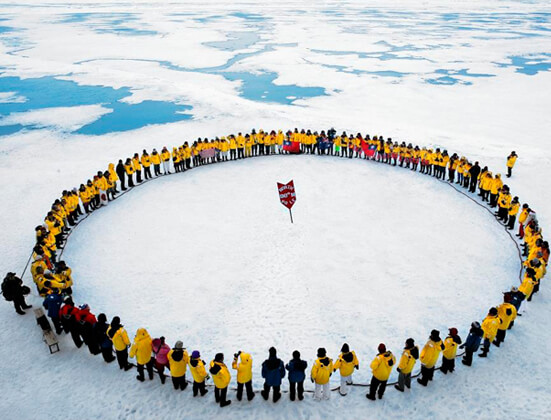
The North Pole is one of the ultimate Arctic holiday destinations, and to set foot on its frozen expanse is a bucket-list item for many intrepid adventurers. Only the privileged few ever get to see and experience this awe-inspiring place, and here at Wildfoot, we’re proud to be able to help you discover just how incredible it really is. There’s not a lot that can compare to the feeling of standing at the actual North Pole, in front of the legendary “90-degree” sign, surrounded by nothing but a frozen white landscape. It’s truly unforgettable.  

The Vessels

Your expedition to the northernmost point of the planet with Wildfoot will take place on special ice-breaker ships – including the magnificent Le Commandant Charcot, the world’s only luxury ice-breaker – that cut effortlessly through the ice floes on the way to the geographical point of the North Pole. Along the way, from the vessel you’ll be able to take in the abundance of terrestrial and marine wildlife and the vast, spectacular landscapes of the Arctic region. 

Le Commandant Charcot heralds a new class of Polar vessels in the Arctic and is the world’s first hybrid-electric exploration ship powered by liquified natural gas. Aside from its mighty capabilities to safely traverse the ice floes in complete safety and with the least disruption to the environment, the luxury aboard this vessel is unprecedented. Complementing the 135 stunningly appointed suites and staterooms (with private balconies or terraces), other features include a swimming pool, spa, restaurant, bar, observation lounge and even a butler service and private Jacuzzi in premium rooms.    

Mike, one of our team members has put together this great webinar on this vessel so if you want to know more feel free to check it out.

The length of the journey itself will depend on conditions and can take up to a week – but one thing’s for certain, you won’t be bored!

The Experience

The North Pole consists of a collection of massive ice floes floating in the Arctic Ocean (up to three metres thick) – there’s no actual land mass. And beneath that ice is an ocean more than 4,000 metres deep… 

Unfortunately, due to the climate crisis, scientists predict that as soon as about 30 years there’ll be no sea ice in the Arctic during the summer months – as it is warming at two times the rate as the rest of the planet. This means rising sea levels and the potential for huge global climate ramifications.

In winter the North Pole is enveloped in 24 hours of darkness, while in summer it’s the opposite, with 24 hours of perpetual sunlight. In contrast to the rest of the Arctic region, there is no terrestrial fauna or flora here, although there’s an abundance of migratory birds to be spotted overhead and plenty of marine life that exists below the ice – but that’s not so easily seen!

Some of our Wildfoot expeditions include a helicopter sightseeing ride, a memorable experience that offers a true birds-eye view on this incredible location, and you’ll also have the opportunity to see the Franz Josef Land archipelago. 

Photography Holidays

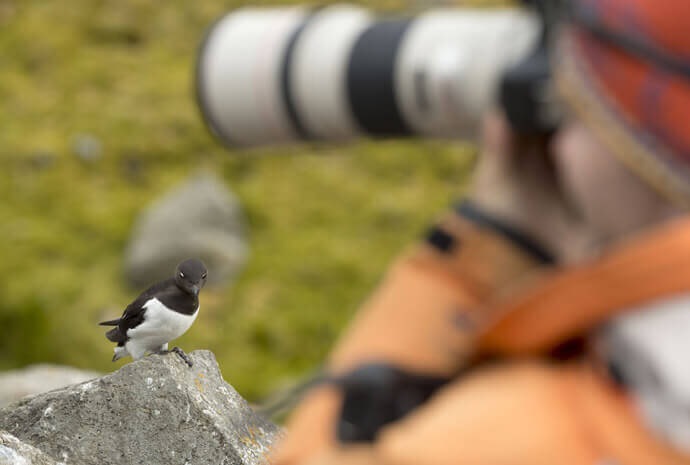
You should consider investing in a good camera in order to get high-quality shots while exploring the Arctic. Carrying a spare battery with you is a very good idea and will help you to avoid being caught short when you’re most in the mood to start snapping away.

If you’re an avid photographer (or a novice looking to learn) you might like to go one step further and take up the opportunity to enlist in a dedicated photography workshop while on your trip with Wildfoot. Many of our expeditions offer this as an optional activity (usually at no extra cost) and anyone who’s keen to expand their skills is very much encouraged to join in. 

These workshops are an extremely worthwhile experience, as they are led by experienced professional photographers, who are also experts in wildlife and polar photography – an important factor, as the environment and conditions present some very unique challenges. 

Many of our expeditions offer these workshops, so if you’re interested make sure you speak with your Wildfoot consultant about it. 

Checklist of Essentials

There are some things that we believe are essential to ensuring you’re safe, comfortable and warm during your trip to any of our Arctic holiday destinations. Bear in mind these are all just recommendations, but because we know the region like the back of our hands, we do know what we’re talking about. 

In terms of baggage you should try to stick to one suitcase, hold-all or backpack plus a small daypack for excursions and activities. 

Clothing, Footwear, Toiletries

Layers are the best option so we recommend bringing a range of clothing that can be utilised on its own or as a layer. 

Along with pyjamas, undergarments and optional swimsuits, bring both long and short sleeved shirts, long pants and shorts (zip-off pants are highly practical), a rain jacket, sun hat, jacket, windbreaker and sweaters. Depending on the class of cruise you book you might also want to pack some smart casual attire for dinners. Multiple pairs of comfortable, breathable socks are essential, along with a couple of pairs of footwear, which should include closed-toe waterproof walking shoes and sports shoes, sandals or flip/flops (depending on the time of year). 

In terms of toiletries make sure that along with your regular requirements (and any prescription medicines) you add some sunscreen, anti-histamines, plasters, lip balm, hand sanitizer, and moist towelettes. 

Incidentals

You will definitely need some good quality sunglasses due to the sheer brightness of this environment, with high-factor sun cream an absolute must on account of the UV light and clear air. Binoculars (for better wildlife spotting) and pen knives can prove to be worth their weight in gold, too. You should also consider bringing a small umbrella, notebook and pens, playing cards or games, purification tablets, water filter and small gifts for guides or local children.

Leave at Home

We highly recommend you leave any valuables and jewellery at home. You won’t have any need for them!

Of course, you’re welcome to get in touch with our expert team at any point if you have any queries about what to take and how to stay comfortable during your adventure. We are more than happy to use our knowledge and experience to benefit you, and are passionate about helping you make your trip a success.

If you want more advice on preparing your luggage have a look at our video:

Ready to Go? Let’s Go!

Talk to us today if you’re keen to secure a booking and prepare yourself for a trip quite unlike any that you will have embarked on before – or will ever embark on again. We can’t wait to take you on your adventure of a lifetime to our range of Arctic holiday destinations where you will discover the unique wildlife and truly extraordinary landscapes for yourself. 

Pick up the phone or send us an email whenever you’re ready and we’ll be waiting to help you plan every last detail of your trip.

Some of Our Favourite Trips

There’s so much to see, do and explore in the Arctic and below are some of our favourite itineraries – all designed by people who’ve been there themselves! That’s the Wildfoot difference.  

Alaska’s Northern Passages and Glacier Bay

This fantastic cruise takes you on an 8-day trip that’s packed to the brim with adventure and has a focus on magnificent glaciers. Aboard the Safari Explorer or Safari Endeavour, the journey delivers a huge array of highlights including a visit to the UNESCO World Heritage Site of Glacier Bay National Park, the Grand Pacific and Margerie glaciers, hiking through Tongass National Forest, and sailing around Chichagof Island, Sergius Narrows and Baranof Island.

With a range of excursions and activities available, you’ll be kept busy with kayaking, hiking, paddleboarding and skiffing, and you’ll see wildlife including whales, bears, otters, seals, porpoises and so much more!

Greenland Odyssey

Be dazzled and awed by the vast, icy beauty of Greenland (the world’s largest island) on this fabulous 17-day odyssey. Before boarding the vessel Sylvia Earle in Iceland for your adventure, you’ll explore the highlights of Reykjavik then head off for the adventure of a lifetime, discovering the wildlife and majestic scenery of Greenland’s east, south and west coasts. 

As well as taking in the scenery of the fjords and mountains, including the stunning beauty of the UNESCO World Heritage-listed Ilulissat Icefjord, you’ll visit Viking ruins and local communities, encounter wildlife like reindeer, Musk Ox and Arctic fox, and cruise icy waterways in a Zodiac. 

Spitsbergen Snowmobile Safari

Wilderness snowmobiling, spectacular scenery, remote lodge accommodation and as much fun as you can handle! This 5-day safari takes you into the frozen wilderness and allows you to enjoy the unique experience of exploring the landscape up close and personal in a way most people never target to see it. 

Staying in the wonderful Spitsbergen Expedition Lodge, as your base, the location puts you between the valleys of Adventdalen and Eskerdalen, delivering views towards Skolten, the highest mountain on Nordenskiöld Land, and Drønnbre-massif. You may also explore the mountain massif between the Adventfjorden and Sassenfjorden fjords, or other routes north to Pyramiden, Fredheim, around the east coast of Spitsbergen or to the glaciers of Tuna and Von Postbreen. What an adventure!

Guided Iceland Winter Tour

Discover the fire and ice of inimitable Iceland in winter on this 8-day small group tour that takes in the majesty and intrigue of the country with an experienced local guide. Travelling in a comfortable, specially-modified 4WD off-road vehicle you’ll explore the extraordinary landscape and geological wonders at a relaxed pace, and stay in quality tourist class hotels.
On this fabulous itinerary you’ll discover the diversity of Iceland through its waterfalls, beaches, hot springs, glaciers and national parks. You’ll visit Vatnajökull National Park to see the Glacier Lagoon, travel deep into incredible blue ice caves to marvel at their icy beauty, and enjoy multiple opportunities to go on the hunt for the famous Northern Lights.