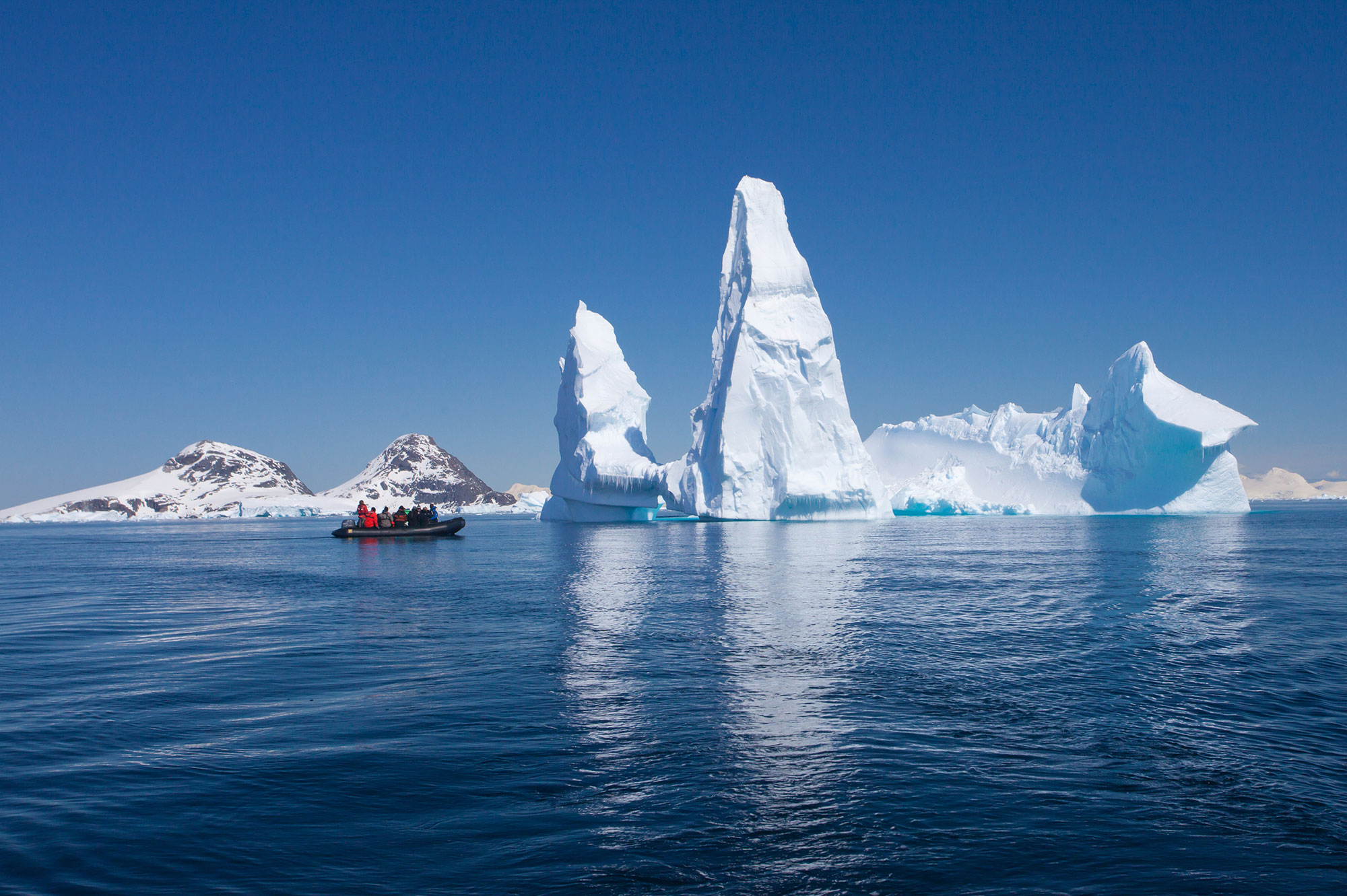
Spotting wildlife in Antarctica Antarctica vs Arctic: Which Expedition Is Right for You?

At Wildfoot Travel, three decades of guiding travellers to the world’s great wilderness destinations has taught us that this is usually the first real fork in the road for anyone dreaming of a polar expedition: Antarctica or the Arctic?

They get lumped together constantly, because both are cold, both are white, both involve a small ship and a Zodiac. In reality, they are close to opposites: different hemispheres, different seasons, different wildlife, different governance, and a genuinely different feeling underfoot.

Here is our honest, unfiltered, head-to-head guide to the two poles, starting with the short version, then the detail behind every line of it.

Antarctica vs Arctic: At a Glance

 AntarcticaThe Arctic
What it isA continent surrounded by ocean, owned by no nationA frozen ocean ringed by 8 nations’ territory
SeasonLate October – March
(Southern summer)
May – September
(Northern summer)
Summer temperatures−5°C to +5°C, usually hovering around zero0°C to +10°C
Typical cost, 10–12 days~£6,500–£14,000pp
(from ~£5,000; £20,000+ luxury)
~£5,000–£10,000pp
(from ~£3,500; £15,000+ luxury)
Headline wildlifePenguins, seals, and whales – no land mammalsPolar bears, walrus, muskox, narwhal, and whales
Getting there2 days’ travel; Drake Passage crossing or fly-the-DrakeDirect/short flights to Arctic gateway towns; no ocean crossing
Time at sea1.5–2 days’ open-ocean crossing each way to reach the PeninsulaSheltered fjord and coastal sailing from the moment you embark
People & cultureNone – scientists only, no Indigenous populationInuit, Sami, and Nenets communities and living culture
Landscape signatureTabular icebergs, absolute white, no vegetationTundra, wildflowers, fjords, and drift ice

The Fundamental Difference: A Continent vs. An Ocean

It sounds like a technicality, but it shapes everything else about the trip: Antarctica is a continent surrounded by ocean; the Arctic is an ocean surrounded by continents.

Antarctica

As a single landmass of roughly 14 million square kilometres, bigger than the United States and Mexico combined, governed by no nation. Buried beneath it is an ice sheet averaging over 2 kilometres thick and exceeding 4 kilometres at its deepest, holding around 70% of the world’s fresh water.

The Antarctic Treaty, signed by 12 countries in 1959 and now with more than 50 parties, reserves the continent for peaceful, scientific use.

There is no permanent population, only researchers rotating through more than 70 stations run by around 30 countries, numbers that swell to roughly 4,000–5,000 people in the southern summer and shrink to around 1,000 hardy winterers once the sun sets for the season.

Arctic

The Arctic is not a continent at all, but a frozen ocean ringed by the territory of eight nations, Canada, Greenland (Denmark), Norway, Sweden, Finland, Russia, Iceland, and the United States (Alaska).

Because it’s land-fringed rather than landlocked, it has been continuously inhabited for thousands of years by Indigenous peoples including the Inuit, Sami, and Nenets, and much of the ground beneath your feet on an Arctic hike is permafrost, soil that has stayed frozen for at least two consecutive years, in places for millennia.

Wildlife: Penguins vs Polar Bears

This is usually the deciding factor for our clients, and it’s a genuine either/or — the two poles do not share their headline species.

Antarctica

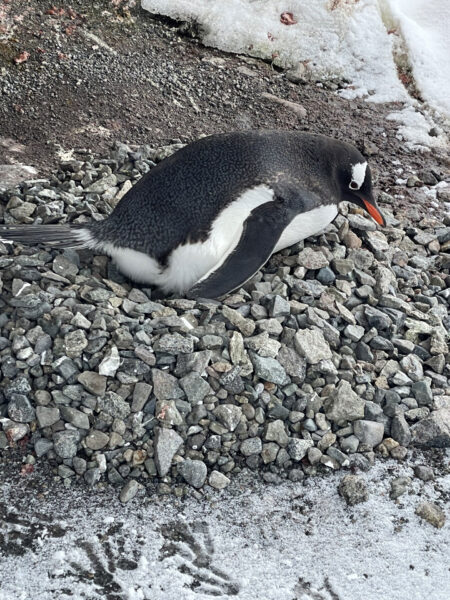
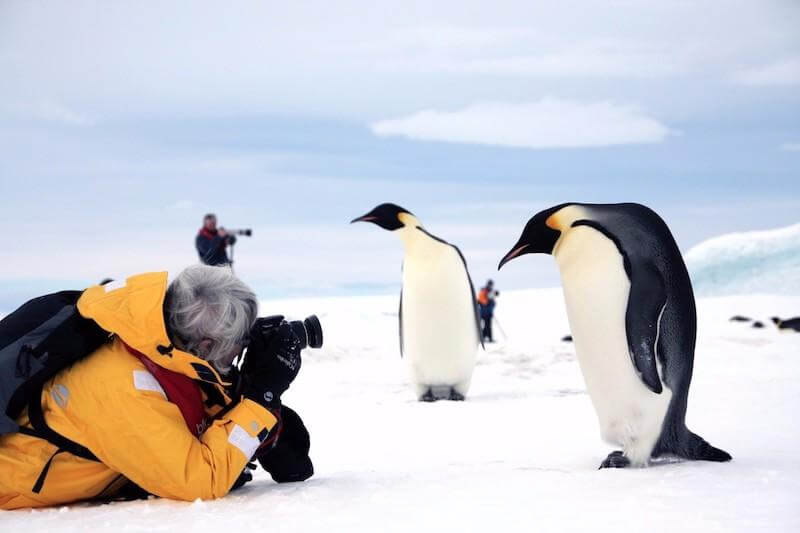
In Antarctica, the stage belongs to penguins: chinstrap, gentoo, Adélie, king, macaroni, and the elusive emperor. Leopard, crabeater, Weddell, fur, and elephant seals haul out on the ice alongside them.

For king penguins, South Georgia is unmatched: Saint Andrews Bay holds the largest king penguin colony in the world, with estimates ranging from around 150,000 breeding pairs upward — one of the great wildlife spectacles anywhere on the planet.
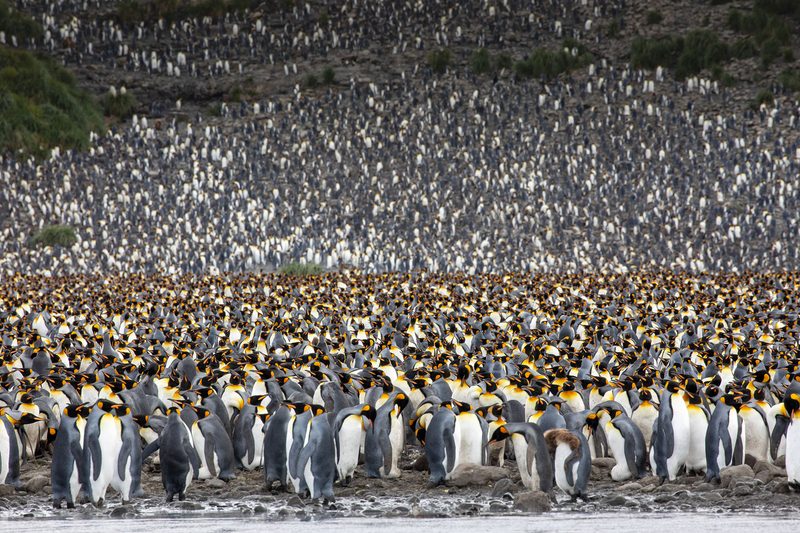
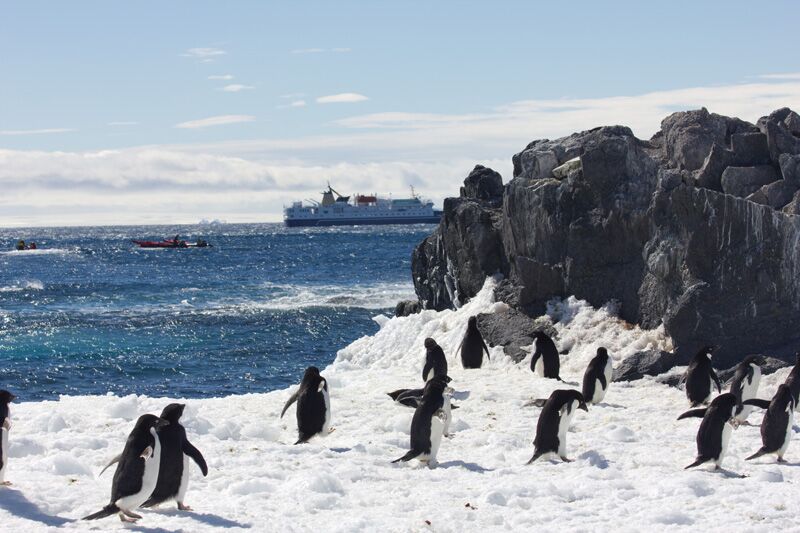
Penguins are a highlight of Antarctica

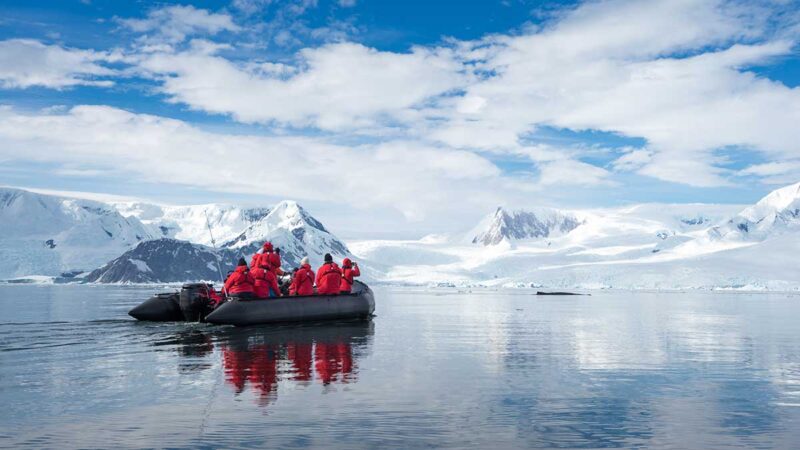
There are no native land mammals of any kind. Whales are a genuine highlight rather than a footnote — humpback, minke, orca, and fin whales are all commonly encountered, with February and March the peak of the season.

Arctic

The polar bear is the animal most people come to The Arctic for — the region’s apex predator and the largest carnivore on land. Around it sits something Antarctica simply doesn’t have: true land mammals, including muskox, reindeer and caribou, and Arctic fox.

In the north, Svalbard offers the best opportunity in the European Arctic to see a bear in its true habitat, out on the sea ice — though sightings are never guaranteed there. For near-certain sightings, Churchill in Manitoba remains the more dependable choice, with bears gathering on shore each autumn.

Offshore and along the ice edge, walrus — marine mammals, despite the hauled-out beaches they’re famous for — gather in their hundreds. The whale list is longer and more varied too, with humpback, beluga, bowhead, fin, minke, and orca all commonly spotted.

See Polar Bears in the wild in the Arctic

Where you sail matters as much as when. The Antarctic Peninsula and South Shetland Islands are the reliable stage for Adélie, chinstrap, and gentoo penguins, while the emperor penguin, the largest and most elusive of the Antarctic penguins, breeds almost entirely on fast ice in the Weddell and Ross Seas, with Snow Hill Island the most consistently visited colony, usually reached only on specialist helicopter- or icebreaker-assisted voyages.

Walrus haul-outs are a spectacle in their own right, around Svalbard and Greenland, hundreds of Atlantic walrus can crowd a single beach, while narwhal and beluga follow the retreating sea ice edge in the high Canadian Arctic and along Greenland’s coast.

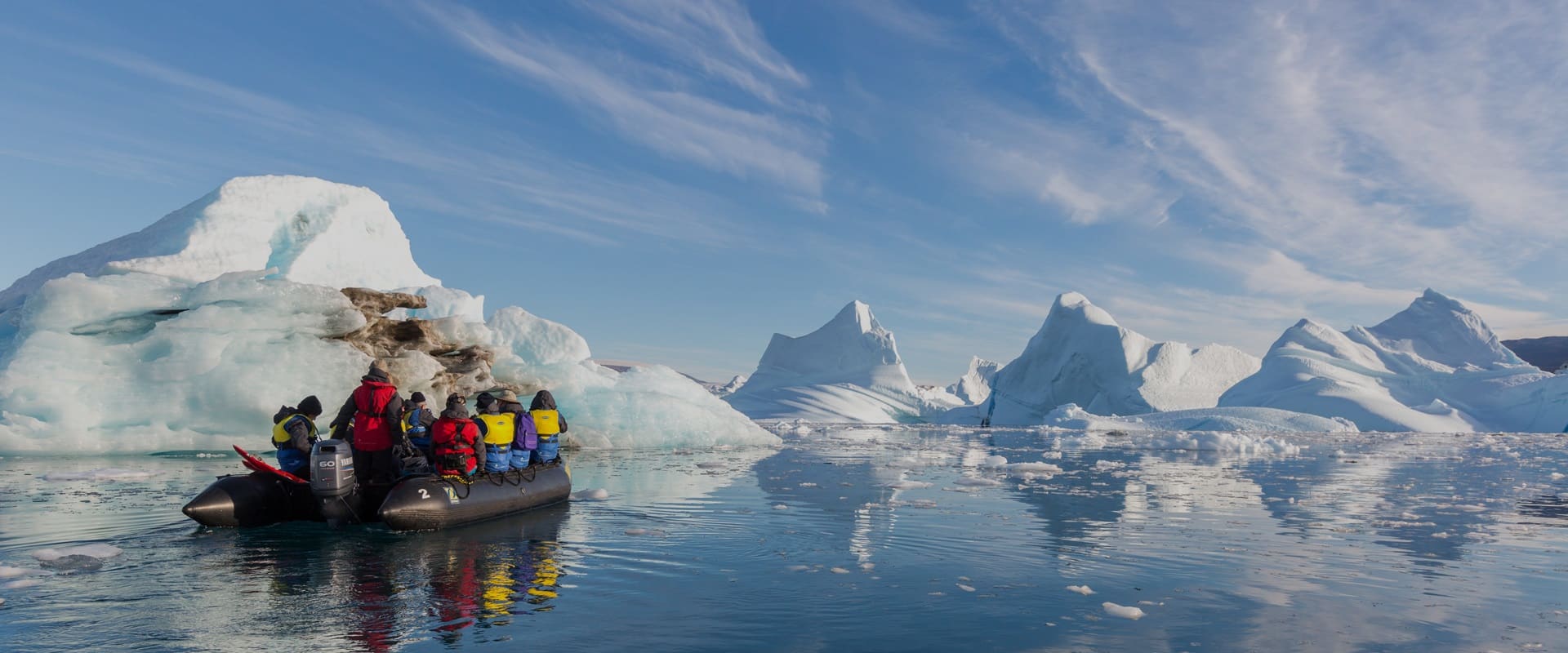
For me, Greenland is all about scale. There’s something about the icebergs there — in my mind, they felt even larger than Antarctica’s. Set against the colourful tundra and red rock of Røde Ø in ScorPeople often ask me what’s been the highlight, out of all the incredible places I’ve been lucky enough to experience. There are strong contenders.

The first time I saw a polar bear and her cubs, on our very last landing in Scoresbysund, East Greenland, is right up there. So is paddling out in Svalbard towards what looked like two black rocks in the ocean, only to realise they were humpback whales sleeping – “logging,” as it’s known – and we were so close we could feel the mist from their blowholes. – James Turner, Wildfoot Travel

But if a specific animal is the reason you’re going, the choice largely makes itself: penguins mean Antarctica, polar bears mean the Arctic.

Season and Timing: Two Opposite Summers

Because the poles sit in opposite hemispheres, their travel seasons are mirror images of each other.

Antarctica

Runs late October to March

October and November bring pristine snow, dramatic sea ice, and penguin courtship displays.

December and January offer the mildest weather, the most active wildlife, and penguin chicks on the Peninsula,at peak pricing.

February and March are the height of whale season.

Arctic

Runs May to September

May and June open the Svalbard season as birdlife returns.

June to August is the peak, under 24-hour midnight sun

August and September bring the Northwest Passage’s brief navigable window, and the first Northern Lights of the season as the sun begins to set again.

Wildfoot recommendation: if your calendar only allows for a European or North American summer holiday, the Arctic is the natural fit. If you’re free in the northern winter, Antarctica is where the season is actually open.

Getting There: Accessibility and the Journey Itself

Antarctica

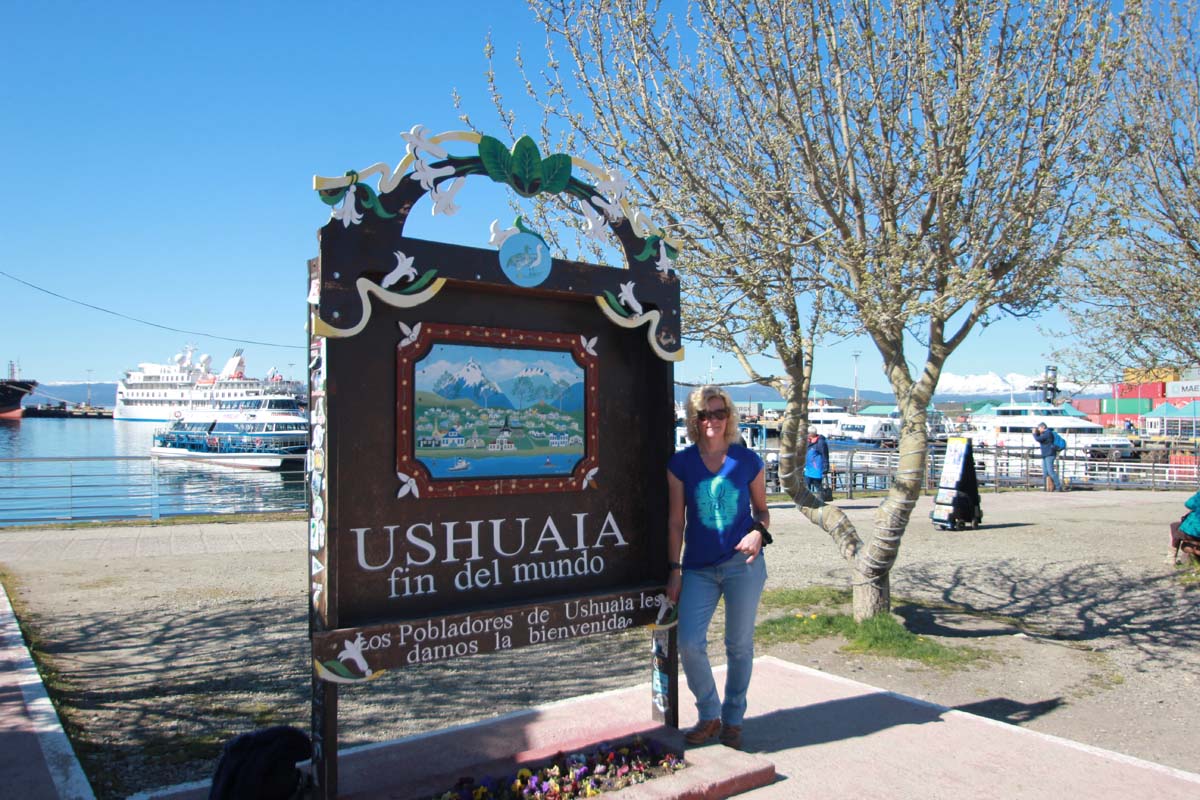
Most expeditions depart from Ushuaia, Argentina (via Buenos Aires) or Punta Arenas, Chile. Traditional itineraries cross the 800km Drake Passage — typically a 1.5 to 2-day sea crossing each way — while ‘fly-the-Drake’ charter flights to King George Island skip it entirely.

Whichever route you choose, reaching the ship takes around two full days of travel from the northern hemisphere.

Arctic

Considerably closer for European and North American travellers. Gateway towns like Longyearbyen (Svalbard), Tromsø, Reykjavik, and Kangerlussuaq are reachable on direct or short connecting flights, often four to nine hours from London or New York.
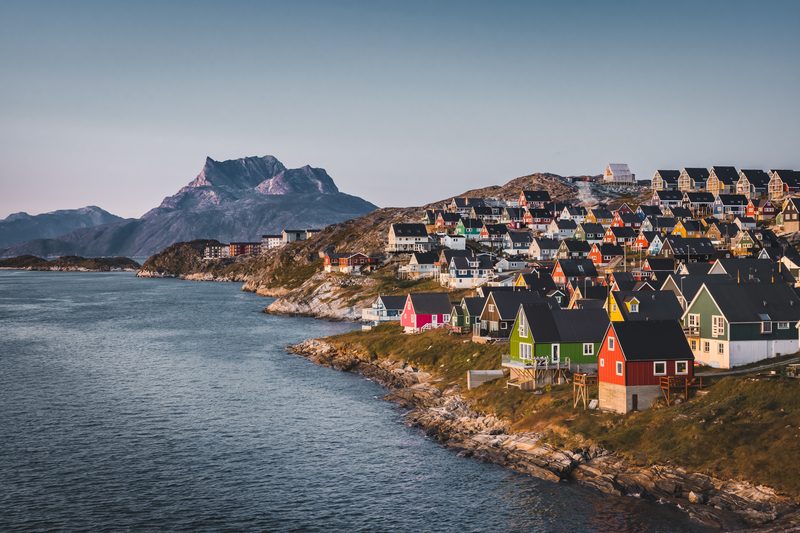
Nuuk, the capital and largest city of Greenland.

There is no equivalent open-ocean crossing — embarkation is usually straightforward, and you are into sheltered fjord and coastal sailing almost immediately.

Our Antarctica route options page breaks down itinerary lengths and starting points, and our Antarctica vessels guide covers the ships.

On the other pole, see our Arctic route options for how Svalbard, Greenland, and the Northwest Passage connect into a single itinerary.

What It Costs

Both poles cover a wide range — the ship, cabin category, itinerary length, and season all move the number by thousands of pounds.

As a rule of thumb, the Arctic has the lower entry point, largely because it’s quicker to reach and doesn’t require the Drake Passage’s extra sailing days.

Per personAntarctica
10–12 days
Arctic (Svalbard)
8–12 days
Entry levelFrom ~£5,000–£6,500From ~£3,500–£5,000
Mid-range~£6,500–£14,000~£5,000–£10,000
Luxury£20,000–£40,000+£12,000–£20,000+

Figures are indicative per-person, twin-share fare ranges for 2026/27 season sailings, excluding international flights and gratuities unless stated. Prices vary by operator, ship, and date — get in touch for a quote against your specific dates.

People and Culture

If a sense of human history and living culture matters to your trip, this is a real point of difference.

Antarctica

Antarctica has never had permanent residents. There is no Indigenous population and never has been. Its human story is one of exploration rather than habitation — Shackleton, Amundsen, Scott — and the only people there today are rotating scientists at research stations.

Arctic

The Arctic has been lived in for thousands of years. Inuit, Sami, and Greenlandic communities have made their home here across generations, and voyages routinely include community visits, museums, and cultural performances. It is a living culture, not simply a historical one.

Cold, Scale, and Landscape

Both regions get described in extremes, but the reality of a summer expedition is far more comfortable than the headline statistics suggest. Around the Antarctic Peninsula in season, temperatures tend to hover between −5°C and +5°C — usually close to zero. Arctic summer temperatures typically run from 0°C to as much as +10°C. You will want good layers, not survival gear.

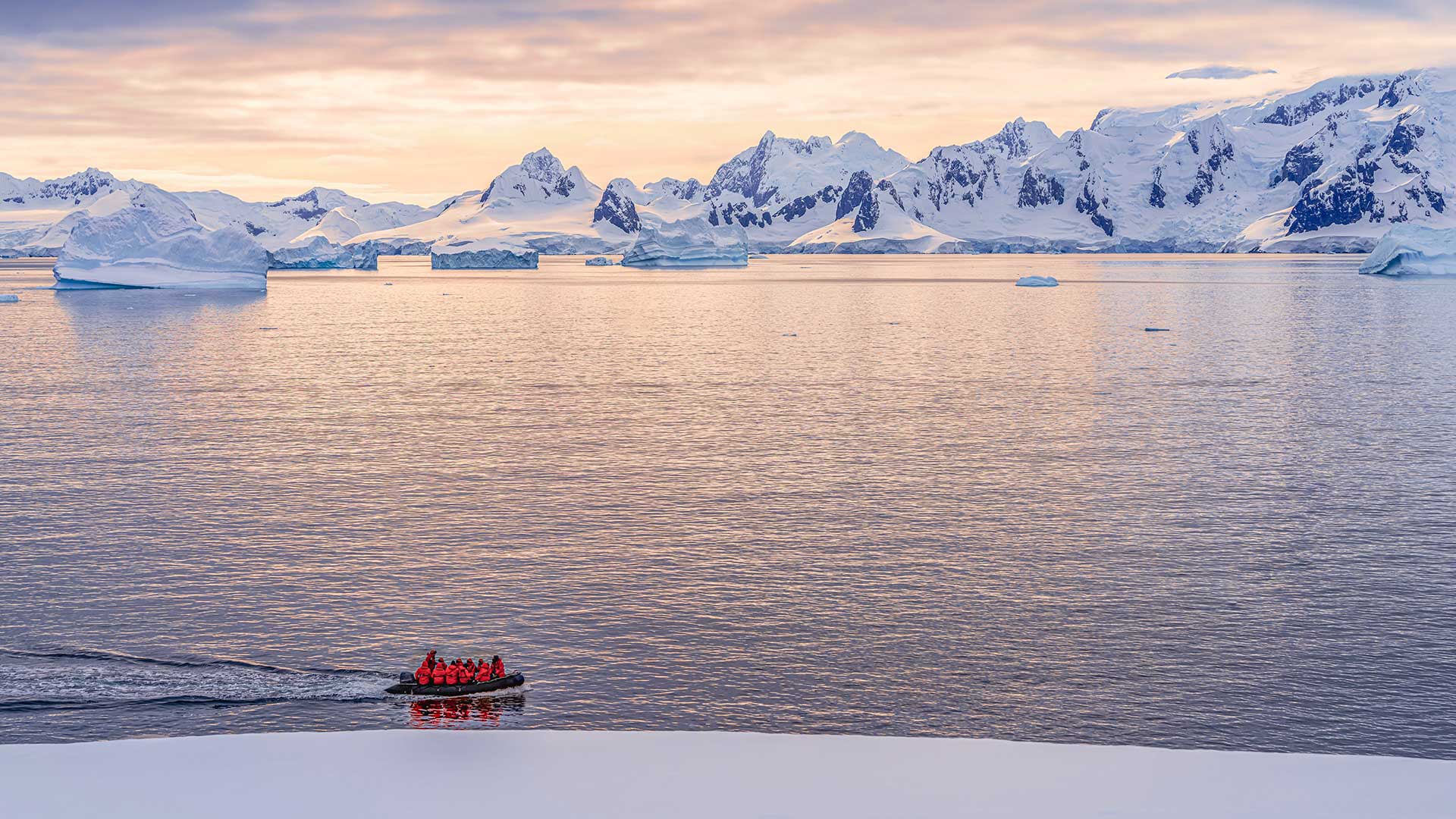
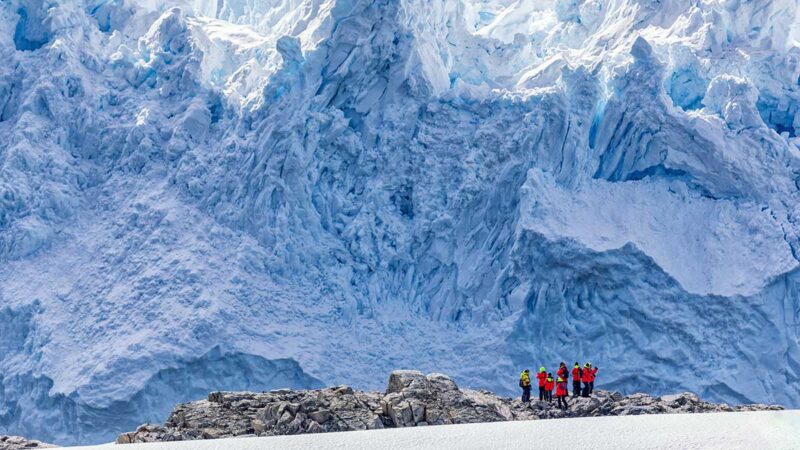
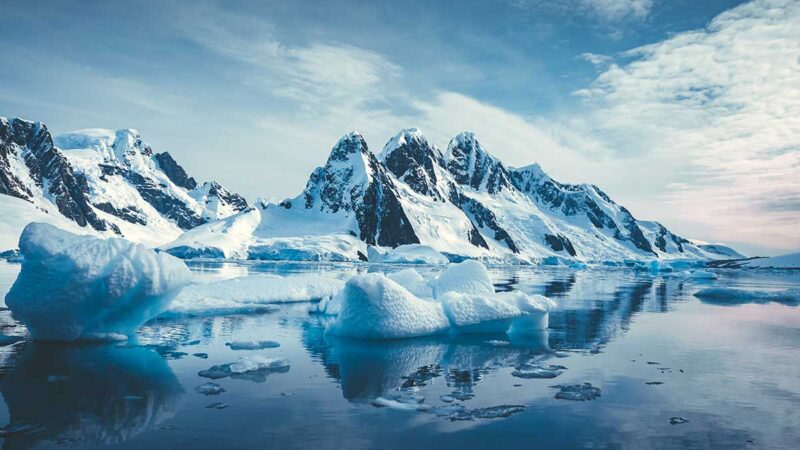
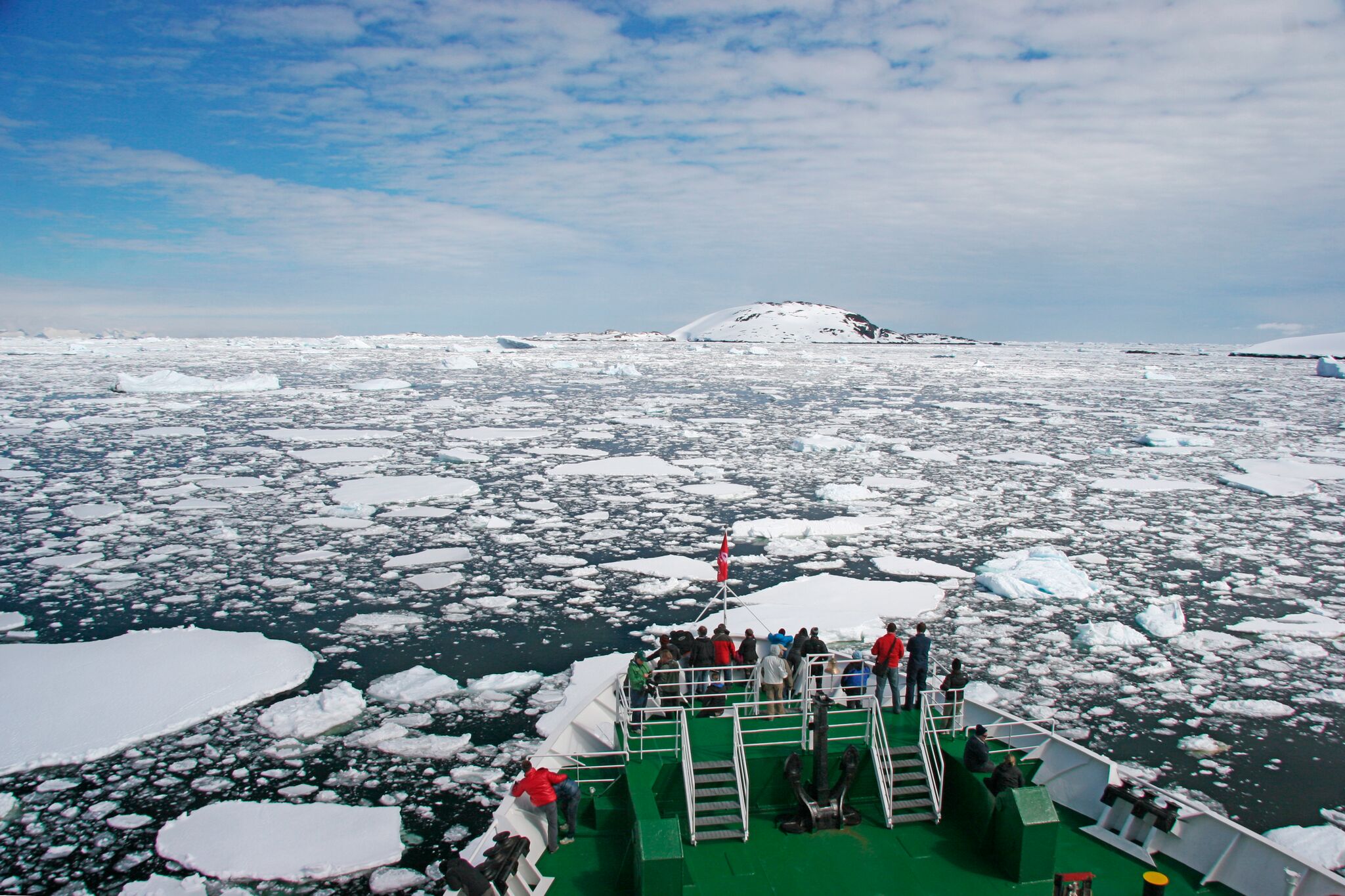
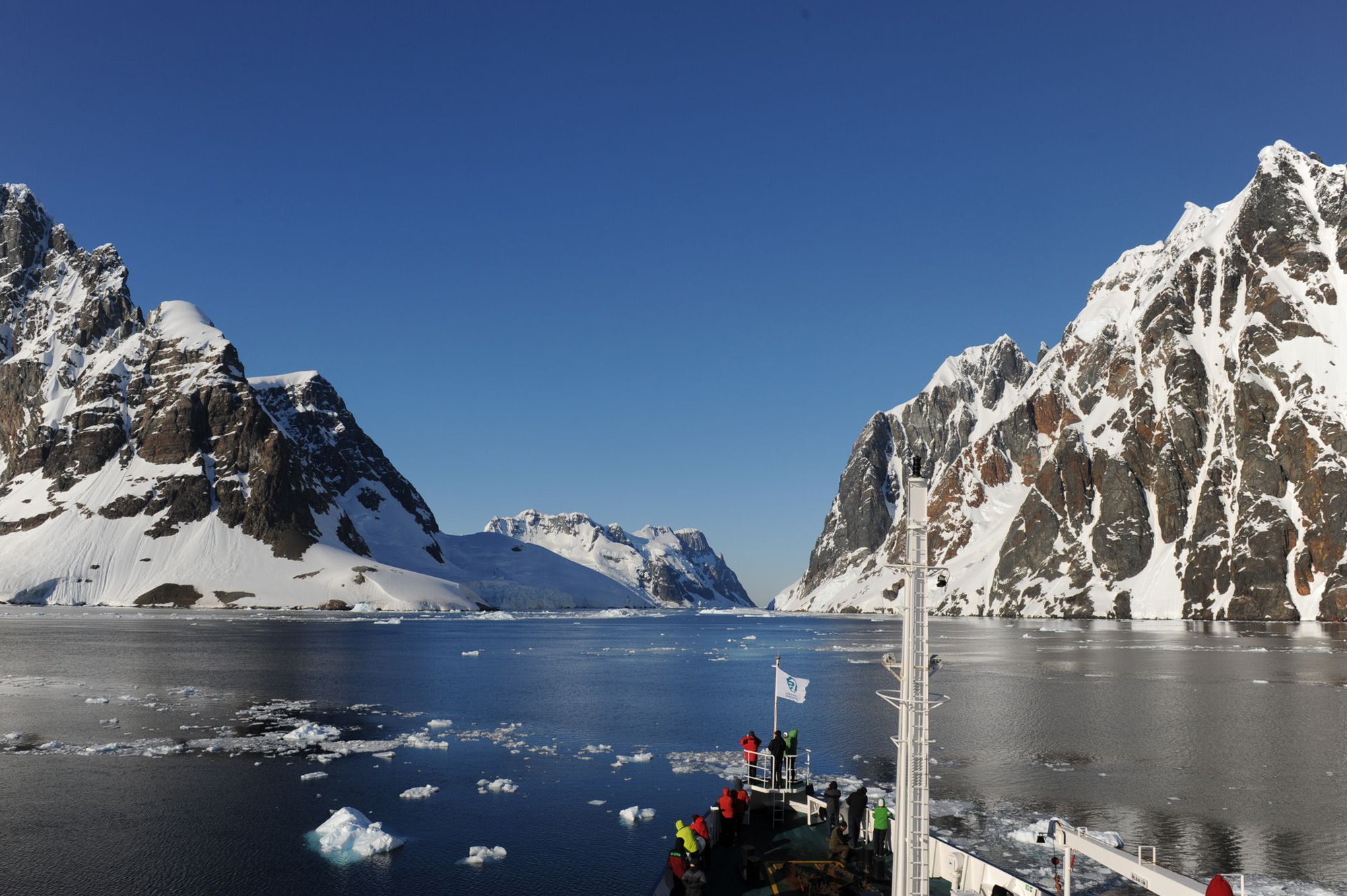
Where Antarctica genuinely does win on scale is its ice. Tabular icebergs — flat-topped, sometimes the size of small countries — are unlike anything the Arctic produces, and the continent is entirely blanketed by an ice sheet, with no vegetation to soften it.
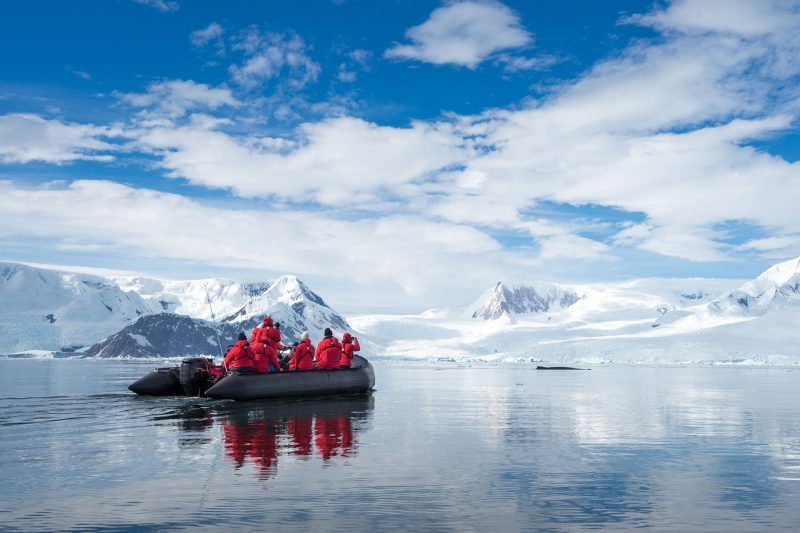
Stunning landscapes in Antarctica
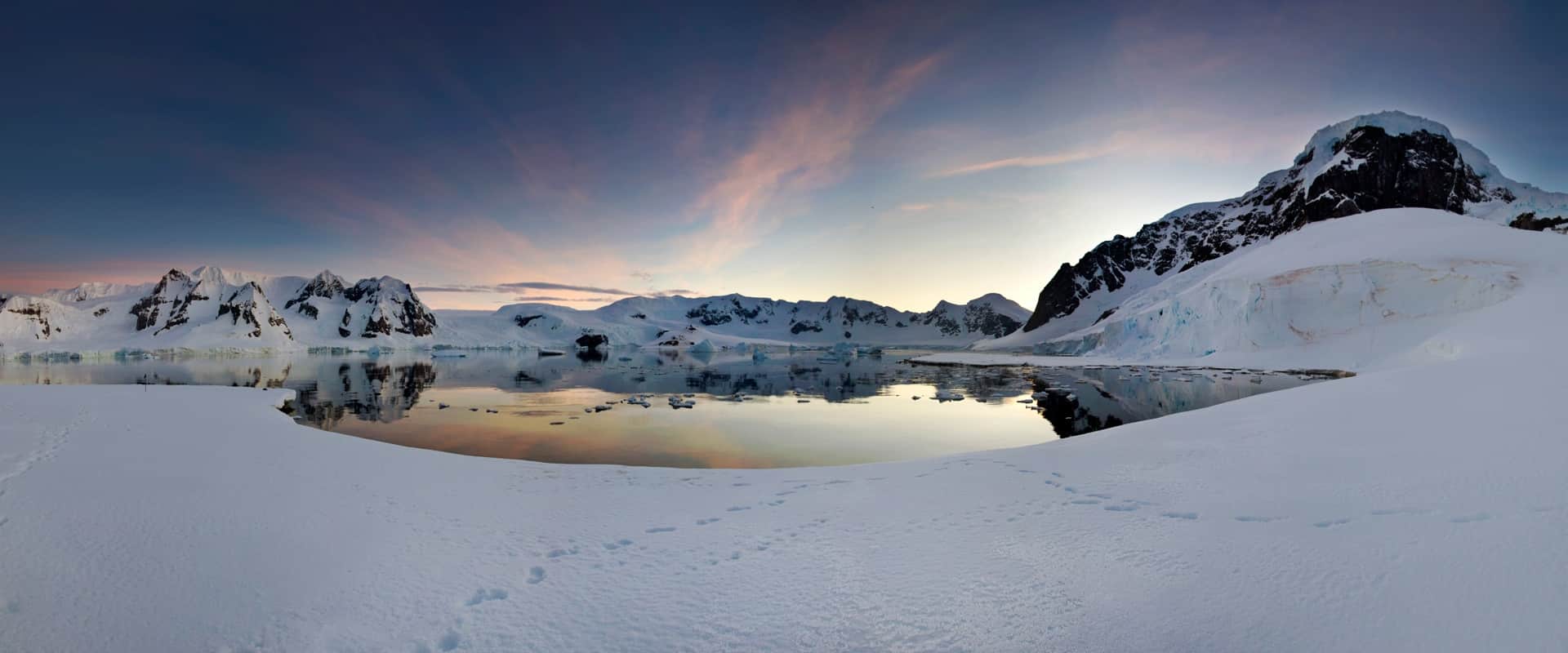
The stunning landscapes of Antarctica

The Arctic, by contrast, is greener in summer. Tundra, wildflowers, and moss appear as the snow retreats, and its fjords, drift ice, and calving glaciers offer a softer, more varied landscape. Arctic sea ice is thinner and far more seasonal, shrinking to a fraction of its winter extent by September — which is precisely why the Arctic cruising season is so tightly bound to those summer months.

Both share dramatic tidewater glaciers and near-24-hour summer daylight. But where Antarctica feels otherworldly and absolute, the Arctic feels wild but inhabited.

Which Pole Suits You

Beyond the headline facts, here’s how we tend to advise different types of traveller.

First-time polar travellers

For UK clients especially, we often suggest starting in the Arctic. A classic Svalbard voyage is easily reached, unmistakably polar from the moment you land, and a superb way to dip a toe into expedition travel — and it sets you up beautifully for Antarctica later.

That said, if you only ever take one polar trip, Antarctica with the Falklands and South Georgia is the one that will live far beyond any expectation, for the sheer concentration of wildlife and dramatic ice alone.

If I had to pick just one moment above all of them, it would be the first time I landed at Gold Harbour, South Georgia. A stunning panorama of jagged mountains under blue skies, a beautiful sandy beach framed by lush green tussock grass – and then, carpeting every inch of it, tens of thousands of king penguins and hundreds of elephant seals as far as the eye could see. It’s the only time in my life I’ve physically frozen in awe at the sheer magnificence of nature. My brain simply couldn’t compute the spectacle in front of me. It took several minutes before I realised I didn’t need to stand rooted to the spot – I could actually walk along the beach and find my own place to take it all in. It remains the most magical moment of my life, and I still get goosebumps thinking about it – James Turner, Wildfoot Travel

Families with older children

The Arctic’s shorter flights, gentler seas, and cultural stops tend to suit families better, especially with children under 12, who most Antarctic operators don’t accept aboard. Always check age policies directly, as they vary by ship.

Photographers

Both are exceptional, but for sheer scale and light, Antarctica’s icebergs and 24-hour December daylight are hard to beat. For a single, dramatic subject, the Arctic’s polar bears on sea ice are the more coveted shot — at the cost of a much lower hit rate.

Solo travellers

Both regions are well set up for solo travellers, with most expedition ships offering solo cabins or roommate matching. The Arctic’s shorter itineraries and lower entry point make it the easier region to try first if budget is the main consideration.

Anyone prone to seasickness

This one has a clear answer: the Arctic. Most Arctic itineraries sail sheltered coastal and fjord waters, while an Antarctic trip almost always means the Drake Passage — two open-ocean crossings, unless you choose (and pay more for) a fly-the-Drake itinerary.

The Master Checklist: Matching the Pole to Your Ambitions

Before you commit to a hemisphere, run your choice through these five filters:

Name your must-see animal

If it’s penguins, only Antarctica will do. If it’s a polar bear, only the Arctic offers a chance, and even there, a sighting is never guaranteed.

Check your calendar

Antarctica’s season runs late October to March; the Arctic’s runs May to September. Your available travel dates may decide this for you before anything else does.

Be honest about time and budget

Antarctica asks for a longer journey, more days at sea, and a higher entry point. The Arctic is quicker and more accessible to reach from Europe and North America.

Consider your sea legs

The Drake Passage is a genuine one-and-a-half to two-day ocean crossing each way, while most Arctic itineraries sail in comparatively sheltered coastal and fjord waters.

Decide what else you want from the trip

If Indigenous culture and a lived-in landscape matter to you, the Arctic delivers something Antarctica structurally cannot. If you want scale, silence, and the sense of standing on an untouched continent, that belongs to Antarctica alone.

That said, if you only ever take one polar trip, Antarctica with the Falklands and South Georgia is the one that will live far beyond any expectation, for the sheer concentration of wildlife and dramatic ice alone.

Really, every day out in the Arctic or Antarctica is special in its own way – the excitement of not knowing what the day holds, the sense that Mother Nature is unveiling a script unique to that exact moment, the unexpected encounters with local Inuit communities that always leave a warm place in my heartesby Sund, the contrast is magnetic for photographers; the ice seems to pop right off the landscape – James Turner, Wildfoot Travel

Frequently Asked Questions

Is Antarctica or the Arctic colder?

Antarctica, though not in a way most travellers experience. Expedition season around the Peninsula sees temperatures hovering between −5°C and +5°C, usually close to zero, while Arctic summers run from 0°C to around +10°C. Both are comfortable with good layers.

How do the costs compare?

The Arctic generally has the lower entry point. A typical 8–12 day Svalbard voyage starts below an equivalent Antarctic Peninsula sailing, largely because it’s quicker to reach and doesn’t require the extra sea days of the Drake Passage. Both regions offer everything from simple expedition ships to genuine six-star vessels.

Can you see penguins and polar bears on the same trip?

No — not in the wild. Penguins are exclusively Southern Hemisphere and polar bears are exclusively Arctic; their ranges never overlap. Seeing both means booking two separate expeditions, one to each pole.
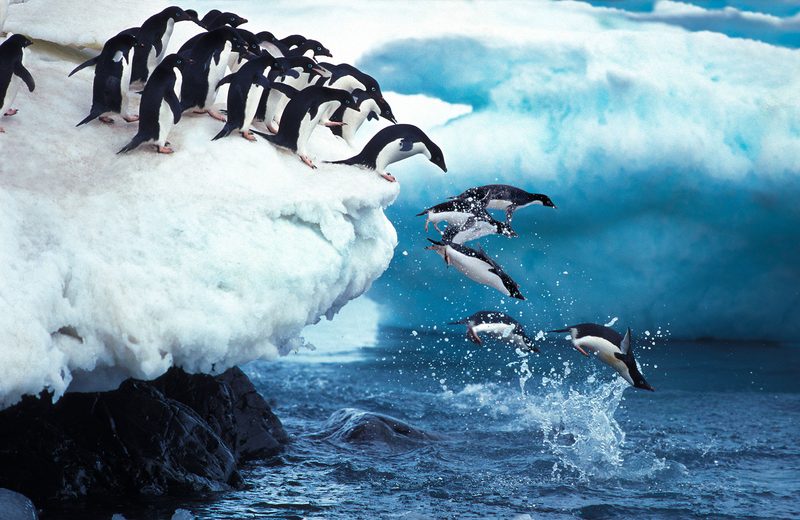
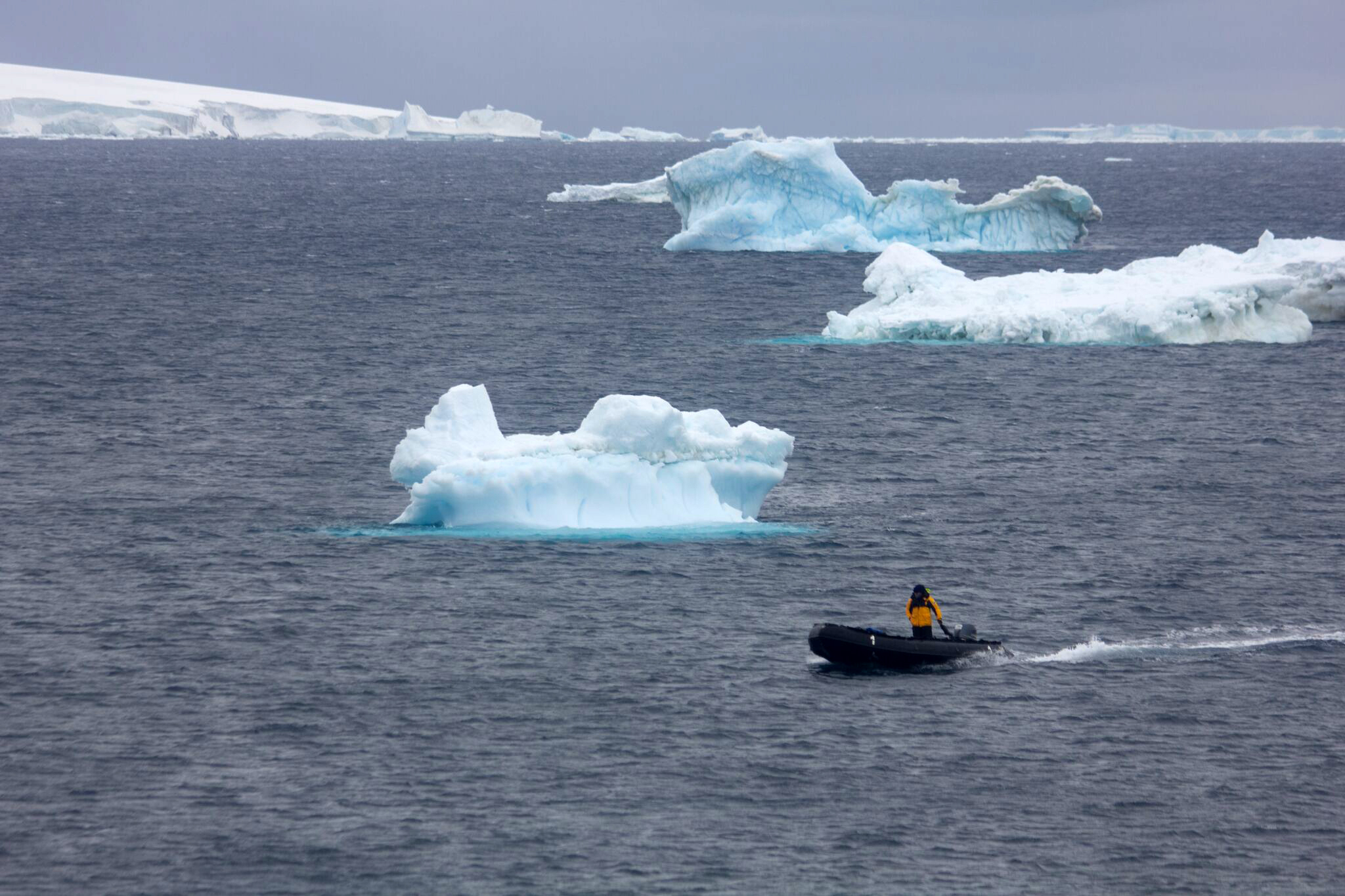
Unforgettable wildlife encounters in Antarctica

Which is easier to get to?

The Arctic. Gateway towns like Longyearbyen, Tromsø, and Reykjavik are a direct or single-connection flight from most of Europe and North America. Antarctica requires flying to Ushuaia or Punta Arenas at the southern tip of South America, plus a Drake Passage crossing or charter flight to reach the ship itself.

Is the sea crossing to Antarctica rough?

It can be. The Drake Passage has a reputation for a reason, though modern stabilised ships and X-BOW® hull designs have made the crossing considerably more comfortable than it once was. ‘Fly-the-Drake’ itineraries avoid it entirely for an added cost.

Which is better for a first-time polar traveller?

If you’re planning to visit both poles eventually — and we’d highly recommend it — start with the Arctic. Svalbard is the quintessential Arctic experience, easily accessible from the UK, and sets you up beautifully for an Antarctic expedition in future.

If you’ll only ever make one trip, Antarctica with the Falklands and South Georgia just about wins it.

Talk to Us

There is no wrong answer between Antarctica and the Arctic — only the trip that matches what you actually want to see, when you’re free to travel, and how you want to feel when you get there.

We have sailed both. We know the ships, the seasons, and the small details — which crossing suits a nervous sailor, which month gives you cubs or chicks, which itinerary is worth the extra cost — that make the difference between a good trip and the trip of a lifetime.

Get in touch with the Wildfoot Travel team to help you choose your polar adventure, or start browsing our Antarctica cruises and Arctic cruises for yourself.

Choosing the Right Small Ship for Antarctic Expeditions: A Guide from the Wildfoot Experts

Few journeys require as much careful thought as an expedition to Antarctica and few travel companies have spent as long helping people get it right.

At Wildfoot Travel, three decades of guiding travellers to the world’s great wilderness destinations has taught us that Antarctica is where experience matters most.

Once you have settled on when you want to travel, the single most critical decision you will make is choosing the vessel that will take you there.

Antarctica does not do things by halves. The ship you choose isn’t just your hotel; it is your icebreaker, your mobile basecamp, and your safety net. But with a dizzying influx of new polar vessels navigating the Southern Ocean, the marketing glossy photos all start to look identical.

Our specialists have sailed on dozens of different vessels across every type of itinerary. We know that the “best” ship doesn’t exist on paper—it only exists in how perfectly it matches what you want from the ice.

Here is our honest, unfiltered guide to parsing the deck plans and technical specs to find the right small ship for your Antarctic adventure.

The Reality of the 100 vs. 200 Guest Divide

In Antarctica, the size of your ship dictates your daily experience on the ice.

Strict IAATO (International Association of Antarctica Tour Operators) regulations state that no more than 100 passengers are allowed ashore at any one time at a single landing site. Furthermore, ships with more than 500 passengers cannot land at all.

This creates a stark operational divide that impacts how much time you actually spend standing next to penguins versus looking at them through a window.

  • SHIPS UNDER 100 GUESTS
    • Straight off the ship
    • No waiting
    • Immediate response to wildlife
  • SHIPS WITH 100–200 GUESTS
    • Rotations: Group A lands while Group B cruises, then swap

1. Under 100 Guests: The True Expedition Keepers

Ships carrying fewer than 100 passengers offer a level of tactical flexibility that larger vessels simply cannot match. Because everyone can step off the ship simultaneously, there is no waiting in shifts.

The Operational Reality: If a pod of type-B killer whales is spotted bubble-net feeding, or a sudden katabatic wind forces a rapid change of plans, the expedition leader can drop the Zodiacs and clear the ship in fifteen minutes flat.

The Landing Footprint: Because you aren’t racing a clock to get the next group ashore, your shore time is often longer, slower, and more immersive.

The Vessel: This bracket now spans two quite different kinds of ship, and it’s worth knowing which one you’re booking. Many are older, converted research vessels or classic expedition hulls—louder, rolling more in heavy seas, with functional, no-frills cabins and a strong shared-mission feel among like-minded travellers. But a newer generation of purpose-built vessels has arrived at this same sub-100 capacity, trading some of that rugged simplicity for considerably more comfort.

The Magellan Explorer is a good example: built from scratch for Antarctic air-cruise operations, with the intimacy of a small ship but a level of onboard polish closer to a boutique hotel. In short, under 100 guests guarantees you operational flexibility—it no longer guarantees a spartan cabin.

2. 100 to 200 Guests: The Rotating Balance

Ships in this bracket must manage landings in “rotations.” To maximize your time, a standard operation means 100 guests are ashore exploring a colony, while the remaining guests are on a Zodiac cruise weaving through icebergs or tracking seals.

The Operational Reality: Your morning excursion is precisely choreographed. If your shore rotation is 90 minutes, it is strictly 90 minutes so the next group gets their turn. However, because you are combining a landing with a Zodiac cruise, you often get a more diverse perspective of a site in a single outing.

The Vessel: This is where the modern fleet thrives. These ships are typically much faster, more stable, and offer dedicated “mudrooms” with individual lockers for your boots and parkas, rather than making you gear up in your cabin.

3. The 120–130 Guest Nuance: How Some Ships Beat the Landing Cap

A number of ships carry somewhere around 120 to 130 guests—technically over the 100-passenger landing threshold—but are still able to run a full, unrotated landing at the magic number.

The trick is in how the itinerary is built: these ships typically carry a strong programme of marine-based activities, such as sea kayaking, snorkelling, or stand-up paddleboarding, alongside the standard Zodiac fleet.

On any given outing, 20 to 30 guests will usually be signed up for one of these marine activities rather than a straight landing. Subtract them from the total, and the ship is back down to roughly 100 guests going ashore—meaning everyone else can land together, uninterrupted, exactly as they would on a genuinely sub-100 vessel. 

It’s a detail that rarely appears on a spec sheet, but it can be the difference between a smooth, single landing and a rotated one, so it’s always worth asking your specialist how a ship’s guest count breaks down in practice.

Technical Specs Unpacked: Ice Classes and Hull Dynamics

You don’t need a degree in marine engineering to book an Antarctic cruise, but understanding a few lines on a ship’s spec sheet will tell you exactly what that vessel is capable of when the ice closes in.

De-coding the Ice Class: PC6 vs. 1A

Ships are built with varying degrees of hull reinforcement, internal framing, and propeller protection to handle polar ice.

Traditional Finnish-Swedish Ice Classes (1A Super, 1A, 1B): Historically the standard, a 1A rating means the ship is built to navigate in difficult ice conditions with icebreaker assistance, though in the Antarctic summer, it means excellent independent capability in broken pack ice.

The Modern Polar Class (PC6 and PC5): The newer Polar Class rating system is more stringent, and it’s worth putting real numbers to it. Under the IACS engineering standard, a PC6 vessel is designed around roughly 1.75 metres of first-year ice, suited to summer/autumn operation. A PC5 vessel steps up to around 2 metres of medium first-year ice, which may include some older ice inclusions, and can operate for a longer season as a result. At the very top of the scale, Le Commandant Charcot holds a PC2 rating—the highest of any purpose-built polar cruise ship—giving it the structural capability to push through ice several metres thick, far beyond anything a standard expedition vessel would attempt.

Why this matters to you: If you are travelling in the early season (November) when the winter ice is still breaking up, or if your heart is set on pushing deep south into the Weddell Sea or crossing the Antarctic Circle, a PC6 or PC5 hull is a massive advantage. It allows the Captain to safely push through ice floes that would force a lower-rated 1B ship to turn around.

Bow Architecture: The X-BOW® Revolution

The Drake Passage is 800 kilometres of unpredictable hydrology where the Atlantic, Pacific, and Southern Oceans collide. To mitigate the infamous ‘Drake Shake’ modern naval architecture has introduced the inverted hull design, most famously Ulstein’s X-BOW®.

Traditional Bows: Feature a pointed bow that rises over waves and slams down into the trough. This causes pitching, spraying, and a sudden loss of forward momentum—the classic recipe for seasickness.

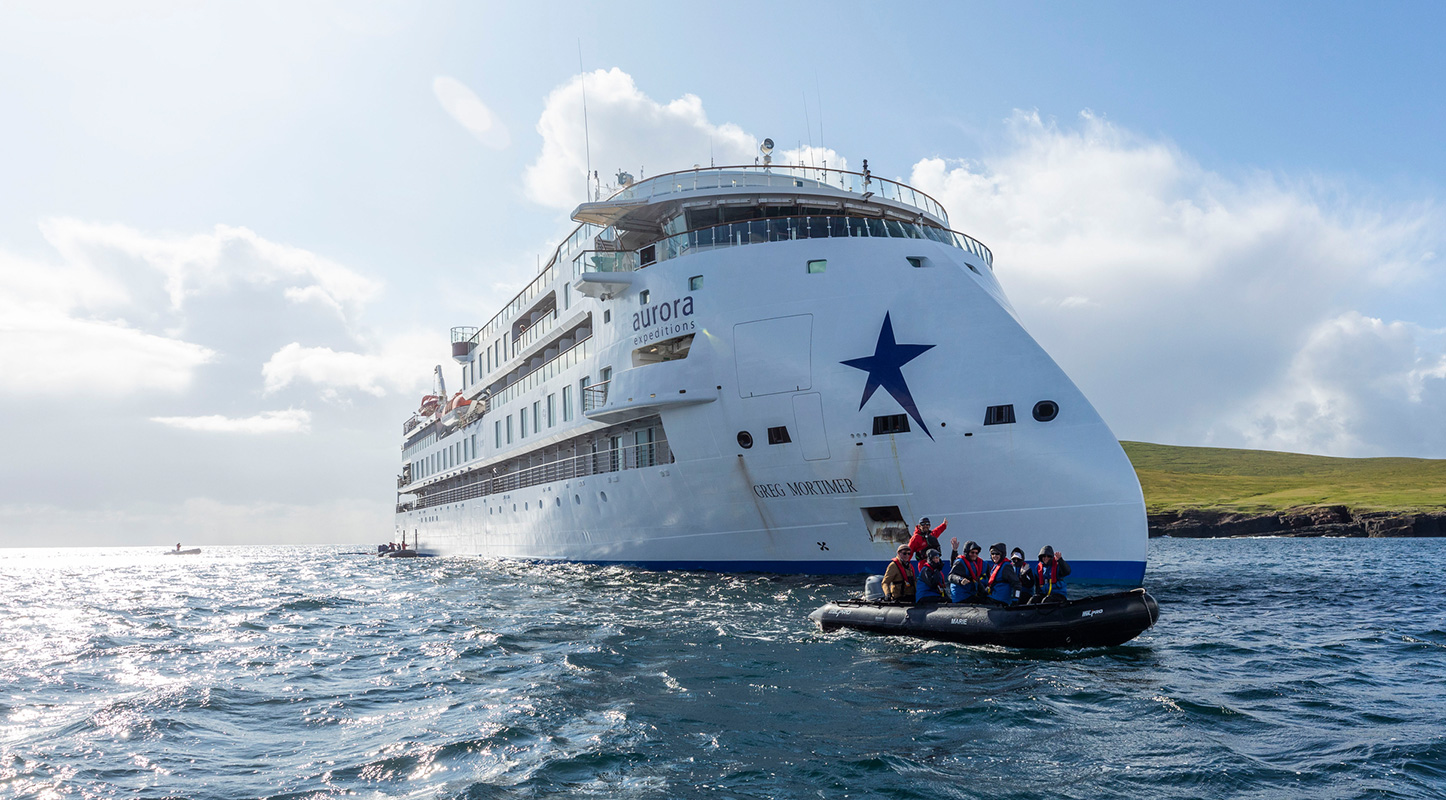
The X-BOW®: Slices cleanly through the wave crests. By distributing the buoyancy more evenly, it eliminates the hard ‘slam’ dramatically reduces pitch, and maintains a higher transit speed. The Greg Mortimer is the vessel that put this design on the map for expedition travellers, and remains one of the clearest examples of what an X-BOW® hull feels like in the Drake. If you are deeply concerned about motion sickness, prioritizing an X-BOW vessel equipped with modern zero-speed stabilizers will completely change your experience of the crossing.

Onboard Philosophies: Rugged Basecamp vs. Luxury Exploration

Small ships generally fall into one of two design philosophies. Deciding between them comes down to how you prefer to spend your time when you are not out in the elements.

The Rugged Basecamp

These ships are working platforms for polar exploration. They are designed around the logistics of getting you off the vessel safely and quickly, rather than pampering you when you return.

The Setup: Expect functional, utilitarian cabins, simple but hearty buffet-style cuisine, and a heavy focus on the lecture lounge. The bridge is almost always open, allowing you to stand next to the officers and watch the radar as they pick a line through the ice.

The Sea Spirit is a good example of this classic expedition style at work.

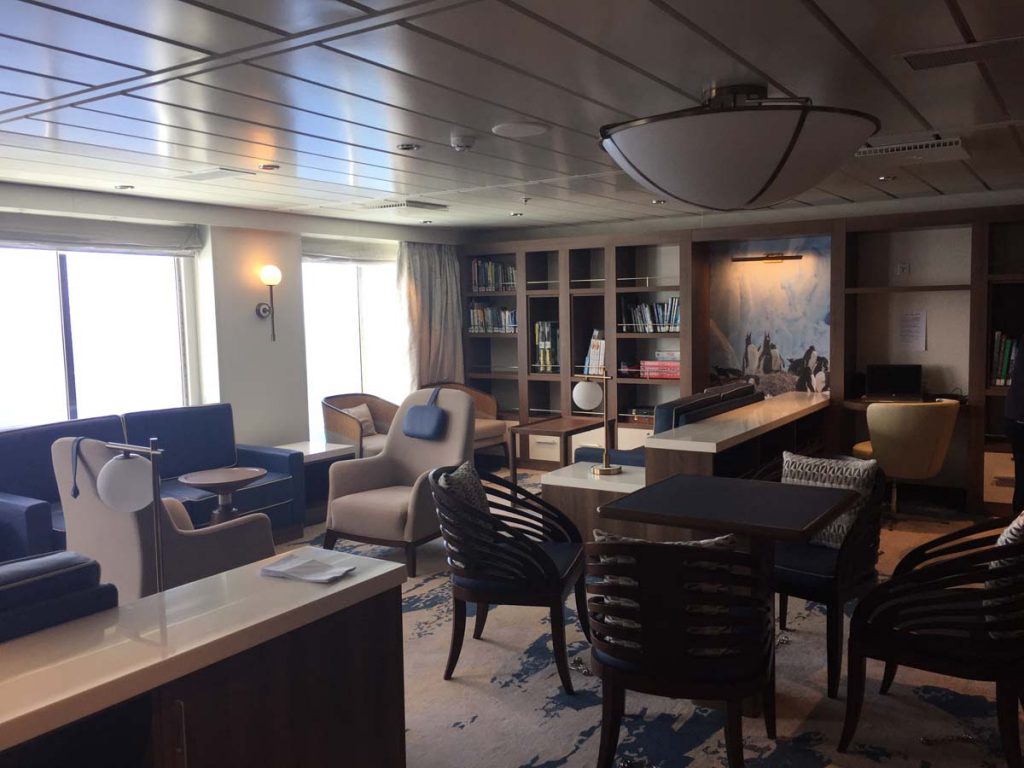
Step aboard a classic vessel and it really does feel like an expedition, not a holiday. You’re swapping stories with fellow guests over charts on the mess table, chatting to officers on the open bridge, losing time in a library full of old exploration books. There’s a real sense of camaraderie that builds fast, and you start to feel like you’re part of the story too, following in the footsteps of the explorers who sailed these waters before you. – James Turner

The Luxury Expedition Vessel

The latest generation of small ships has completely redefined polar travel, bringing six-star comfort to the edge of the world without sacrificing expedition grit.

The Setup: Think private walk-out balconies, multiple specialized restaurants, heated outdoor infinity pools, and extensive spa facilities. Crucially, they feature advanced engineering like dynamic positioning systems. 

This allows the ship to hover over sensitive marine environments using GPS-steered thrusters, completely eliminating the need to drop an anchor and damage the fragile seabed. Le Commandant Charcot is the standard-bearer for this category, pairing its PC2 ice class with an indoor pool, spa, and multiple restaurants.

You don’t expect to feel quite so comfortable while you’re staring at a wall of ice several storeys high. But that’s the thing with these ships – you could be in the hot tub with a glass of champagne, or just stood on your balcony with a coffee, and the ice is right there, calving away in front of you. It’s a rare mix – luxury and wilderness side by side, and it creates an experience that you’ll never forget. – James Turner

The Master Checklist: Matching the Vessel to Your Ambitions

Before you sign on the dotted line, run your choice through these four critical filters:

  • Look at the Zodiac-to-Guest Ratio: A ship can have the best guides in the world, but if they only have 8 Zodiacs for 170 guests, transitions will be slow. Look for vessels that maintain a ratio of roughly one Zodiac per 10–12 passengers to ensure operations move like clockwork.
  • Check the Adventure Activity Deck Space: If you want to kayak, snowshoe, or camp on the ice, ask how the ship stores and deploys this gear. Dedicated sea kayak launch platforms or stern marinas make a massive difference in how easily you get onto the water.
  • Evaluate the Observation Space: In Antarctica, you want to be looking out, not in. Check the deck plans for the size of the forward-looking observation lounge and the amount of open, unobstructed exterior deck space at the bow. You don’t want to be fighting for a view when whales appear.

Talk to Us

The question of which small ship to choose rarely has a single right answer. It is a delicate equation balancing your physical tolerance for rough seas, your desire for off-ship autonomy, and your budget.

We have stood on the bridges, slept in the cabins, and stepped off the Zodiacs of the fleet we recommend. We know the trade-offs, the hidden perks, and the small design details that make a massive difference when you are down in the ice.

Get in touch with the Wildfoot Travel team to find the perfect vessel for your Antarctica expedition.

Best Time to Visit Antarctica: A Month-by-Month Guide from the Experts at Wildfoot Travel

At Wildfoot Travel, three decades of guiding travellers to the world’s great wilderness destinations has taught us that Antarctica is where experience matters most.

Antarctica does not do things by halves. It is the coldest, windiest, most remote continent on Earth — and for a few extraordinary months each year, it opens its doors to those prepared to make the journey. Knowing when to go is not simply a matter of picking a date that suits your diary.

The Antarctic season is short, nuanced, and full of variables. Get your timing right and you will witness one of the most spectacular wildlife spectacles on the planet.

Our specialists have travelled to Antarctica in every month of the season, aboard dozens of different vessels and across every type of itinerary. They know what each departure genuinely delivers: the wildlife spectacles that define a particular week, the ice conditions, and the moments that cannot be planned for but somehow always arrive.

What follows is their honest account of the Antarctic season, month by month — to help you find the journey that is right for you. Take a few moments to listen to Wildfoot Travel’s Dave Cheetham explain what time of year you should choose in order to make the most of time in Antarctica:

The Antarctic Season: The Basics

The Antarctic cruise season runs from late October to late March — a window of just five months that corresponds with the Southern Hemisphere’s summer.

Outside of this period, the continent is gripped by polar darkness, brutal temperatures, and sea ice that makes navigation impossible for all but the most specialist vessels. For expedition cruise travellers, this austral summer window is the only practical option.

Within those five months, however, the experience changes dramatically from week to week. Wildlife cycles, ice conditions, daylight hours, temperatures, and even pricing vary considerably depending on when you travel.

No part of the season disappoints – every month has its own character, its own rewards, and its own particular magic. The question is simply which of those experiences is right for you.

November: The Early Season — Pristine, Dramatic and Uncrowded

November marks the beginning of the Antarctic season proper, and it has a quality that is almost impossible to replicate later in the year: a profound sense of arrival.

The continent is waking up after winter, the snow is still deep and unbroken, and the landscape has an untouched, almost otherworldly perfection to it. You are, in every sense, among the first.

Sea ice is still retreating at this point, which means itineraries tend to focus on the Antarctic Peninsula and nearby island groups, but the visual drama is extraordinary. Vast tabular icebergs – some the size of city blocks – drift in waters of an impossible blue. The light at this time of year, particularly in the long evenings, is superb for photography.

Wildlife is beginning to stir. Gentoo and chinstrap penguins return to their colonies in November and by mid-month courtship displays are well underway – pebble-stealing, braying calls, and the frantic activity of nest-building.

Eggs begin to appear towards the end of the month. Humpback whales are also beginning to arrive, having completed their long migration from tropical breeding grounds in search of the rich krill blooms of the Southern Ocean.

Practically speaking, November departures tend to be less expensive than peak season. For travellers who value solitude and drama over the bustle of high summer, early season is often the revelation of their lives.

Best for:
• Pristine landscapes and photography
• Uncrowded landings
• Early penguin courtship and nest-building
• Opportunities for camping & snowshoeing
• Temperatures: typically -5°C to 0°C on the Peninsula

I wasn’t prepared for the astounding beauty of the sea ice. As far as the eye can see, it just twinkles like glitter – the whole surface catching the light in a way that photographs simply don’t do justice to. Standing on the bridge watching the ship pick its way through it is one of those experiences you find yourself struggling to describe afterwards. And then there are the gentoos. I’d read about the pebble-stealing but nothing quite prepares you for watching it play out in front of you – the bare-faced cheek of it! Pristine Antarctica is everything I had dreamed of, and so much more.

James Turner, Commercial Director, Wildfoot Travel

December: The Season in Full Swing

December is when Antarctica truly ignites. The sun barely sets — by mid-December you have more than 20 hours of daylight — and the wildlife activity across the Peninsula reaches a peak of intensity and energy that is unlike anything most travellers have ever witnessed.

Penguin colonies are at their most frenetic. Eggs begin hatching from early December, and by mid-month fluffy grey chicks are well in evidence. Parent penguins shuttle ceaselessly between the colony and the sea, their return greeted by a cacophony of calling chicks desperate to be fed.

The sheer volume of life – thousands upon thousands of birds, the noise, the smell, the movement – is genuinely overwhelming in the best possible way.

Humpback whale numbers build through December as more individuals arrive to take advantage of the krill blooms, and encounters become increasingly frequent and reliable.

Temperatures on the Peninsula typically range from 0°C to 5°C. Christmas and New Year sailings book up fast and command a premium – if you have your heart set on a festive departure, reserving your place well in advance, often a year or more ahead, is essential.

Best for:
• Hatching penguin chicks and the first fluffy juveniles appearing in the colonies
• More than 20 hours of daylight around the solstice
• Humpback whale encounters becoming increasingly frequent through the month
• A life-changing experience over the festive season
• Temperatures: 0°C to 5°C on the Peninsula

I spent Christmas Eve camping under the Antarctic sky and woke on Christmas morning to Father Christmas arriving by Zodiac to bring us back to the ship. Then Christmas Day itself amongst thousands of gentoo penguins – the braying chorus, the chaos, the sheer wildness of it all. I have done nothing in my life that comes close to it.

— Simon Rowland, Managing Director, Wildfoot Travel

January: Midsummer in the Southern Ocean

January is often described as the heart of the Antarctic summer – and it’s easy to understand why. The season is in full flow, the wildlife calendar is at its most eventful, and retreating sea ice opens up itineraries that simply aren’t possible earlier in the season.

Crossings of the Antarctic Circle, in particular, become more regularly achievable in January, offering access to landscapes and wildlife that feel even more remote and seldom-seen.

Penguin chicks are growing rapidly and have formed crèches – huddles of juvenile birds that cluster together for warmth while their parents are at sea feeding. Watching the adults return and navigate through a colony of thousands to locate their own chick by call alone is one of the great wildlife spectacles on Earth.

Whale watching is outstanding. Humpbacks are feeding voraciously in the krill-rich waters, and encounters at close range – breaching, lunge-feeding, spy-hopping alongside the Zodiac – are genuinely common. Temperatures on the Peninsula typically range from 2°C to 5°C.

Best for:
• Penguin crèches and rapidly growing chicks
• Antarctic Circle crossings as sea ice retreats
• Humpback whale encounters at their most frequent
• Travellers who want the wildlife calendar at its most eventful
• Typical Peninsula temperatures 2°C to 5°C

The colonies were alive with chicks – just this dazzling, chaotic mass of grey fluff as far as you could see. Then, on the same day, a leopard seal and orca. I genuinely didn’t know where to look.

— Sylvia Buckley, Administration Manager, Wildfoot Travel

February: Whales, Fledglings and the Deepest South

February is a month of transitions. The season is maturing, the chicks are fledging, and the whales are firmly established in the Southern Ocean’s feeding grounds.

By February, gentoo and chinstrap chicks have grown their waterproof adult plumage and are beginning to take their first tentative steps towards the sea. Watching a penguin chick experience the ocean for the first time – hesitant at the water’s edge before suddenly diving in – is the kind of moment that stays with you for life.

With sea ice at its annual minimum, ships can push further south than at any other point in the season, opening up routes and landscapes that are simply inaccessible earlier in the year.

Humpbacks, fin whales and minkes are feeding on dense krill concentrations, and whale encounters are a near-daily occurrence.

Best for:
• Whale enthusiasts – humpbacks, fin whales and minkes at their most prolific
• Witnessing penguin chicks taking to the sea for the first time
• The deepest southern itineraries as sea ice reaches its annual minimum
• Typical Peninsula temperatures 2°C to 5°C

We were barely ten minutes into the Zodiac excursion when the guide cut the outboard motor. Beneath us, a leopard seal – enormous and completely unbothered by our presence – swept under the boat, circled us, then rose slowly to the surface to get a better look. This happened repeatedly for the best part of fifteen minutes, in complete silence. Then things took an unexpected turn. It turns out (in this instance at least) a leopard seal can develop a very particular kind of attachment to an inflatable Zodiac. We were all perfectly calm, of course. The leopard seal, on the other hand, was absolutely convinced Barry White had just pulled up.

James Turner, Commercial Director, Wildfoot Travel

March: The End of the Season — Quiet, Raw and Unexpectedly Beautiful

March marks the end of the Antarctic summer, and the continent begins its slow retreat into winter. Departures become rare after mid-March, but for those who do travel in early March, the experience has a quality all of its own.

The colonies are quieter than the frenetic peak of midsummer, but by no means empty – gentoo penguins remain well into March, and there is something deeply satisfying about encountering them without the intensity of high season. The landscape is changing too. A dusting of fresh snow returning to the high ground, the light taking on a lower, more golden quality as the sun dips closer to the horizon – Antarctica in March has an atmosphere that is harder to put into words than any other part of the season.

March is also one of the finest months of the season for whale watching. Humpbacks, fin whales and minkes are still feeding voraciously in krill-rich waters, and with fewer vessels operating, encounters can feel extraordinarily intimate.

The returning darkness brings longer, more dramatic evenings that lend the landscape a brooding, cinematic quality. For a handful of very specialist departures, those darker skies also create the conditions for searching for the Aurora Australis – one of the rarest and most sought-after experiences in expedition travel.

March is Antarctica stripped back and elemental. For the right traveller, it is completely unforgettable.

Best for:
• Photographers – the low golden light of late summer is arguably the finest of the season
• Continued good whale watching
• Travellers who value atmosphere, solitude and a more contemplative experience
• Watching unfortunate penguins run the leopard seal gauntlet
• Those seeking one of the most elemental, raw versions of Antarctica there is

We paddled out towards what we thought were two rocks in the bay at Neko Harbour. When we stopped and let the kayaks drift, we realised our mistake. They weren’t rocks. Two humpback whales, logging – sleeping at the surface – barely metres away. Close enough to hear them breathe in. Close enough to feel the warm, slightly questionable mist as they breathed out. Watching them hover in the stillness, rising and falling with their own buoyancy, in absolute silence – twenty minutes that I will carry with me for the rest of my life.

James Turner, Commercial Director, Wildfoot Travel

Choosing by What You Want to See

If picking a month feels overwhelming, let your wildlife priorities guide you:

• Penguin courtship and nest-building: November
• Hatching eggs and first chicks: Late December
• Fluffy chicks and feeding frenzy: January
• Fledging penguins taking to the sea: February
• Whale watching (peak): February and March
• Leopard seals: February to March (present throughout the season)
• Pristine icescape photography: late October to early December
• Antarctic Circle crossings: Late January to February

A Word on the Drake Passage

No guide to visiting Antarctica would be complete without addressing the Drake Passage — the 800-kilometre stretch of open water between the tip of South America and the Antarctic Peninsula. It is one of the most storied stretches of ocean on Earth, and its reputation is well-earned.

The Southern Ocean is simply unpredictable, shaped by the convergence of the Atlantic, Pacific and Indian Oceans, and no month consistently delivers calm conditions on the Drake.

The honest answer is that no month consistently delivers calm conditions on the Drake. The Southern Ocean is simply unpredictable, shaped by the convergence of the Atlantic, Pacific and Indian Oceans, and the famous “Drake Lake” – glassy, almost surreal calm – and the “Drake Shake” – powerful swells and rolling seas – can occur at any time of year. Modern expedition ships are built for these conditions, and the crossing itself – two days each way – is part of the journey.

Most travellers, it has to be said, come to relish it. For those who prefer a calmer start to their expedition, fly-cruise options departing from Punta Arenas to King George Island offer a direct route to the Peninsula, bypassing the Drake entirely.

Practical Notes

Booking lead time: Popular departures — particularly Christmas, New Year, and peak January sailings — can sell out 12 to 18 months in advance. We always recommend getting in touch with us as early as possible, even if your travel is still some way off.

Itinerary length: Most Antarctic Peninsula cruises run from 10 to 14 days, with the Drake Passage accounting for roughly four of those days in transit. Fly-cruise options, which bypass the Drake entirely, are available and can add more time in the Peninsula itself.

What to combine: Many travellers choose to include the Falkland Islands and South Georgia in their itinerary — both extraordinary destinations in their own right. The timing considerations for South Georgia are worth discussing with our team when planning your itinerary.
Talk to Us

The question of when to visit Antarctica rarely has a single right answer — it depends on the wildlife you most want to see, the type of experience you are seeking, the itinerary you have in mind, and your budget. It is exactly the kind of decision our specialists exist to help you with.

We have travelled to Antarctica in every month of the season, across dozens of different vessels and itineraries. We know what each departure genuinely delivers — the highs, the trade-offs, and the moments that will stay with you for a lifetime.

Get in touch with the Wildfoot Travel team to start planning your Antarctica expedition.

Mike in Antarctica Greg Mortimer Antarctica Cruise: First-Hand from Our Expert Team

Introduction

At Wildfoot Travel we have been running unforgettable tours in Antarctica for over 30 years, helping hundreds of customers explore the World’s last great wilderness on the ultimate adventure-of-a-lifetime!

From the 21st Nov to the 4th Dec 2025, Senior Travel Designer & Product Executive, Mike Gardiner, visited this stunning region onboard onboard the Greg Mortimer.

Below is Mike’s first-hand account of his polar adventure:

What was your first impression of Antarctica?

My first experience of Antarctica was on the Antarctica Active voyage aboard the Greg Mortimer. The first impression was one of calm. There was a real sense of space and quiet, with wildlife immediately taking centre stage around us.

Penguins were moving through the water, seabirds were constantly overhead, and there was a feeling that you were stepping into an environment where nature was completely in control. At the same time, there was a strong sense of anticipation about what we would encounter over the coming days.

Experiences

Which activities were you most looking forward to and were there any you were unsure about beforehand?

Hiking and kayaking were the activities I was most looking forward to. Being out on the ice and moving through that landscape, with wildlife all around, was something I had really anticipated. Snorkelling on the other hand I was not especially expecting much from, mainly because of the cold.

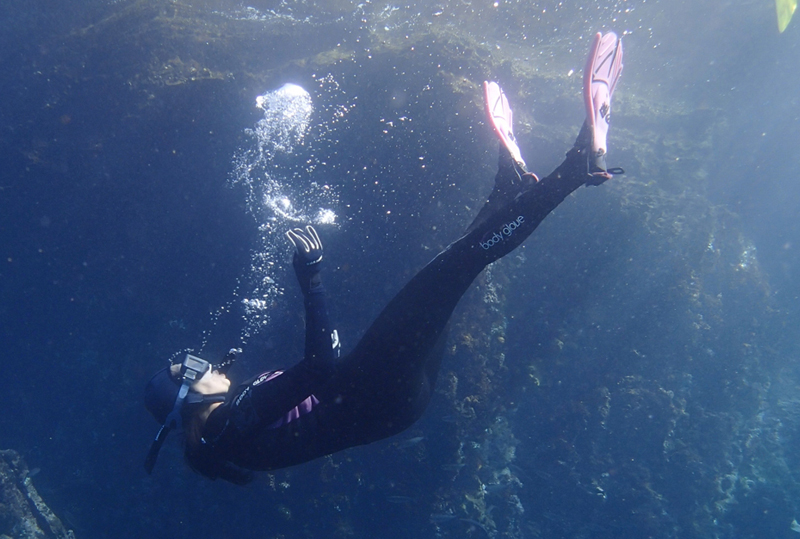
In the end snorkelling turned out to be exceptional. Beneath the brash ice the light was completely different, almost filtered and muted. We saw krill in large numbers, which really puts into perspective how the entire food chain here starts with something so small. We also had penguins moving quickly beneath us, which made it feel like you were briefly entering their world rather than observing it from above. It was a completely different way of experiencing Antarctic wildlife.

That said, while both hiking and snorkelling were incredible in their own ways, it was the camping that ultimately stood out as the most memorable experience. Being out on the ice overnight, completely immersed in that environment, with the sounds of the natural world all around, gave a very different perspective to everything else we had experienced on the voyage.

Life on board

What was it like travelling on an expedition ship?

Life aboard the Greg Mortimer had a strong sense of community. The ship is relatively small in terms of passenger numbers, and the expedition team were very approachable and engaging, which set the tone for the whole voyage.

Everyone onboard was there for the same reason to experience Antarctica actively and to be as close as possible to its wildlife and landscapes. That created a constant exchange of stories each day. People would compare what they had seen, especially wildlife encounters such as penguins, whales or seals, and share tips for the next activity. It felt very social and collaborative, almost like a travelling expedition community rather than a cruise.

The food also exceeded all expectations. There was consistently excellent quality across all three meals of the day, with a surprising level of choice given the remote environment. Whether it was breakfast before a landing, a well earned lunch between activities, or dinner after a full day spent watching wildlife and exploring ashore, the standard remained high throughout. It added a real sense of comfort and balance to what was otherwise a very active and wildlife focused expedition experience.

How important was the expedition team to the overall experience?

The expedition team aboard the Greg Mortimer were a key part of the experience. Their knowledge and enthusiasm added a lot of depth to each day, whether that was through briefings, guiding landings or simply being available to answer questions.

What stood out was how approachable they were. There was always someone willing to explain what you were seeing, whether it was wildlife behaviour, ice conditions or the wider Antarctic environment. That constant interpretation of the wildlife in front of you added real meaning to every encounter.

They also played a big role in making the most of changing conditions. Plans would shift depending on weather and ice, and the team adapted quickly to ensure we were always in the best possible place for wildlife sightings and landings. That flexibility combined with their experience made a noticeable difference to what we were able to see and do.

One moment that really captured this was during a landing at Damoy Point, where the team opened up the old British transit hut once used by researchers flying into the peninsula onto the glacier runway before continuing on to their postings.

The hut now sits as a museum, and while it was fascinating to see how people had lived and worked there in such an isolated environment, what made it truly memorable was the human connection brought to it by the guide.

A softly spoken Scot called Mac began sharing his own experiences of flying into Damoy in the 1970s. Hearing first hand stories layered over the physical space itself brought everything to life in a completely unexpected way.

Wildlife

How would you describe the overall wildlife experience in Antarctica?

Wildlife is really what defines Antarctica. It is not something you go looking for in specific moments. It is constantly present. From the moment you step onto deck there are penguins in the water, seabirds overhead, and often seals hauled out on passing ice.

It creates a sense that you are always observing something active and natural rather than simply passing through a landscape. Even the ice itself feels alive because of the wildlife moving across it.

What were the penguin encounters like?

The penguins were a constant highlight. Seeing them on land is one thing, but watching them in the water or moving beneath the surface while snorkelling was something else entirely. They are incredibly fast and purposeful in the water and it really changes your perception of them compared to how they appear on land.

There is also something very engaging about how present they are throughout the voyage. They become part of the rhythm of each day and are never far from view.

Did you have any particularly memorable marine mammal encounters?

Yes and these were some of the most powerful moments of the trip. We saw humpback whales regularly, often very close to the ship. Hearing them exhale and watching them dive with their flukes raised is something that stays with you.

On one day we also encountered a large pod of orca after a change in route due to ice conditions. They travelled with the ship for around twenty minutes, moving in a coordinated group ahead of us. It was completely unplanned and that made it even more striking.

Was there a sense of unpredictability in the wildlife encounters?

Absolutely. That unpredictability is a huge part of what makes Antarctica so special. You might set out with a plan for landings or activities, but the wildlife encounters often end up being the defining moments of the day.

Whether it was whales appearing alongside the ship or penguins suddenly surfacing beneath the water, there was always a sense that something could happen at any moment.

On the ice

Was there a moment that captured the essence of Antarctica for you?

One of the standout experiences of the trip was camping on an island in Paradise Bay. We were surrounded by mountains and experienced sunset from the shore while listening to glaciers calving into the water.

At the same time humpback whales were moving through the bay very close to us. You could hear them exhale and see them lift their flukes as they dived. It was a simple but very powerful moment, completely immersed in Antarctic wildlife with no separation between you and the environment.

I was travelling with my wife Louisa and sharing that experience made it even more memorable.

Closing thoughts

How would you sum up Antarctica?

The overall impression that stayed with me was one of remote fragility. Antarctica feels both vast and delicate at the same time.

Icebergs, snow, whales and penguins set against constantly changing landscapes. It is also a reminder that true wilderness still exists and that places like this are defined first and foremost by their wildlife and the way it shapes everything you experience there.

How could I experience my own adventure in Antarctica?

To discuss your own polar adventure, learn more about Antarctica or get in touch with our expert team.

We’re here to guide you every step of the way, and our unsurpassed first-hand knowledge of all of our adventure and wildlife regions allows us to give the very best advice and guidance.

An Antarctica Adventure with Our Wildfoot Expert

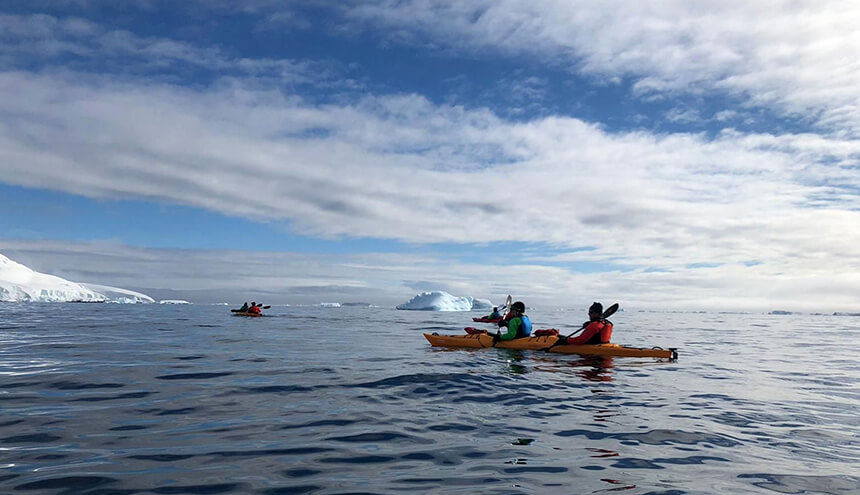
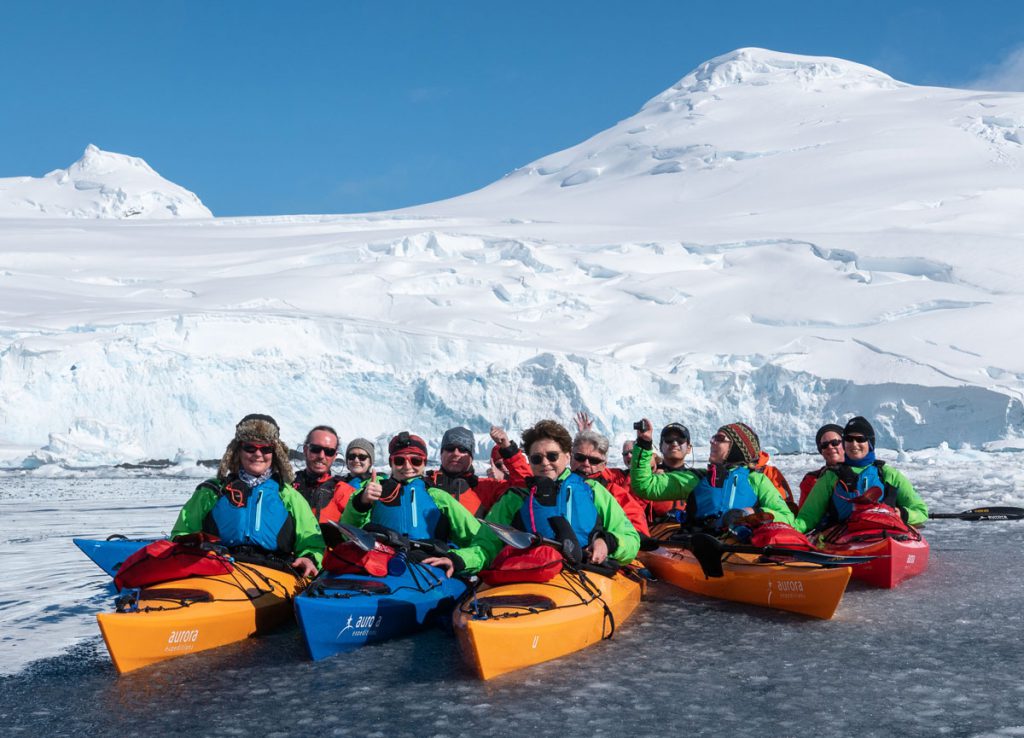
A trip of a lifetime: the spectacular Greg Mortimer and  Kayaking in Antarctica

Wildfoot Travel Advisor Debbie Grainger boarded an expedition cruise to Antarctica recently. Here, she gives us a first hand account of her Antarctica adventure – complete with kayaking.

I have just returned from the most amazing trip to the Antarctic peninsula. Friends and family asked me why I was so excited to be travelling to this far-away frozen planet. My answer? I loved the Arctic and all it has to offer, but people tell me daily that Antarctica is the most impressive, emotion-evoking continent you can only vaguely imagine. If you’ve been there, then you’ll know exactly what I mean – if you haven’t, then what are you waiting for? An Antarctica adventure is everything it promises to be and so much more. There wasn’t one day that I didn’t gasp in awe at the beauty, the wilderness and the wildlife.

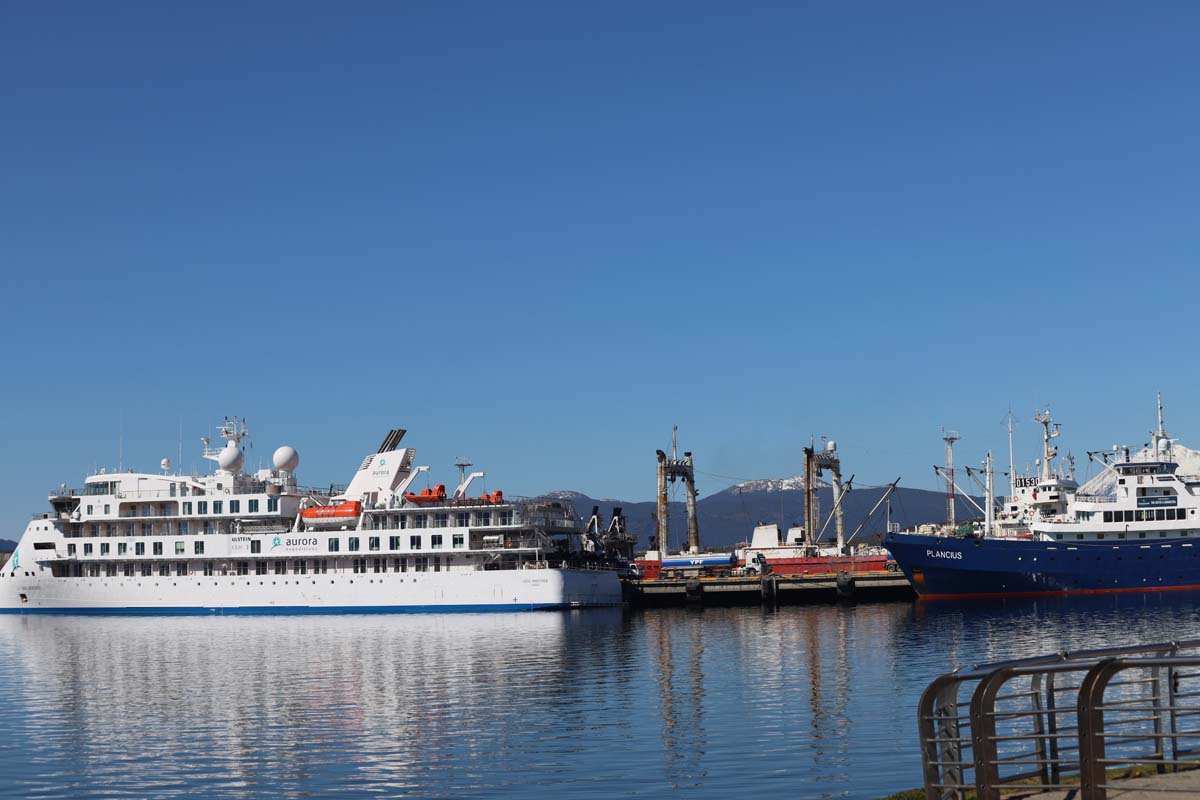
Following a night in Buenos Aires and another in Ushuaia, our adventure really began as we stepped onboard the Greg Mortimer. My daughter, who was travelling with me, suggested at 6am on the morning of embarkation, that we go for a run from our hotel down to the port, to get our first glimpse of this much-talked about ship. So, we threw our running gear on and ran the 5km to the port and there she was. All shiny and white and sparkling in the early morning sunshine, standing in her glory against the backwash of blue skies and snowy, white mountain peaks in the background.

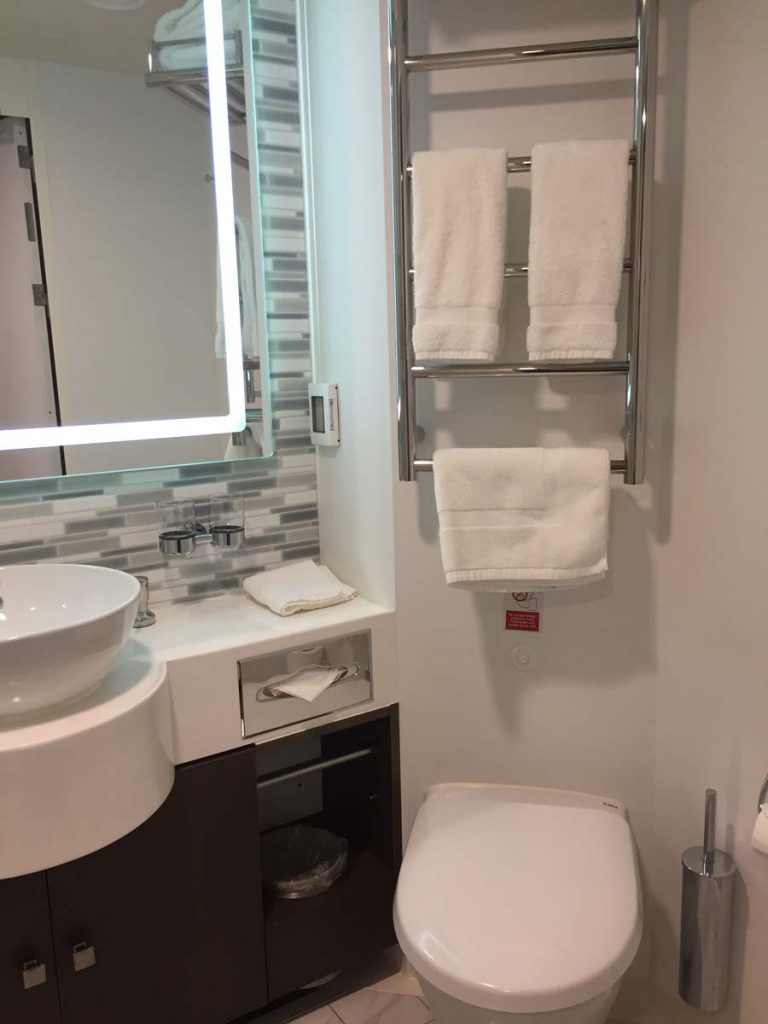
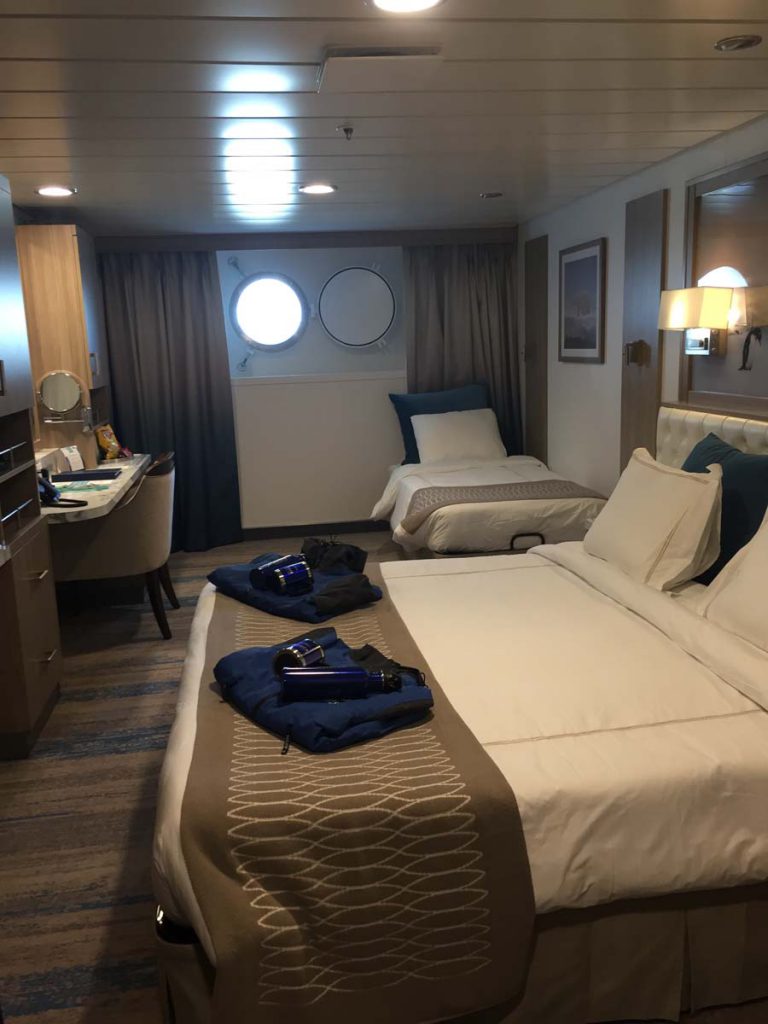
When we boarded later that day to begin our Antarctica adventure, we were greeted individually by a member of staff and shown to the cabin. Ours was a porthole cabin on Deck 3, which can take three passengers in either a large double bed and a single sofa bed, or two single beds plus the sofa bed. The cabin was tastefully decorated and had great storage options; with a triple wardrobe and bedside cabinets, storage under the beds, plus two more cupboards and four more drawers. There is also a desk area with a mirror, and a large smart TV where you can access the daily programme, view what the bridge can see or simply watch TV.

You can view details of the Greg Mortimer by clicking this link – https://www.wildfoottravel.com/destinations/antarctica/vessels/greg-mortimer.

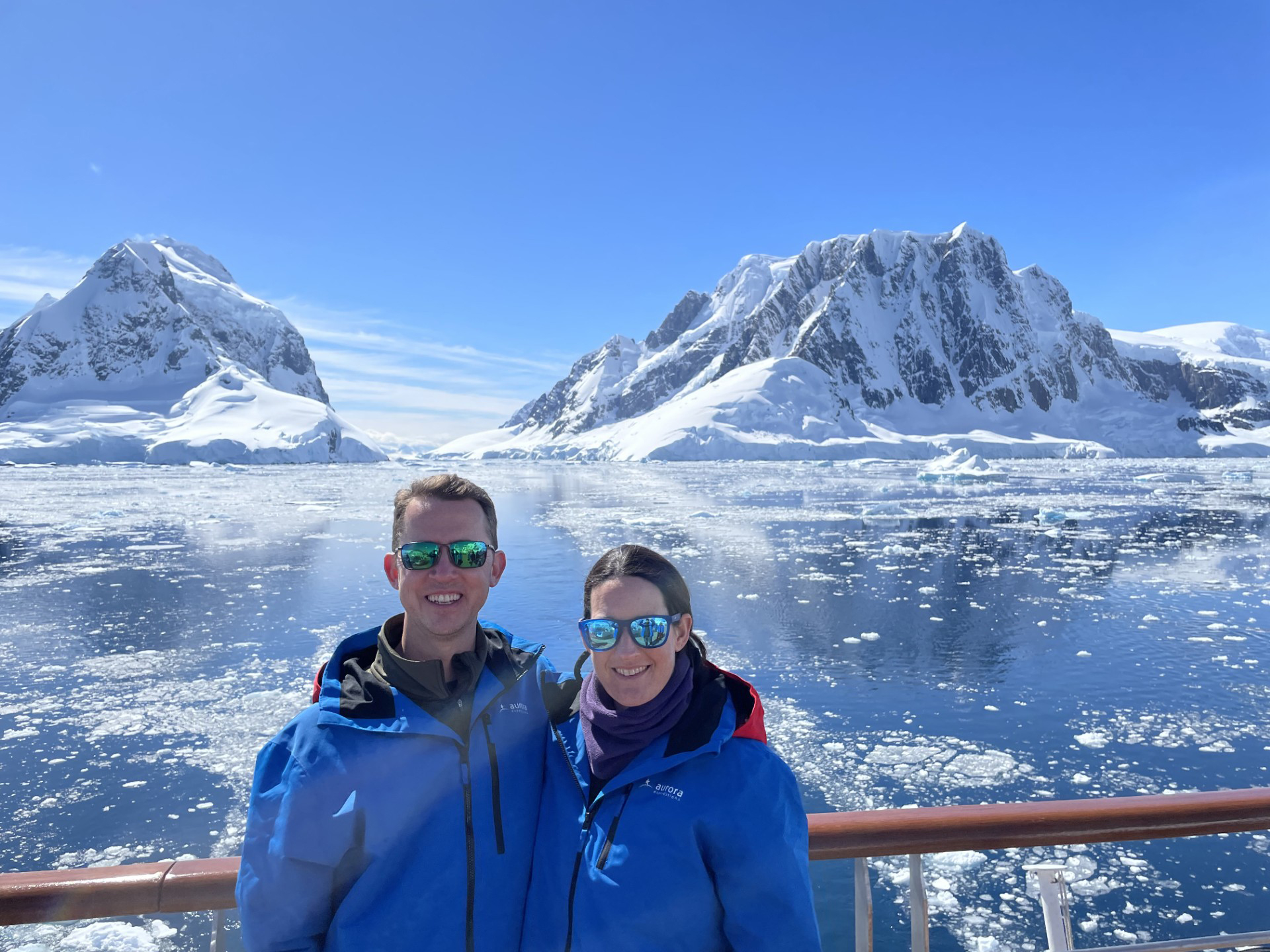
What I would like to focus on are the “green” credentials of the Greg Mortimer. Most people these days are aware of climate control and carbon emissions. Aurora, the company who permanently charters the Greg Mortimer, takes every opportunity to explain the fragile ecosystems you will encounter on an Antarctica adventure. Passengers are fully briefed on environmental guidelines, and the scientific reasons behind them, right at the start of the voyage. Their experienced guides demonstrate how to observe wildlife in ways that cause minimum impact. The environmental education continues on shore, as the more that these remote area specialists share their knowledge about the natural environments we encounter, the more rewarding an Antarctica adventure will be.

The Greg Mortimer gives off 80% less emissions into the air and sea with her Tier 3 engine using lower energy consumption. She has high fuel efficiency, reduced light pollution for minimal wildlife disruption, and lower on-board plastic use. Furthermore, the ship has state-of-the-art virtual anchoring technology, meaning it can hold its position using its own propellers and thrusters, while launching Zodiacs and kayaks without disturbing the sea floor. Virtual anchoring technology means no more anchors and chains dropping to the sea floor.

Water filtration is done on board, cleaning products are biodegradable and phosphate-free, and seafood is sustainably sourced and meets Marine Stewardship Council Fisheries standards. Elsewhere, the line’s sustainability record is good. In Svalbard, for example, participation in annual clean-ups has helped remove 20 tons of waste from beaches.

Kayaking

During our first day of crossing the Drake Passage, the kayakers were asked to stay behind after the IAATO guidelines talk that was given during the afternoon session. Al, the kayak team leader, ran through the list of outerwear that they provide, and the base layers they suggest you wear each day. I was surprised as to how many layers they suggested and was a bit worried that I hadn’t taken enough clothes with me. However, I needn’t have worried. The suggestion is that you wear two base layer tops and three base layer bottoms, plus two pairs of socks, a warm hat, a neck warmer, sunglasses and sunblock. I only wore two bottoms and I was warm enough, but I wore merino wool next to my skin on both upper and lower body. I really think this helped me to keep warm, as I didn’t suffer from the cold.

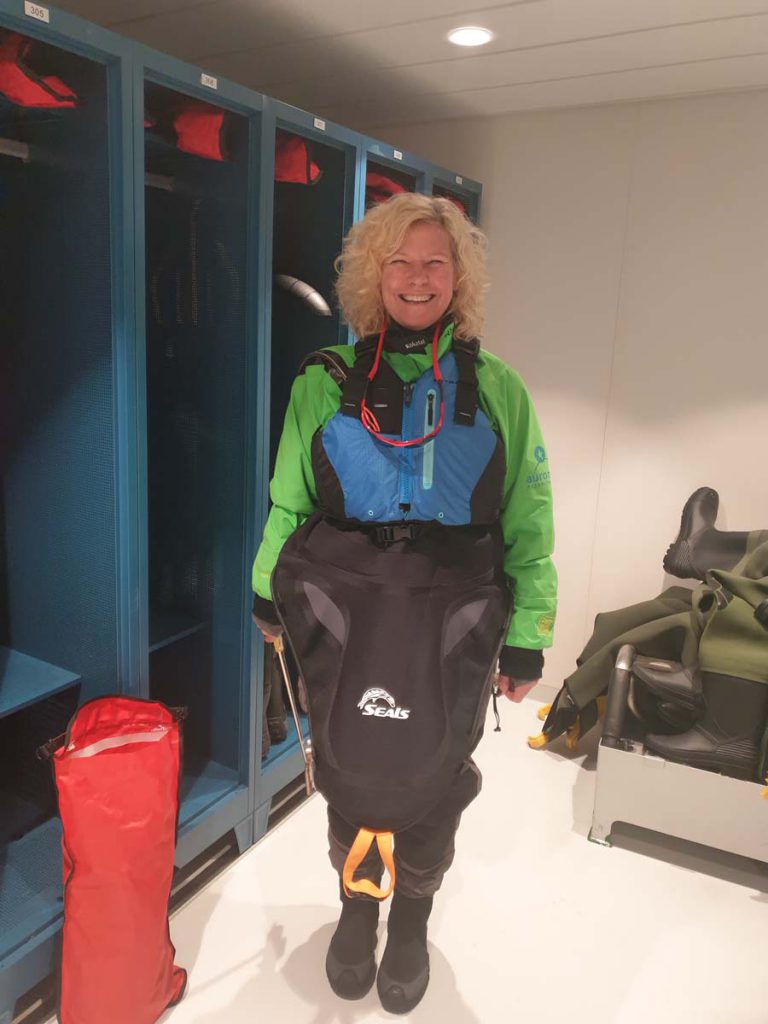
The following day we had another announcement, asking us to be in the mud room for 10am. We were kitted out with our drysuits and all the other equipment that we were going to need over the next few days – red and black suits for the men, and green and black for the ladies. I had expected to wear ski gloves whilst kayaking in Antarctica, so I had taken two pairs with me, plus some liner gloves so that I had at least one dry pair. However, the poggies that were supplied were fantastic. Even on the coldest days, these kept my hands lovely and warm. I did take a pair of gloves in my dry bag though, as when you went ashore, your hands got cold very quickly.

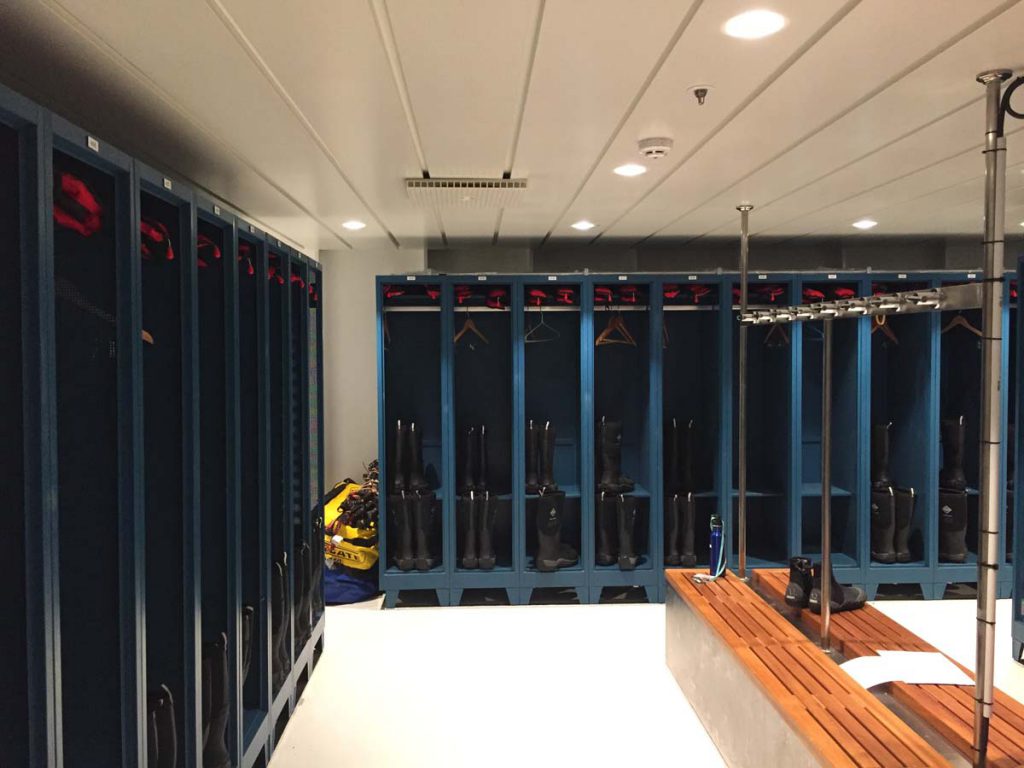
The mudroom and kayak room were to become my second home for the next six or seven days of our Antarctica adventure. They are located at the very back of the ship on Deck 3, although you access them via Deck 4 and down some steps. The mudroom has plenty of lockers where you hang your outside clothes and mud boots – you are allocated your locker by cabin number. Anyone that is going to go out on the zodiacs also uses the same mud room, so to avoid the congestion of 120 passengers all getting changed at the same time, you are called down in groups. The activities people were called first, followed by either portside or starboard for the zodiacs.

Passengers going out by zodiacs swipe their cabin card with one of the members of crew and leave the ship from one of the side openings. The opening isn’t quite level with the sea, so you have a couple of steps to descend onto a narrow, solid platform and then slide into the zodiac and off you go. It’s important to remember to wash and disinfect your boots when you get back onboard and swipe your card to say that you’re back on the ship.

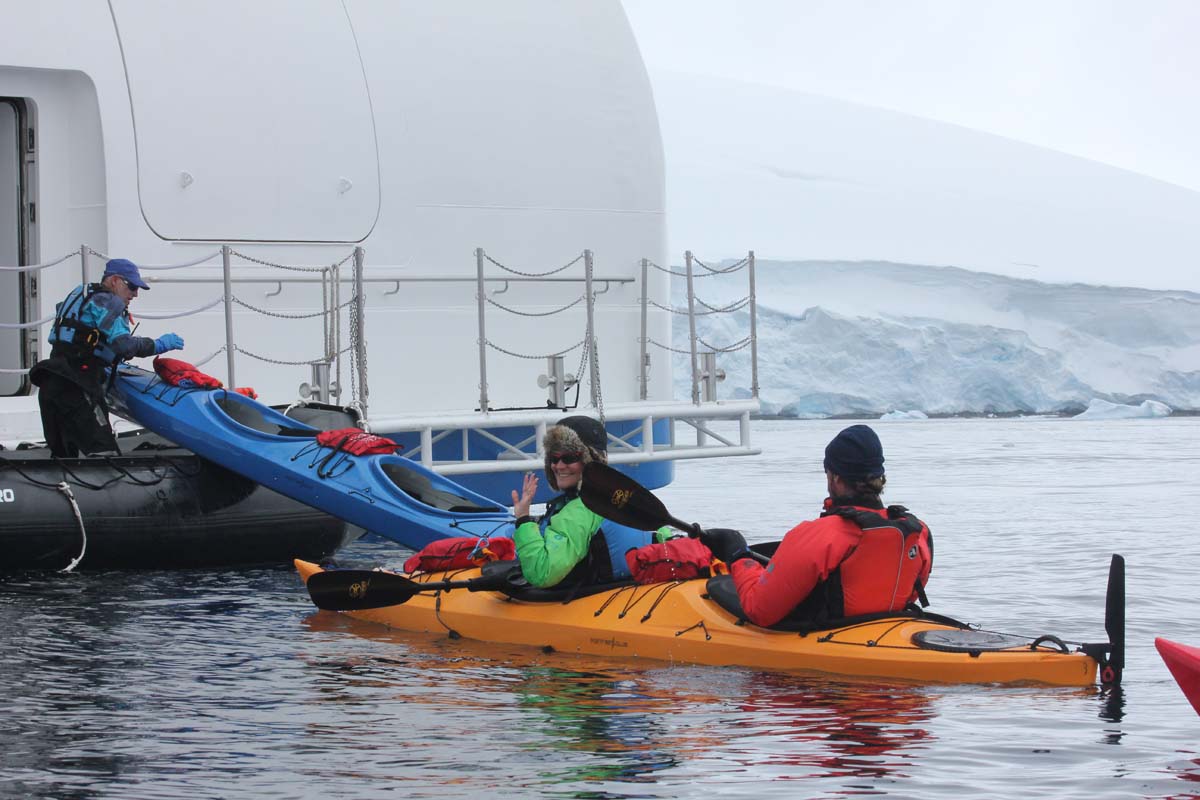
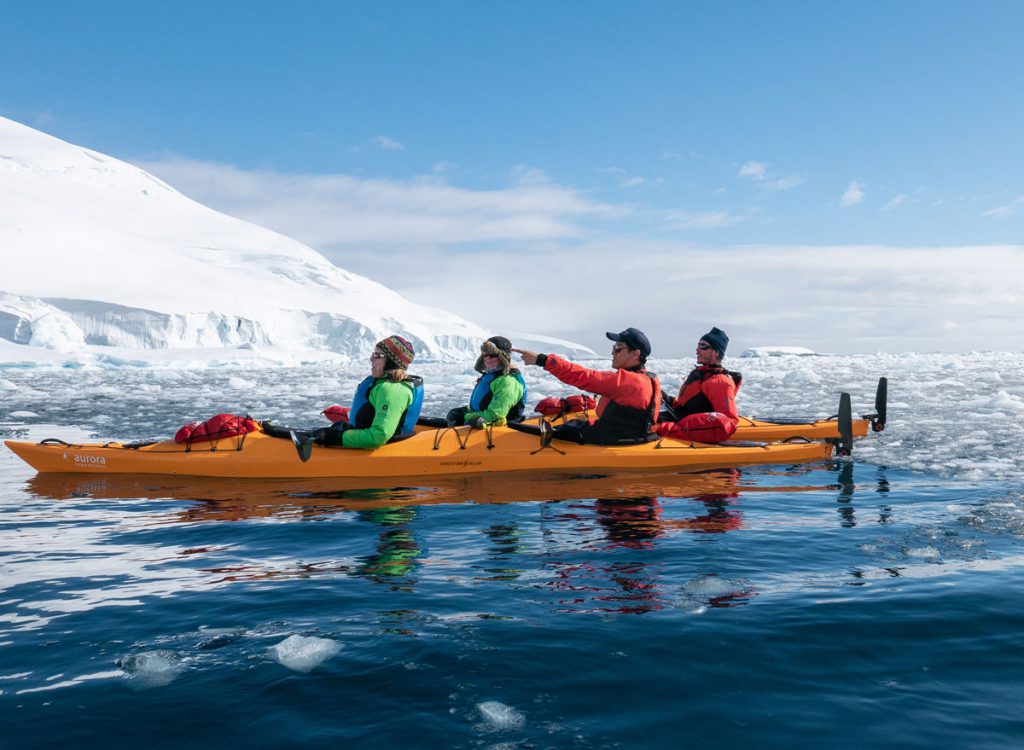
For kayakers, we exit through the very back of the ship. There is a room beyond the mudroom where all the kayaks are neatly and safely tied up and stored away until they are needed. This is where you hang your drysuit, kayak skirt and PFD (personal flotation device). Your paddles and poggies (light, neoprene mitts which attach to your paddles via Velcro) are also stored here.

Tuesday November 12th was to be our first kayaking outing. That morning we had been up on deck watching Captain Oleg navigate his ship through the MacFarlane Strait, arriving into the South Shetland Islands just before lunch. Very few of the crew had sailed through this narrow strait before, so everyone was up on deck watching the ship being expertly guided.

Once we had eaten lunch, we made our way to the mudroom to force ourselves into our drysuits. We all waited rather nervously, not really knowing what we were supposed to do next, and therefore it took some time to get us all into kayaks. We watched as each kayak was lowered into the sea from the back of the ship and, individually, we made our way out of the mudroom into the kayak room. 

We already knew who we were kayaking with and which kayaks we had been assigned to, so when it was our turn we grabbed our paddles and poggies and made our way down the steps and into the zodiac. Whilst we waited, the kayak was lowered over the zodiac and into the water. We then sat astride the seat, before lowering ourselves into the kayak. Now, I have never done this in open water before, so I was a bit apprehensive about falling into the freezing cold sea, but the guides hold the kayak steady for you and it’s really easy to slide yourself in. Getting the skirt on took a little bit of getting used to, as you are floating in the sea, but we soon got the hang of it and it just became second nature after a couple of goes.

Half Moon Island was our destination and I was so excited to see my first chinstrap penguins swimming and porpoising around us in the waters. There were many skuas and shags flying above our heads, but we needed to concentrate on our paddling as the sea was fairly choppy. After about 90 minutes of paddling, we made a landing on Half Moon Island. Pulling our kayaks out of the water, we went for a little stroll in the deep snow, whilst sipping our much appreciated hot chocolate and eating our cookies.

We had only been on land for about 10 minutes when Al got a message from the bridge advising that bad weather was coming in quickly, so we immediately headed back to our kayaks, put our gear back on, and started paddling back towards the ship. Unfortunately, the wind became super strong within just a few minutes of leaving the shore and the waves got higher, which made paddling extremely difficult. To make matters worse, my paddling partner became exhausted and stopped paddling. After a few minutes of struggling to paddle a double kayak alone, one of the support kayaks pulled alongside us and asked if we were OK. My partner requested that we return to the ship in his kayak so, much to my disappointment, we clambered into the zodiac from our kayak, pulled it onboard, and set off towards the ship.

Just 300 metres from the ship the zodiac broke down! Ben called for assistance from the bridge but nobody was immediately available. We were now in a snow blizzard and the other kayakers, although finding the paddling extremely tough, were at least making progress. Then the wind turned against us, pushing the zodiac and the kayakers further from the ship. As we drifted away from the ship, another zodiac came to our rescue and towed us back. As quickly as the wind got up, it dropped again, and the kayakers eventually made it back to the ship absolutely exhausted.

That evening, Al told us that this had been the toughest “first day” outing that he had experienced in 20 years of kayak guiding!

Luckily, that was the only day we experienced rough seas and wind on our Antarctic adventure. The following kayak excursions were perfect – flat seas, sometimes blue skies and sunshine, sometimes fresh snow.

Over the next few days, we kayaked around Hydrurga Rock, Portal Point – our first continental landing. Then Cuverville Island, Plenau, Paradise Harbour – our second continental landing. We had penguins swimming around our kayaks on every excursion that we went out on. At Portal Point we had a wonderful afternoon paddling as snow fell all around us. I was soaking up the scenery and enjoying the peace and quiet that surrounded us, when all of a sudden a leopard seal popped its head out of the water, eyed us all watching in awe, and then just slipped back under the water as quickly as he had appeared.

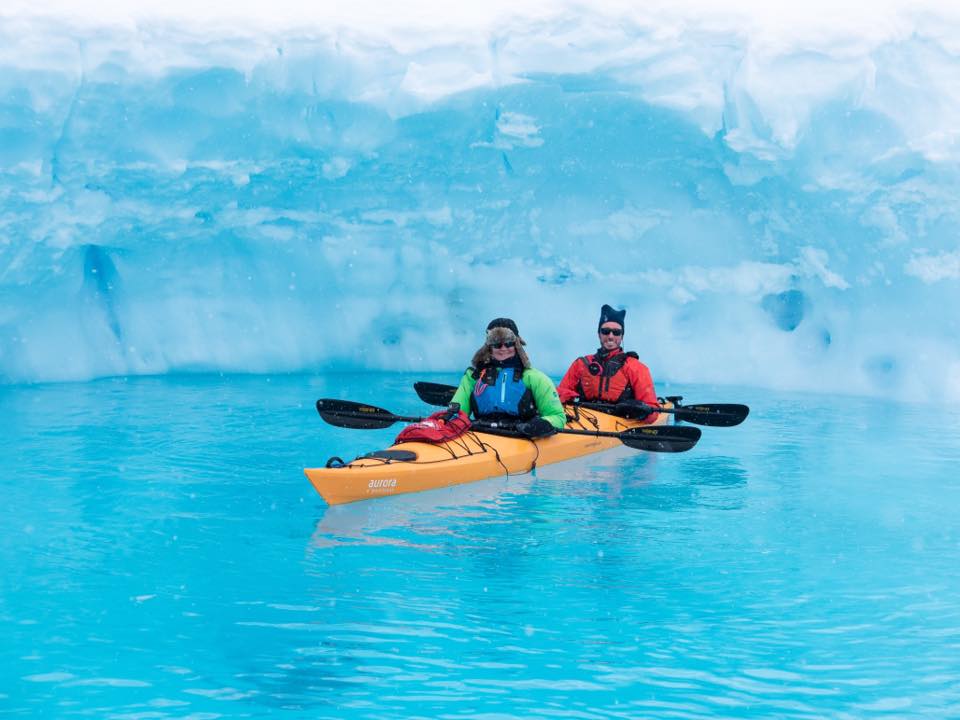
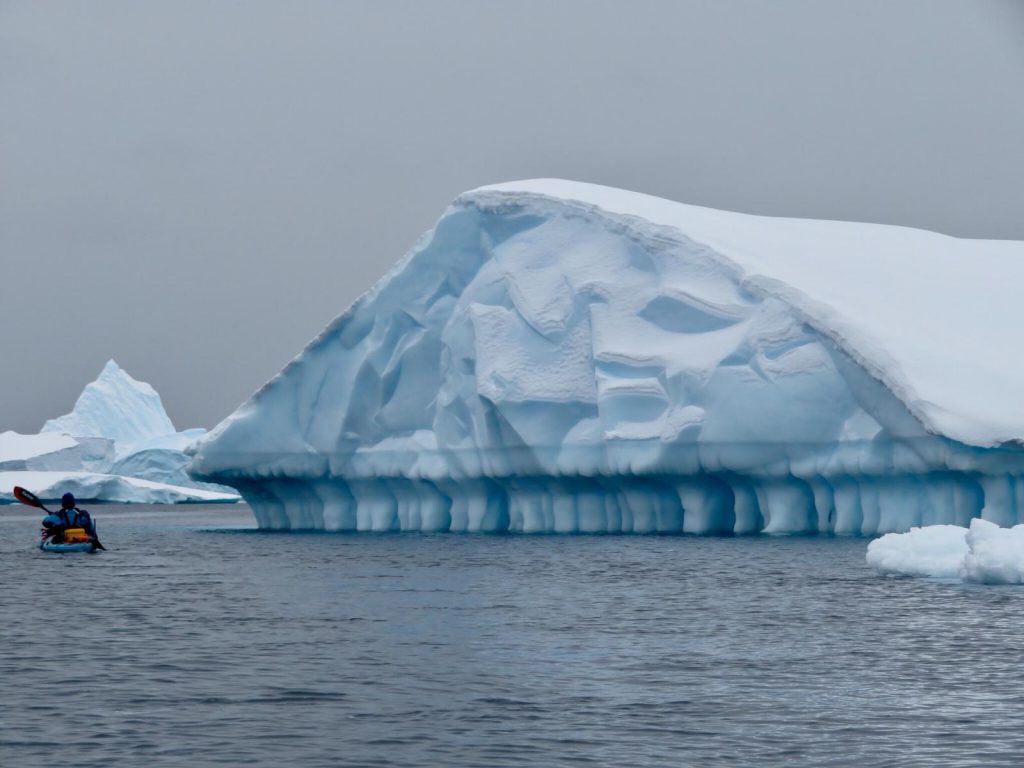
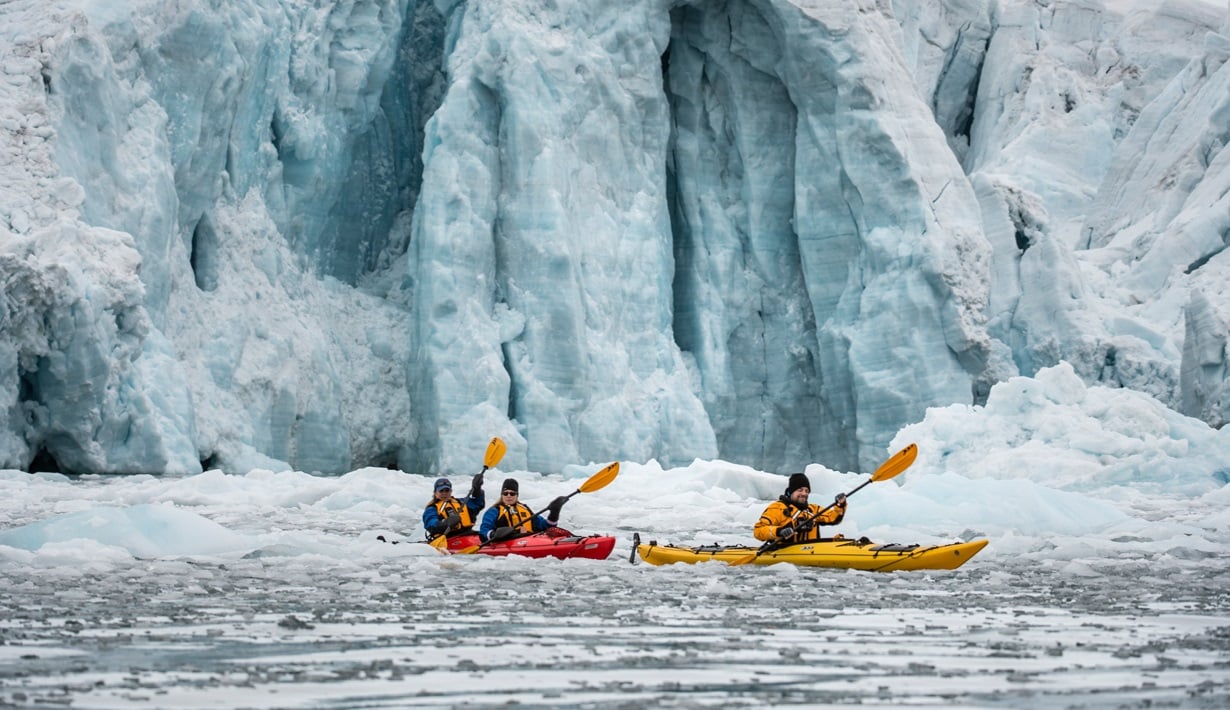
During our fantastic days of kayaking, we were privileged to witness crabeater seals and Weddel seals bathing on ice floes, Gentoo penguins dancing their courtship dances whilst floating on the ice floats, and I never got tired of watching the penguins porpoising through the water with such ease. We learned how to navigate our kayaks through the ice and around the most stunning glaciers and ice sculptures, and listened to the ice crackling and popping all around as we slid our kayaks over. In the far distance we could hear calvings taking place, although we didn’t witness any, and saw the snowshoers and skiers hiking their way up the mountains. 

This extra activity that I opted to do on my Antarctica adventure was worth every single penny, and I urge anyone with the slightest inkling of kayaking to give it a go. You really won’t be disappointed.

People are already asking me how I feel after my trip to Antarctica. Well, this place stole my heart. It shook me to the core with its beauty, its serenity and its wildlife. It turned my life upside down and made me wish that I was 30 years younger so that I could plan my career all over again and work on one of these expedition ships.

As we sailed back towards Ushuaia over the Drake Passage, I was already planning how I could get to visit this magical continent again. I really hope I will be back for another Antarctica adventure one day.

Our Favourite Holidays for Kayaking

Inspired by hearing about this incredible Antarctica adventure? Here are some of our favourite itineraries.

Shackleton Route from Montevideo (22 days)

Inspired by Shackleton’s legend, this itinerary delivers the best of this magnificent region, departing from Montevideo and sailing through the Falkland Islands, South Georgia and the Antarctic Peninsula. Encounter penguins, seals and much more in this extraordinarily biodiverse region.

Luxury Falklands, South Georgia and Antarctica (23 days)

Soak up incredible scenery and outstanding wildlife as you journey through these three iconic regions on a luxury vessel. Departing from Buenos Aires to Ushuaia, this unforgettable trip offers a new adventure at every turn. 

Spirit of Antarctica (12 days)

Come aboard a custom-built polar vessel for a thrilling adventure taking you through the pristine wilderness to encounter unique and abundant wildlife and an awe-inspiring landscape of towering icebergs. Enjoy a host of optional extra activities like Zodiac excursions and visits to historic sites.

South Georgia and Antarctic Odyssey (21 days)

An absolutely epic expedition through the region, departing from and returning to Ushuaia. You’ll sail the famous Drake Passage and follow Shacketon’s path to encounter truly jaw-dropping scenery and a proliferation of wildlife like nowhere else on the planet. 

Check out all our trips to Antarctica here

A Close Look At Beluga Whales

Encounters With Pumas

The emporer penguins of Antarctica's snow Hill Island Snow Hill Island


Travel Expert Gillian Landells checks out the polar cruise liners refit

Wildfoot’s polar travel expert Gillian Landells tells us about her favourite polar cruise destination, Snow Hill Island, Land Of The Emperor Penguins.  As a wildlife enthusiast and keen amateur photographer, she reveals why she feels drawn to this remote island wilderness. Continue reading →

Wildlife spotting on board an Antarctic Expedition Cruise Ship The Drake Passage

Natalie. Wildfoot travel's Antarctica Cruise Expert AdvisorWildfoot Travel expert Natalie Greenhalgh explains about the legendary stretch of water know as the Drake Passage and what it means to those venturing to Antarctica.

The Drake Passage…an infamous 600-mile-wide passage between South America’s Cape Horn and the South Shetland Island’s of Antarctica. For some, this crossing is all part of an exciting adventure. For others, severe sea-sickness can prevent them from fulfilling a life-long dream of visiting Antarctica. Reputed as the roughest sea-passage in the world, the Drake Passage is the stuff of legends and crossing it is often an experience that passengers on Antarctica cruises look forward to the most. For those who have experienced it they would say there’s something quite exhilarating about taking on rolling waves aboard an ice-strengthened Antarctica expedition vessel.

What makes the Drake Passage so infamously rough is the fact that this is the spot where the Atlantic, Pacific, and Southern Seas converge, creating a roaring current mix known as the “Drake Shake”. Currents at this latitude meet no resistance from any landmass making this the only unhindered flow of ocean on the planet. Luckily, nowadays expedition vessels are equipped with stabilizers to absorb much of the swaying. Thanks to the advancement in sea sickness medication, most Antarctica cruise ship passengers get by with just a queasy stomach. At times, the passage is so unpredictable that it can, also be eerily calm, referred to as the “Drake Lake”. But if all of this makes your stomach churn and you think you just can’t face this crossing, there is another option.

Antarctica XXI have made it possible to fly across the Drake Passage
Antarctica XXI have made it possible to fly across the Drake Passage, saving time and worry for anxious sailors.

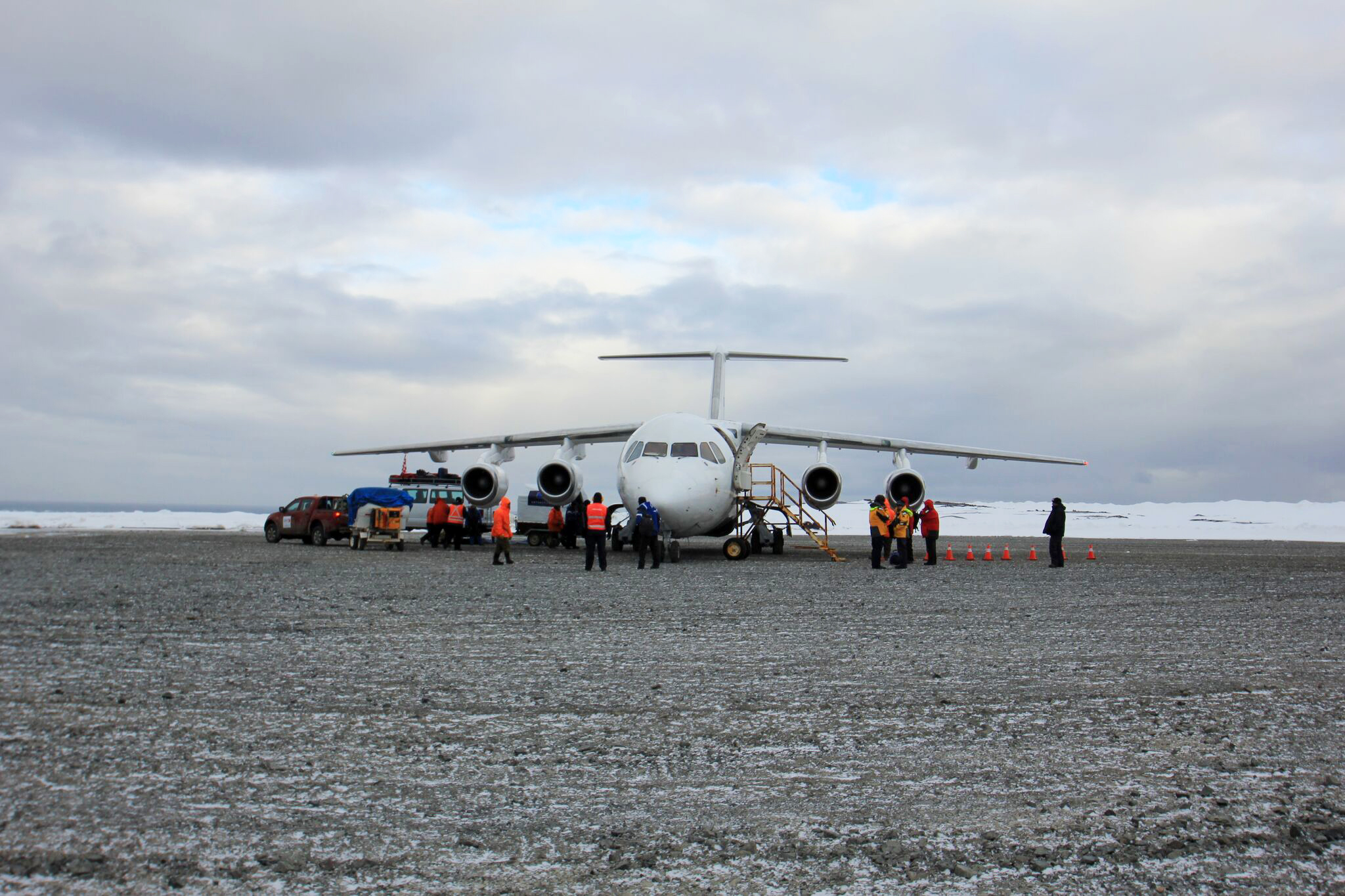
Antarctica XX1 were the first company that came along and introduced the Fly-Cruise option. Instead of enduring the 2-day passage, you can fly from Punta Arenas to King George Island in the South Shetland Islands and meet your cruise to explore Antarctica. You vastly cut your travel time down from a 2-day crossing to a 2-hour flight, giving you more time to spend exploring Chile if you wish.

Flying across the Drake Passage, landing in Antarctica
Flying across the Drake Passage, arriving in Antarctica fresh and raring to get on with the adventure.

Zodiac racing out towards the polar cruise
Zodiacs will take you out to board your polar cruise vessel. An exciting start to your Antarctic adventure!

Of course, the flight operation is weather dependent and delays may happen. However, in the 14-year history of the company, only 1 flight was delayed to the point where clients could not make it to Antarctica at all.

Simon Rowland, Wildfoot Travel’s Managing Director took a Fly the Drake expedition recently on MV Ocean Nova. Simon had this to say about his trip.

“One of the most fulfilling expeditions I’ve taken part in. Kayaking in Antarctica is a must for those seeking even more adventure and it’s an aspirational way to see the wildlife even more up close with no more than 10 other kayakers.
The fact that from your hotel in Punta Arenas to the start of this unique Polar adventure in this winter wonderland environment is just over 2 hours. Quite remarkable. If you are time sensitive or just don’t wish to contemplate the Drake Passage, this is certainly the trip for you!”

Simon Rowland kayaking on his excursion on his Antarctica XXI 'Fly The Drake' trip to Antarctica
Simon enjoying the optional kayaking excursion on his Antarctica XXI ‘Fly The Drake’ trip.

We also work closely with Quark Expeditions who offer the option of flying to the South Shetlands and also the option of taking on the Drake Passage on one of their fantastic expedition vessels: Island Sky; Ocean Diamond; Ocean Adventurer and Ocean Endeavour to name a few.

Wildlife spotting aboard a Quark Expeditions Polar Cruise Vessel.
Wildlife spotting aboard a Quark Expeditions Antarctic Cruise Vessel.

So if you fancy this intrepid adventurous crossing and can imagine yourself cheering on the waves, you’ll be rewarded with the chance to spot spectacular wildlife watching along the Drake. Ships in the passage are often good platforms for the sighting of whales, dolphins and seabirds including giant petrels, albatrosses and penguins. And what a way to be rewarded when you arrive…you’ve made it to Antarctica!

Find out about all our trips to Antarctica here.


Paulina Ramirez form Antarctica XXI stopped by our office the other day to discuss forthcoming trips. While she was with us, we asked her to tell us what was so special about ‘Flying The Drake’.  You can hear what Paulina had to say in this short video.

SaveSave

SaveSave

SaveSave

SaveSave

SaveSave

SaveSave

SaveSave

SaveSave

SaveSave

There’s nothing quite like kayaking in the Antarctic

One of the best things about WILDFOOT is the way we’re able to cater for everyone, no matter how active they want to be while exploring this part of the world. We are proud to be able to offer bespoke breaks designed to suit the unique needs of our clients. We are specialists in polar travel who are always passionate about passing on our knowledge of the Antarctic and helping our clients to make the most of their adventure.

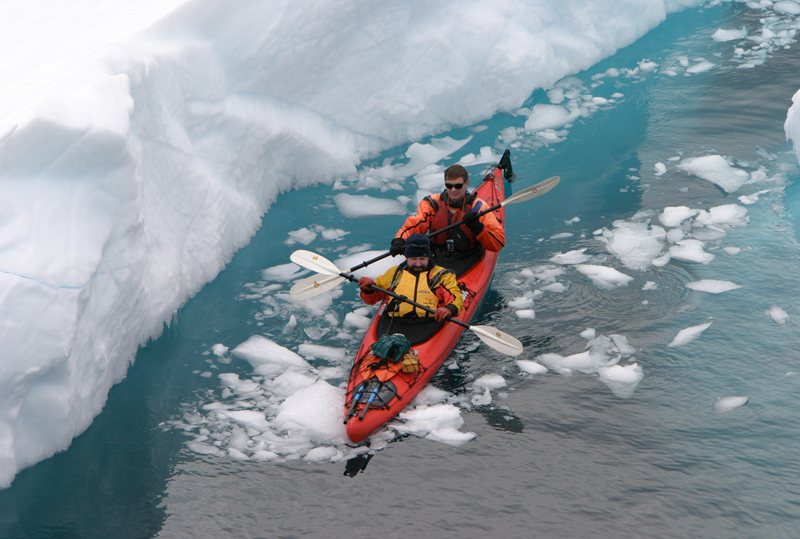
Kayaking is one of the most popular activities in the Antarctic. All of our kayaking excursions offer different views of Antarctica and provide real exhilaration. Explore Antarctica from a sea kayak and you will be able to hear and see incredible things up close. These include crashing glaciers, porpoising penguins, swarming krill and the exciting crackling of ice. These boats are virtually noiseless, which means they won’t drown out some of the most fascinating sounds the Antarctic has to offer.

Your guide will examine your comfort level to keep you safe while you are out on the water. We are here to provide you with the best Antarctica kayaking holiday possible, while giving you all of the attention you need to make your excursion a magical one. We enjoy robust, long-standing relationships with a number of cruise companies and have built up exceptional knowledge of Antarctic kayaking over the years. This knowledge allows us to deliver the excellence that you require, helping you to derive vast pleasure from the widest range of polar activities and create memories that you will never forget.

We are proud of the attention to detail that we offer and always take feedback from our clients seriously, which enables us to continue delivering outstanding Antarctica excursions. Why not talk to us today if you are interested in sea kayaking in the Antarctic? Whether you will be travelling alone or as part of a group, you can rely on us to do everything in our power to bring you the world-class adventure that you are seeking, keeping you safe in the process and helping you build on your Arctic knowledge.

Get in touch with the WILDFOOT team today to find out more about what is almost guaranteed to be the most remarkable overseas journey on which you have ever embarked.

Experience the rare thrill of Antarctic scuba diving

Not many people are lucky enough to visit the awe-inspiring continent of Antarctica, and even fewer will ever be able to dive in its incredible waters. WILDFOOT’s Antarctic adventure cruises present you with the opportunity to become one of those precious few, diving at some of the most visually spectacular sites in the world alongside an experienced team of professionals.

Antarctica is one of the last remaining unspoilt wildernesses left in the world, and diving into its waters is like stepping into a completely unimagined environment. After you zip up your dry suit and strap on your gear, you will be slipping under the water to witness scenery that only a fraction of the global population has seen before you. Our experienced dive masters are ready to guide you through this jaw-dropping landscape.

The water itself is surprisingly clear and pure, providing the perfect visibility for observing the Antarctic shelf below sea level. Icebergs rear up above the surface, but it is only through submerging yourself that you can truly understand their colossal size, as the light that penetrates the water produces a mesmerising glow from these vast walls of ice.

Aside from the deep blue clarity of the water and the overwhelming grandeur of the icebergs, many divers are attracted by the abundance of sea life. You will be able to spot several varieties of Antarctic fish, as well as star fish, jelly fish and crabs, but one of the most exciting potential encounters is with the resident seals.

Fur and leopard seals are both native to the area, and are generally inquisitive creatures that will jump into the water if they see a boat approaching. They usually approach divers at speed, only to veer off just before they come into contact with them. They also enjoy mimicking behaviour, so you might just be able to interact with them by twisting and rolling. Penguins too jump off the ice and transform themselves from comical creatures waddling and hopping about to streamlined masters of the water, darting swiftly around.

Our scuba diving adventures are only available for a limited number of people from a limited number of departures, and can be included as part of either a bespoke or tailor made package. Diving these pristine waters is an experience that you will carry with you forever, so why not contact us today for more information about incorporating a diving experience into one of our Antarctic adventure cruises?

An express trip, flying in to enjoy the riches of Antarctica's wildlife MS Ocean Nova, Deception Island, Whalers Bay

Earlier this season, Simon Rowland from Antarctica Bound travelled to Antarctica using the flight across the Drake Passage, rather than sailing across the Drake Passage to and from Ushuaia.

Earlier this season, Wildfoot Travel’s Simon Rowland travelled to Antarctica using the flight across the Drake Passage, rather than sailing across the Drake Passage to and from Ushuaia. Here is his first hand account of this unique express trip to enjoy Antarctica’s gleaming white wilderness.

Continue reading →