Choosing the Right Small Ship for Antarctic Expeditions: A Guide from the Wildfoot Experts

Few journeys require as much careful thought as an expedition to Antarctica and few travel companies have spent as long helping people get it right.

At Wildfoot Travel, three decades of guiding travellers to the world’s great wilderness destinations has taught us that Antarctica is where experience matters most.

Once you have settled on when you want to travel, the single most critical decision you will make is choosing the vessel that will take you there.

Antarctica does not do things by halves. The ship you choose isn’t just your hotel; it is your icebreaker, your mobile basecamp, and your safety net. But with a dizzying influx of new polar vessels navigating the Southern Ocean, the marketing glossy photos all start to look identical.

Our specialists have sailed on dozens of different vessels across every type of itinerary. We know that the “best” ship doesn’t exist on paper—it only exists in how perfectly it matches what you want from the ice.

Here is our honest, unfiltered guide to parsing the deck plans and technical specs to find the right small ship for your Antarctic adventure.

The Reality of the 100 vs. 200 Guest Divide

In Antarctica, the size of your ship dictates your daily experience on the ice.

Strict IAATO (International Association of Antarctica Tour Operators) regulations state that no more than 100 passengers are allowed ashore at any one time at a single landing site. Furthermore, ships with more than 500 passengers cannot land at all.

This creates a stark operational divide that impacts how much time you actually spend standing next to penguins versus looking at them through a window.

  • SHIPS UNDER 100 GUESTS
    • Straight off the ship
    • No waiting
    • Immediate response to wildlife
  • SHIPS WITH 100–200 GUESTS
    • Rotations: Group A lands while Group B cruises, then swap

1. Under 100 Guests: The True Expedition Keepers

Ships carrying fewer than 100 passengers offer a level of tactical flexibility that larger vessels simply cannot match. Because everyone can step off the ship simultaneously, there is no waiting in shifts.

The Operational Reality: If a pod of type-B killer whales is spotted bubble-net feeding, or a sudden katabatic wind forces a rapid change of plans, the expedition leader can drop the Zodiacs and clear the ship in fifteen minutes flat.

The Landing Footprint: Because you aren’t racing a clock to get the next group ashore, your shore time is often longer, slower, and more immersive.

The Vessel: This bracket now spans two quite different kinds of ship, and it’s worth knowing which one you’re booking. Many are older, converted research vessels or classic expedition hulls—louder, rolling more in heavy seas, with functional, no-frills cabins and a strong shared-mission feel among like-minded travellers. But a newer generation of purpose-built vessels has arrived at this same sub-100 capacity, trading some of that rugged simplicity for considerably more comfort.

The Magellan Explorer is a good example: built from scratch for Antarctic air-cruise operations, with the intimacy of a small ship but a level of onboard polish closer to a boutique hotel. In short, under 100 guests guarantees you operational flexibility—it no longer guarantees a spartan cabin.

2. 100 to 200 Guests: The Rotating Balance

Ships in this bracket must manage landings in “rotations.” To maximize your time, a standard operation means 100 guests are ashore exploring a colony, while the remaining guests are on a Zodiac cruise weaving through icebergs or tracking seals.

The Operational Reality: Your morning excursion is precisely choreographed. If your shore rotation is 90 minutes, it is strictly 90 minutes so the next group gets their turn. However, because you are combining a landing with a Zodiac cruise, you often get a more diverse perspective of a site in a single outing.

The Vessel: This is where the modern fleet thrives. These ships are typically much faster, more stable, and offer dedicated “mudrooms” with individual lockers for your boots and parkas, rather than making you gear up in your cabin.

3. The 120–130 Guest Nuance: How Some Ships Beat the Landing Cap

A number of ships carry somewhere around 120 to 130 guests—technically over the 100-passenger landing threshold—but are still able to run a full, unrotated landing at the magic number.

The trick is in how the itinerary is built: these ships typically carry a strong programme of marine-based activities, such as sea kayaking, snorkelling, or stand-up paddleboarding, alongside the standard Zodiac fleet.

On any given outing, 20 to 30 guests will usually be signed up for one of these marine activities rather than a straight landing. Subtract them from the total, and the ship is back down to roughly 100 guests going ashore—meaning everyone else can land together, uninterrupted, exactly as they would on a genuinely sub-100 vessel. 

It’s a detail that rarely appears on a spec sheet, but it can be the difference between a smooth, single landing and a rotated one, so it’s always worth asking your specialist how a ship’s guest count breaks down in practice.
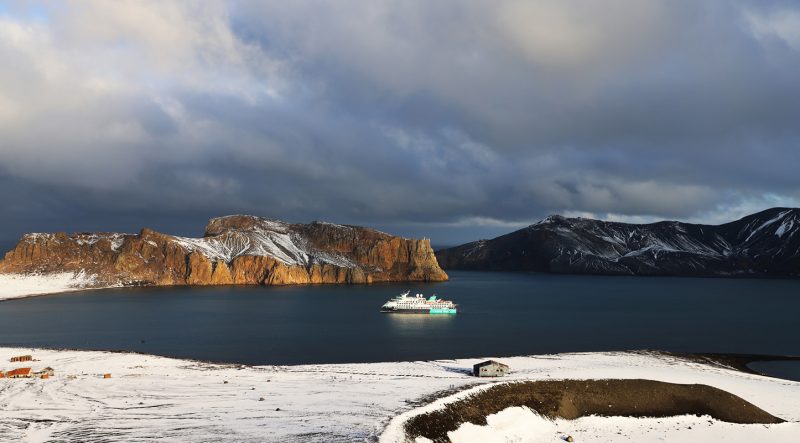
Technical Specs Unpacked: Ice Classes and Hull Dynamics

You don’t need a degree in marine engineering to book an Antarctic cruise, but understanding a few lines on a ship’s spec sheet will tell you exactly what that vessel is capable of when the ice closes in.

De-coding the Ice Class: PC6 vs. 1A

Ships are built with varying degrees of hull reinforcement, internal framing, and propeller protection to handle polar ice.

Traditional Finnish-Swedish Ice Classes (1A Super, 1A, 1B): Historically the standard, a 1A rating means the ship is built to navigate in difficult ice conditions with icebreaker assistance, though in the Antarctic summer, it means excellent independent capability in broken pack ice.

The Modern Polar Class (PC6 and PC5): The newer Polar Class rating system is more stringent, and it’s worth putting real numbers to it. Under the IACS engineering standard, a PC6 vessel is designed around roughly 1.75 metres of first-year ice, suited to summer/autumn operation. A PC5 vessel steps up to around 2 metres of medium first-year ice, which may include some older ice inclusions, and can operate for a longer season as a result. At the very top of the scale, Le Commandant Charcot holds a PC2 rating—the highest of any purpose-built polar cruise ship—giving it the structural capability to push through ice several metres thick, far beyond anything a standard expedition vessel would attempt.

Why this matters to you: If you are travelling in the early season (November) when the winter ice is still breaking up, or if your heart is set on pushing deep south into the Weddell Sea or crossing the Antarctic Circle, a PC6 or PC5 hull is a massive advantage. It allows the Captain to safely push through ice floes that would force a lower-rated 1B ship to turn around.

Bow Architecture: The X-BOW® Revolution

The Drake Passage is 800 kilometres of unpredictable hydrology where the Atlantic, Pacific, and Southern Oceans collide. To mitigate the infamous ‘Drake Shake’ modern naval architecture has introduced the inverted hull design, most famously Ulstein’s X-BOW®.

Traditional Bows: Feature a pointed bow that rises over waves and slams down into the trough. This causes pitching, spraying, and a sudden loss of forward momentum—the classic recipe for seasickness.

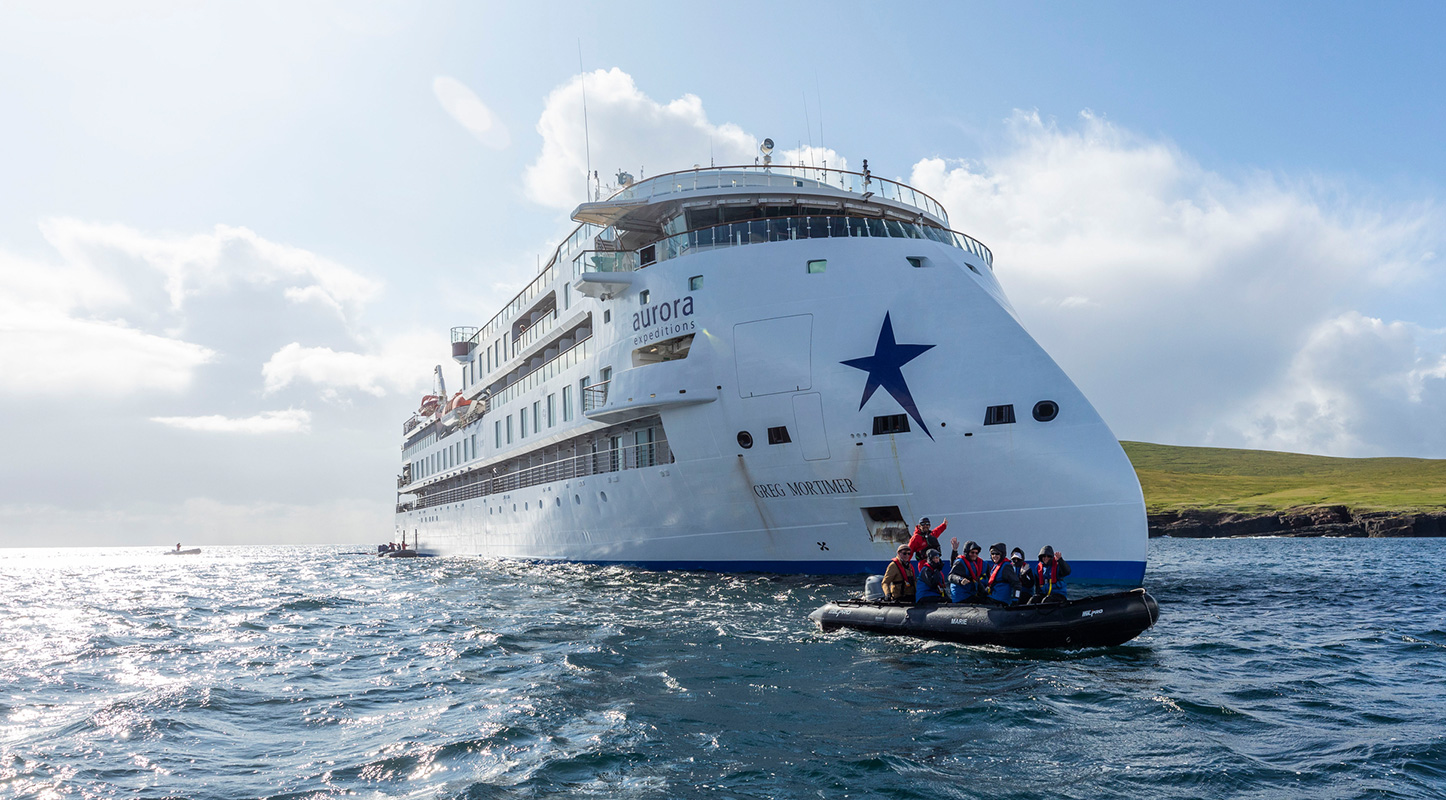
The X-BOW®: Slices cleanly through the wave crests. By distributing the buoyancy more evenly, it eliminates the hard ‘slam’ dramatically reduces pitch, and maintains a higher transit speed. The Greg Mortimer is the vessel that put this design on the map for expedition travellers, and remains one of the clearest examples of what an X-BOW® hull feels like in the Drake. If you are deeply concerned about motion sickness, prioritizing an X-BOW vessel equipped with modern zero-speed stabilizers will completely change your experience of the crossing.
Onboard Philosophies: Rugged Basecamp vs. Luxury Exploration

Small ships generally fall into one of two design philosophies. Deciding between them comes down to how you prefer to spend your time when you are not out in the elements.

The Rugged Basecamp

These ships are working platforms for polar exploration. They are designed around the logistics of getting you off the vessel safely and quickly, rather than pampering you when you return.

The Setup: Expect functional, utilitarian cabins, simple but hearty buffet-style cuisine, and a heavy focus on the lecture lounge. The bridge is almost always open, allowing you to stand next to the officers and watch the radar as they pick a line through the ice.

The Sea Spirit is a good example of this classic expedition style at work.

Step aboard a classic vessel and it really does feel like an expedition, not a holiday. You’re swapping stories with fellow guests over charts on the mess table, chatting to officers on the open bridge, losing time in a library full of old exploration books. There’s a real sense of camaraderie that builds fast, and you start to feel like you’re part of the story too, following in the footsteps of the explorers who sailed these waters before you. – James Turner

The Luxury Expedition Vessel

The latest generation of small ships has completely redefined polar travel, bringing six-star comfort to the edge of the world without sacrificing expedition grit.

The Setup: Think private walk-out balconies, multiple specialized restaurants, heated outdoor infinity pools, and extensive spa facilities. Crucially, they feature advanced engineering like dynamic positioning systems. 

This allows the ship to hover over sensitive marine environments using GPS-steered thrusters, completely eliminating the need to drop an anchor and damage the fragile seabed. Le Commandant Charcot is the standard-bearer for this category, pairing its PC2 ice class with an indoor pool, spa, and multiple restaurants.

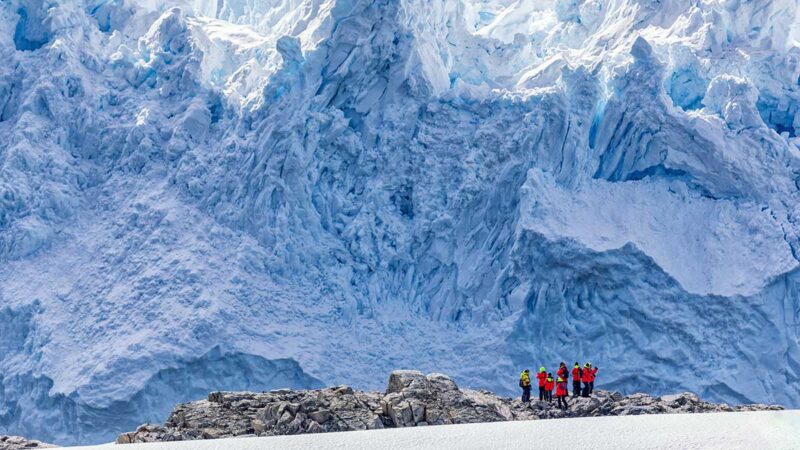
You don’t expect to feel quite so comfortable while you’re staring at a wall of ice several storeys high. But that’s the thing with these ships – you could be in the hot tub with a glass of champagne, or just stood on your balcony with a coffee, and the ice is right there, calving away in front of you. It’s a rare mix – luxury and wilderness side by side, and it creates an experience that you’ll never forget. – James Turner
The Master Checklist: Matching the Vessel to Your Ambitions

Before you sign on the dotted line, run your choice through these four critical filters:

  • Look at the Zodiac-to-Guest Ratio: A ship can have the best guides in the world, but if they only have 8 Zodiacs for 170 guests, transitions will be slow. Look for vessels that maintain a ratio of roughly one Zodiac per 10–12 passengers to ensure operations move like clockwork.
  • Check the Adventure Activity Deck Space: If you want to kayak, snowshoe, or camp on the ice, ask how the ship stores and deploys this gear. Dedicated sea kayak launch platforms or stern marinas make a massive difference in how easily you get onto the water.
  • Evaluate the Observation Space: In Antarctica, you want to be looking out, not in. Check the deck plans for the size of the forward-looking observation lounge and the amount of open, unobstructed exterior deck space at the bow. You don’t want to be fighting for a view when whales appear.

Talk to Us

The question of which small ship to choose rarely has a single right answer. It is a delicate equation balancing your physical tolerance for rough seas, your desire for off-ship autonomy, and your budget.

We have stood on the bridges, slept in the cabins, and stepped off the Zodiacs of the fleet we recommend. We know the trade-offs, the hidden perks, and the small design details that make a massive difference when you are down in the ice.

Get in touch with the Wildfoot Travel team to find the perfect vessel for your Antarctica expedition.
Best Time to Visit Antarctica: A Month-by-Month Guide from the Experts at Wildfoot Travel

At Wildfoot Travel, three decades of guiding travellers to the world’s great wilderness destinations has taught us that Antarctica is where experience matters most.

Antarctica does not do things by halves. It is the coldest, windiest, most remote continent on Earth — and for a few extraordinary months each year, it opens its doors to those prepared to make the journey. Knowing when to go is not simply a matter of picking a date that suits your diary.

The Antarctic season is short, nuanced, and full of variables. Get your timing right and you will witness one of the most spectacular wildlife spectacles on the planet.

Our specialists have travelled to Antarctica in every month of the season, aboard dozens of different vessels and across every type of itinerary. They know what each departure genuinely delivers: the wildlife spectacles that define a particular week, the ice conditions, and the moments that cannot be planned for but somehow always arrive.

What follows is their honest account of the Antarctic season, month by month — to help you find the journey that is right for you. Take a few moments to listen to Wildfoot Travel’s Dave Cheetham explain what time of year you should choose in order to make the most of time in Antarctica:

The Antarctic Season: The Basics

The Antarctic cruise season runs from late October to late March — a window of just five months that corresponds with the Southern Hemisphere’s summer.

Outside of this period, the continent is gripped by polar darkness, brutal temperatures, and sea ice that makes navigation impossible for all but the most specialist vessels. For expedition cruise travellers, this austral summer window is the only practical option.

Within those five months, however, the experience changes dramatically from week to week. Wildlife cycles, ice conditions, daylight hours, temperatures, and even pricing vary considerably depending on when you travel.

No part of the season disappoints – every month has its own character, its own rewards, and its own particular magic. The question is simply which of those experiences is right for you.

November: The Early Season — Pristine, Dramatic and Uncrowded

November marks the beginning of the Antarctic season proper, and it has a quality that is almost impossible to replicate later in the year: a profound sense of arrival.

The continent is waking up after winter, the snow is still deep and unbroken, and the landscape has an untouched, almost otherworldly perfection to it. You are, in every sense, among the first.

Sea ice is still retreating at this point, which means itineraries tend to focus on the Antarctic Peninsula and nearby island groups, but the visual drama is extraordinary. Vast tabular icebergs – some the size of city blocks – drift in waters of an impossible blue. The light at this time of year, particularly in the long evenings, is superb for photography.

Wildlife is beginning to stir. Gentoo and chinstrap penguins return to their colonies in November and by mid-month courtship displays are well underway – pebble-stealing, braying calls, and the frantic activity of nest-building.

Eggs begin to appear towards the end of the month. Humpback whales are also beginning to arrive, having completed their long migration from tropical breeding grounds in search of the rich krill blooms of the Southern Ocean.

Practically speaking, November departures tend to be less expensive than peak season. For travellers who value solitude and drama over the bustle of high summer, early season is often the revelation of their lives.

Best for:
• Pristine landscapes and photography
• Uncrowded landings
• Early penguin courtship and nest-building
• Opportunities for camping & snowshoeing
• Temperatures: typically -5°C to 0°C on the Peninsula

I wasn’t prepared for the astounding beauty of the sea ice. As far as the eye can see, it just twinkles like glitter – the whole surface catching the light in a way that photographs simply don’t do justice to. Standing on the bridge watching the ship pick its way through it is one of those experiences you find yourself struggling to describe afterwards. And then there are the gentoos. I’d read about the pebble-stealing but nothing quite prepares you for watching it play out in front of you – the bare-faced cheek of it! Pristine Antarctica is everything I had dreamed of, and so much more.

James Turner, Commercial Director, Wildfoot Travel

December: The Season in Full Swing

December is when Antarctica truly ignites. The sun barely sets — by mid-December you have more than 20 hours of daylight — and the wildlife activity across the Peninsula reaches a peak of intensity and energy that is unlike anything most travellers have ever witnessed.

Penguin colonies are at their most frenetic. Eggs begin hatching from early December, and by mid-month fluffy grey chicks are well in evidence. Parent penguins shuttle ceaselessly between the colony and the sea, their return greeted by a cacophony of calling chicks desperate to be fed.

The sheer volume of life – thousands upon thousands of birds, the noise, the smell, the movement – is genuinely overwhelming in the best possible way.

Humpback whale numbers build through December as more individuals arrive to take advantage of the krill blooms, and encounters become increasingly frequent and reliable.

Temperatures on the Peninsula typically range from 0°C to 5°C. Christmas and New Year sailings book up fast and command a premium – if you have your heart set on a festive departure, reserving your place well in advance, often a year or more ahead, is essential.

Best for:
• Hatching penguin chicks and the first fluffy juveniles appearing in the colonies
• More than 20 hours of daylight around the solstice
• Humpback whale encounters becoming increasingly frequent through the month
• A life-changing experience over the festive season
• Temperatures: 0°C to 5°C on the Peninsula

I spent Christmas Eve camping under the Antarctic sky and woke on Christmas morning to Father Christmas arriving by Zodiac to bring us back to the ship. Then Christmas Day itself amongst thousands of gentoo penguins – the braying chorus, the chaos, the sheer wildness of it all. I have done nothing in my life that comes close to it.

— Simon Rowland, Managing Director, Wildfoot Travel

January: Midsummer in the Southern Ocean

January is often described as the heart of the Antarctic summer – and it’s easy to understand why. The season is in full flow, the wildlife calendar is at its most eventful, and retreating sea ice opens up itineraries that simply aren’t possible earlier in the season.

Crossings of the Antarctic Circle, in particular, become more regularly achievable in January, offering access to landscapes and wildlife that feel even more remote and seldom-seen.

Penguin chicks are growing rapidly and have formed crèches – huddles of juvenile birds that cluster together for warmth while their parents are at sea feeding. Watching the adults return and navigate through a colony of thousands to locate their own chick by call alone is one of the great wildlife spectacles on Earth.

Whale watching is outstanding. Humpbacks are feeding voraciously in the krill-rich waters, and encounters at close range – breaching, lunge-feeding, spy-hopping alongside the Zodiac – are genuinely common. Temperatures on the Peninsula typically range from 2°C to 5°C.

Best for:
• Penguin crèches and rapidly growing chicks
• Antarctic Circle crossings as sea ice retreats
• Humpback whale encounters at their most frequent
• Travellers who want the wildlife calendar at its most eventful
• Typical Peninsula temperatures 2°C to 5°C

The colonies were alive with chicks – just this dazzling, chaotic mass of grey fluff as far as you could see. Then, on the same day, a leopard seal and orca. I genuinely didn’t know where to look.

— Sylvia Buckley, Administration Manager, Wildfoot Travel

February: Whales, Fledglings and the Deepest South

February is a month of transitions. The season is maturing, the chicks are fledging, and the whales are firmly established in the Southern Ocean’s feeding grounds.

By February, gentoo and chinstrap chicks have grown their waterproof adult plumage and are beginning to take their first tentative steps towards the sea. Watching a penguin chick experience the ocean for the first time – hesitant at the water’s edge before suddenly diving in – is the kind of moment that stays with you for life.

With sea ice at its annual minimum, ships can push further south than at any other point in the season, opening up routes and landscapes that are simply inaccessible earlier in the year.

Humpbacks, fin whales and minkes are feeding on dense krill concentrations, and whale encounters are a near-daily occurrence.

Best for:
• Whale enthusiasts – humpbacks, fin whales and minkes at their most prolific
• Witnessing penguin chicks taking to the sea for the first time
• The deepest southern itineraries as sea ice reaches its annual minimum
• Typical Peninsula temperatures 2°C to 5°C

We were barely ten minutes into the Zodiac excursion when the guide cut the outboard motor. Beneath us, a leopard seal – enormous and completely unbothered by our presence – swept under the boat, circled us, then rose slowly to the surface to get a better look. This happened repeatedly for the best part of fifteen minutes, in complete silence. Then things took an unexpected turn. It turns out (in this instance at least) a leopard seal can develop a very particular kind of attachment to an inflatable Zodiac. We were all perfectly calm, of course. The leopard seal, on the other hand, was absolutely convinced Barry White had just pulled up.

James Turner, Commercial Director, Wildfoot Travel

March: The End of the Season — Quiet, Raw and Unexpectedly Beautiful

March marks the end of the Antarctic summer, and the continent begins its slow retreat into winter. Departures become rare after mid-March, but for those who do travel in early March, the experience has a quality all of its own.

The colonies are quieter than the frenetic peak of midsummer, but by no means empty – gentoo penguins remain well into March, and there is something deeply satisfying about encountering them without the intensity of high season. The landscape is changing too. A dusting of fresh snow returning to the high ground, the light taking on a lower, more golden quality as the sun dips closer to the horizon – Antarctica in March has an atmosphere that is harder to put into words than any other part of the season.

March is also one of the finest months of the season for whale watching. Humpbacks, fin whales and minkes are still feeding voraciously in krill-rich waters, and with fewer vessels operating, encounters can feel extraordinarily intimate.

The returning darkness brings longer, more dramatic evenings that lend the landscape a brooding, cinematic quality. For a handful of very specialist departures, those darker skies also create the conditions for searching for the Aurora Australis – one of the rarest and most sought-after experiences in expedition travel.

March is Antarctica stripped back and elemental. For the right traveller, it is completely unforgettable.

Best for:
• Photographers – the low golden light of late summer is arguably the finest of the season
• Continued good whale watching
• Travellers who value atmosphere, solitude and a more contemplative experience
• Watching unfortunate penguins run the leopard seal gauntlet
• Those seeking one of the most elemental, raw versions of Antarctica there is

We paddled out towards what we thought were two rocks in the bay at Neko Harbour. When we stopped and let the kayaks drift, we realised our mistake. They weren’t rocks. Two humpback whales, logging – sleeping at the surface – barely metres away. Close enough to hear them breathe in. Close enough to feel the warm, slightly questionable mist as they breathed out. Watching them hover in the stillness, rising and falling with their own buoyancy, in absolute silence – twenty minutes that I will carry with me for the rest of my life.

James Turner, Commercial Director, Wildfoot Travel

Choosing by What You Want to See

If picking a month feels overwhelming, let your wildlife priorities guide you:

• Penguin courtship and nest-building: November
• Hatching eggs and first chicks: Late December
• Fluffy chicks and feeding frenzy: January
• Fledging penguins taking to the sea: February
• Whale watching (peak): February and March
• Leopard seals: February to March (present throughout the season)
• Pristine icescape photography: late October to early December
• Antarctic Circle crossings: Late January to February

A Word on the Drake Passage

No guide to visiting Antarctica would be complete without addressing the Drake Passage — the 800-kilometre stretch of open water between the tip of South America and the Antarctic Peninsula. It is one of the most storied stretches of ocean on Earth, and its reputation is well-earned.

The Southern Ocean is simply unpredictable, shaped by the convergence of the Atlantic, Pacific and Indian Oceans, and no month consistently delivers calm conditions on the Drake.

The honest answer is that no month consistently delivers calm conditions on the Drake. The Southern Ocean is simply unpredictable, shaped by the convergence of the Atlantic, Pacific and Indian Oceans, and the famous “Drake Lake” – glassy, almost surreal calm – and the “Drake Shake” – powerful swells and rolling seas – can occur at any time of year. Modern expedition ships are built for these conditions, and the crossing itself – two days each way – is part of the journey.

Most travellers, it has to be said, come to relish it. For those who prefer a calmer start to their expedition, fly-cruise options departing from Punta Arenas to King George Island offer a direct route to the Peninsula, bypassing the Drake entirely.

Practical Notes

Booking lead time: Popular departures — particularly Christmas, New Year, and peak January sailings — can sell out 12 to 18 months in advance. We always recommend getting in touch with us as early as possible, even if your travel is still some way off.

Itinerary length: Most Antarctic Peninsula cruises run from 10 to 14 days, with the Drake Passage accounting for roughly four of those days in transit. Fly-cruise options, which bypass the Drake entirely, are available and can add more time in the Peninsula itself.

What to combine: Many travellers choose to include the Falkland Islands and South Georgia in their itinerary — both extraordinary destinations in their own right. The timing considerations for South Georgia are worth discussing with our team when planning your itinerary.

Talk to Us

The question of when to visit Antarctica rarely has a single right answer — it depends on the wildlife you most want to see, the type of experience you are seeking, the itinerary you have in mind, and your budget. It is exactly the kind of decision our specialists exist to help you with.

We have travelled to Antarctica in every month of the season, across dozens of different vessels and itineraries. We know what each departure genuinely delivers — the highs, the trade-offs, and the moments that will stay with you for a lifetime.

Get in touch with the Wildfoot Travel team to start planning your Antarctica expedition.

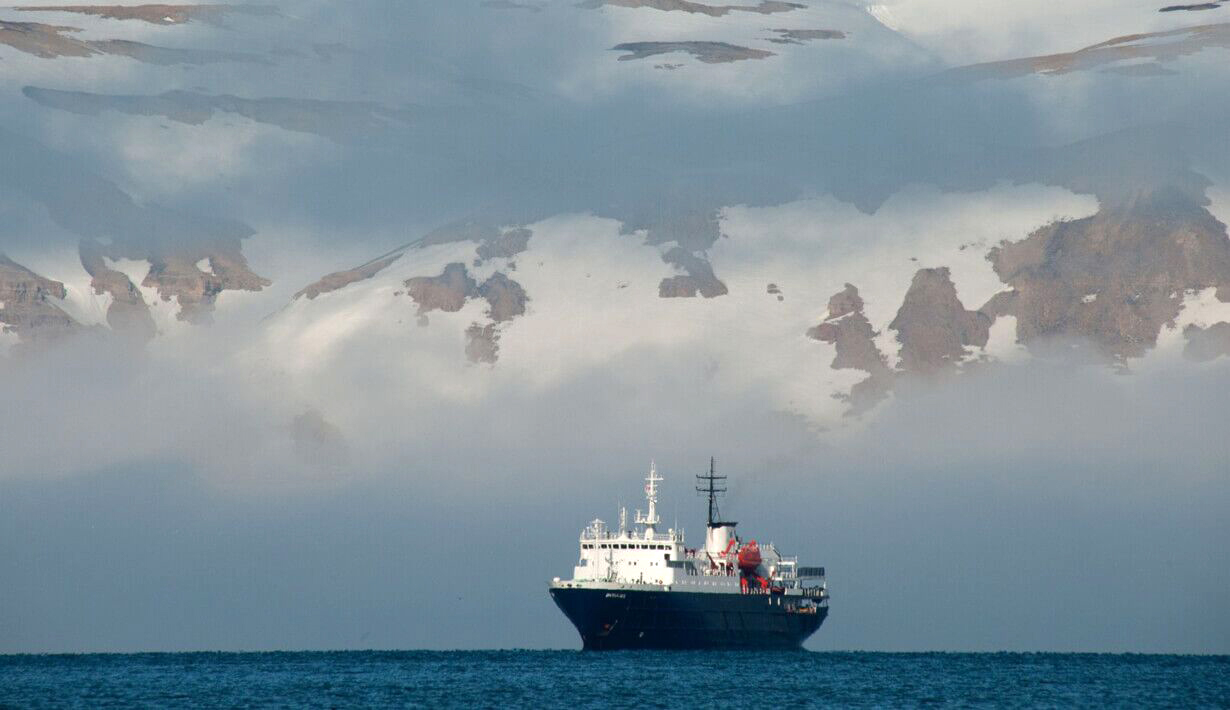
MV Ortelius in the Falklands 9 Night Cruise on the Ortelius round the Falkland Islands


Brenda Hotham set off on a cruise round the Falklands recently aboard the MV Ortelius. Here, Brenda reviews the trip in her own words.

Great food, well appointed adequately sized cabin, hot drinks always available (including delicious hot chocolate!), skilful captain and crew, open bridge policy, a delightful cabin steward, Michael, who arranged the towels into animals-a bear, an elephant, a monkey and a penguin, the places visited and lectures form the main memories of this cruise.

Places visited

Carcass Island

We saw and were able to photograph the endemic Cobb’s Wren, a Southern Caracara and a lone Magellanic Penguin amongst other birds. We were also treated to a feast of cakes cooked by the owner Rob Mcgill’s Chilean team.

Steeple Jason

in the extreme North-West of the Falklands.I discovered ‘Birdland’ in Bourton-on-the Water in the 1970s and found that Len Hill, the Curator, had purchased Steeple Jason and Grand Jason in 1970 for £5500. On his death the Islands were eventually taken over by the ‘Wildlife Conservation Society of New York City’.

We walked by hundreds of Gentoo Penguins, some of whom were carrying stones for nest building, others were just going to and from the sea. We also experienced seeing and hearing over 113,000 Black-browed Albatrosses. What a sight with most on nests and some paired off enjoying each others company. There were also Rockhopper Penguins amongst the Albatrosses. We were able to get close to a couple of Striated Caracaras.

West Point Island

This was the opportunity to sit and closely observe Black-browed Albatrosses with Rockhopper Penguins amongst them. Some of the Rockhoppers had an egg. I was sitting by a tussock watching an albatross on a nest, it flew off and landed on the other side of the tussock and looked at me through the grass giving me an interesting photo.

Saunders Island

A Penguin Paradise because we saw all 5 species of Falklands Penguins- Gentoo, King, Magellanic, Rockhopper and one Macaroni which was probably the most photographed bird of the trip! Some of the Kings looked scruffy because they were moulting.

Stanley

We had longer in Stanley because we could not land at Volunteer Point. Absolutely fantastic for shopping, visiting the Cathedral and the Museum. The Museum has the history of the 1982 War, Dioramas of the Wildlife and information about Charles Darwin and Isambard Kingdom Brunel’s Great Britain. Outside the museum we were greeted by a friendly Dolphin Gull.

New Island

Yet more Black-browed Albatrosses and Rockhopper Penguins but also some beautiful Imperial Shags. Other birds included a Ruddy-headed Goose and some Black-chinned Siskins. There was also a rabbit!

Before the cruise I stayed at El Pedral, Argentina, mainly for Magellanic Penguins and Elephant Seals. The birding life was also great with the most notable being the Long-tailed Meadowlark and the Rufous-collared Sparrow.

After the cruise I stayed at the Holiday Inn in Buenos Aires. Again there were some good birds to see including a Fork-tailed Flycatcher and a Green-barred Woodpecker.

Here are a few of Brenda’s photos from the trip.

[Best_Wordpress_Gallery id=”38″ gal_title=”Falklands Aboard The Ortelius”]


Embark on the Falklands tour of your dreams

The Falkland Islands offer some of the most fascinating examples of wildlife and nature that the world has to offer, as well as a considerable number of glorious white beaches. They are home to a wide range of penguins and birds, in addition to more than two-thirds of all of the black-browed albatross in the world.

The islands attract people from every continent and appeal to casual fans of wildlife, as well as those with a passionate interest in rare animals such as the Falklands flightless steamer duck. The best places to spot wildlife in the Falklands rarely become over-populated with humans, which gives visitors the chance to see some of the most fascinating species on the globe up close. WILDFOOT creates first-class Falkland Island tours.

Volunteer Point is one of the best places to spot penguins, especially the hundreds of king penguins, whilst embarking on boat trips to West Point Island to see the nesting black-browed albatrosses and rockhopper penguins is a popular activity. Discerning food lovers are catered for wonderfully by the fresh fish, meat and vegetables that the islands are famous for. The Falklands are also the home of the world’s most southerly cathedral.

Here at WILDFOOT, we can help if you are interested in embarking on the Falklands trip of a lifetime. We can assist you whether you would prefer to stay for 7, 10, 14 or 18 nights. Opt for our 14 day tour and you will be able to stay at locations as iconic as Carcass, Pebble and Sea Lion Islands and Stanley, to name but a few. The Falklands Islands are synonymous with epic scenery, clear blue skies, glorious stretches of white sand and some of the most remarkable wildlife that you will find in any country.

You can contact us at any time to take advantage of our vast expertise and find out more about what your tour will be like. If you have ever dreamed of spending time among some of the most delightful and intriguing species in the world, we can make this a reality. Your fare will include various flights and accommodation. We have unrivalled first-hand knowledge of the Falklands archipelago and can’t wait to pass on our expertise to you, so why not make an enquiry today?

Embark on a tailor made adventure to the Falklands

The Falklands Islands are certainly well-known for the territorial disputes that have surrounded it down the ages, and indeed, there are few parts of the world that are so steeped in compelling history. However, it is only right that the Falklands are also celebrated for their astonishing geography and biodiversity, with our own tailored packages here at Wildfoot Travel bringing you closer to it all.
Continue reading →