The Arctic is a place that captures the imagination of many fortunate travellers year in year out. People choose to go to the Arctic for the breathtaking natural beauty, stunning natural wildlife and the splendid isolation the region can offer. However, there are a group of people who go to the Arctic for an entirely different reason, the study of microorganisms.
When you picture the Arctic, chances are you imagine a cold, empty ice-covered wasteland stretching as far as the eye can see. However, this couldn’t be farther from the truth. For many holidaymakers, the Arctic is the final frontier, boasting everything from dramatic landscapes, incredible wildlife, and the natural wonder of the Aurora Borealis- the famous northern lights.
Yesterday evening we ended with a landing and walk in a really visited location Beach called Faksevagen in the bay of Llomfjoreen. 100’s of year ago there was a glacier in this valley but now only remnants are left as evidence. Whether it’s the currents of the gulf steam or from Siberia there’s an overwhelming mass of plastic waste which is washed up of the shores of this archipelago. Lengths of fishing nets seem to be the worse culprit and it’s the end to many a marine animal when it accidentally get tangled up and experiences an agonizing and slow death. But also amongst the litter are bottles, commercial fishing floats, ships ropes, fishing lines, timber of various sizes, crates, polathyne bags. Most expedition vessels have a policy of collecting as much as possible and between a hundred passengers in only 20 minutes we filled two large half ton sand bags – just scraping the surface I’m afraid as we left tons more which we could not manage in the time we were there. The Norwegian government do clear patches but it’s a never ending task with new debris on each tide. We witnessed two lots of dear antlers fast in a fishing net tangled ball where three animals in each had been caught up and died together unable to release themselves.
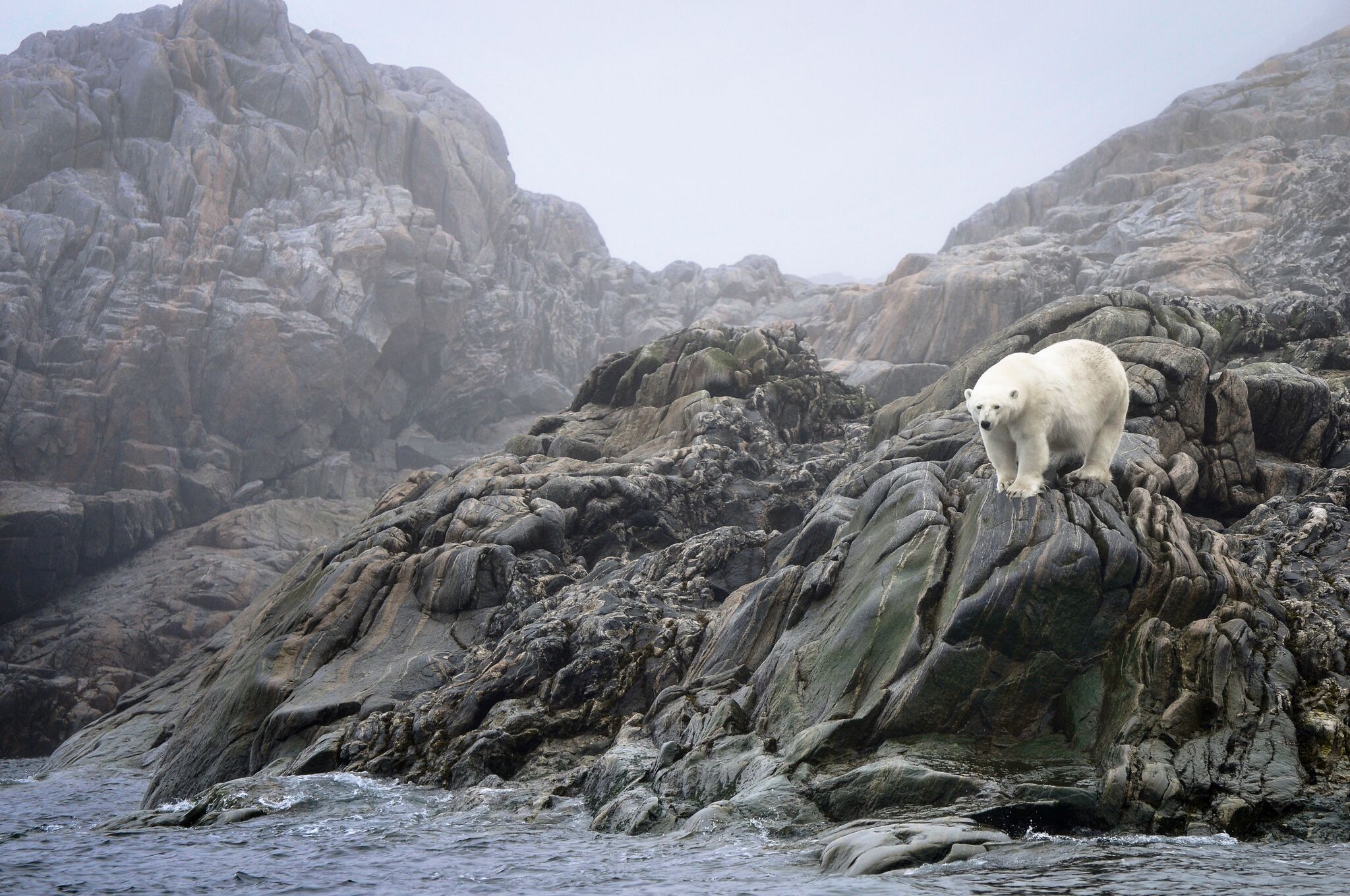
We headed north of Svalbard last night towards the ice edge and only 500 miles from the North Pole. Within a short period we spotted several bears, most minding their own business but one female who was extremely inquisitive she came for some distance sometimes at a canter with great interest. She reached us eventually by which time the captain nudged us next to the ice. This bear showed absolute signs she wanted to investigate holding her nose up as if smelling the remnants of breakfast we had just finished a few minutes before. It was an amazing sight and she performed as if on Que, rolling over, jumping across ice, swimming, sliding and a finally of a roll and stretch on the ice. Absolutely wonderful and the best sighting we could have expected. I was a little worried in the last day or so that our sighting options had been scuppered by weather but this made it all worthwhile. The expedition team team say we have one of the best sightings of the season and although curious bears are out there it’s still quite rare to find one so dead set on visiting the vessel.
As mentioned previously we have greatly benefited and our expedition enhanced by the presence of a historian on board called Paul Harris. Paul is very well published with over 40 books but has great knowledge of Arctic history to present day. For some time the first human to reason the North Pole was a disputed piece of history with at least two separate expeditions fabricating their success when in later years it was proven they had both lied to seek publicity and fortune and were so disgraced. Did you know the first Human to reach the North Pole wasn’t until the 1960’s when an obscure and little known English man called Wally Herbert made an attempt and reached the pole but it was unfortunately for Wally unfortunate that mans first landing on the mood completely over shadowed his brave and courageous achievement and Wally never attained the lime light, recognition and fame he truly deserved.
Frank Todd who as I mentioned previously is a well known Polar expedition leader with over 40 years experience and over four wildlife books published knew Wally very well and shared many an expedition cabin with him Over the years.
Check out our trips an expedition cruises to the arctic here
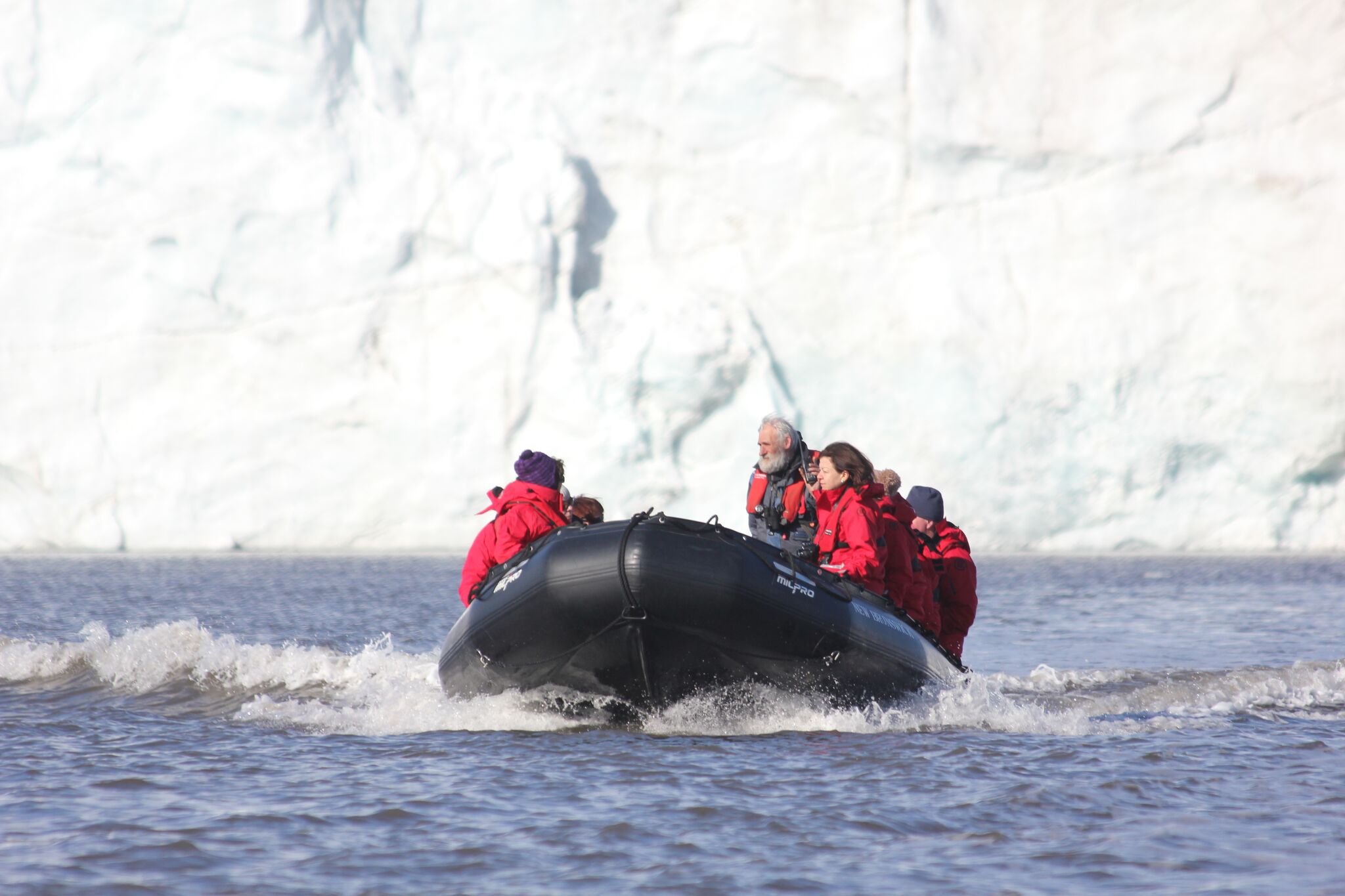
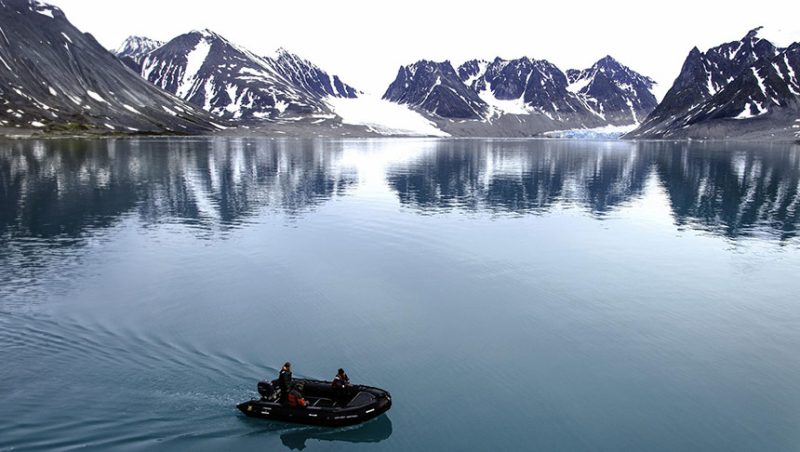
After setting sail last night we travelled throughout the night south to reach Hornsund the Southern most fjord in Spitsbergen. At 6am there was an announcement that there was a feeding frenzy in front of the ship involving Fin whale, Humpback, Dolphin and 1000’s of Kittiwake. The surface of the sea was teaming with activity for at least 60 minutes. Great start to the Expedition. To reach Hornsund we had to motor until 1pm when we set anchor is the Picturesque Bay of Brepollen the location of the Storbreen Glacier. Cruising by Zodiac in the afternoon we spotted a white figure in the distance towards to glacier. Polar bear alert – our first view. A young 3 / 4 year old bear. A welcome sight on only our first day. It’s suprising how speedy it swam after diving in the water from the iceberg to seek a peaceful position right under the Glacier. Incredible sight and whilst it sunbathed we had to pinch ourselves as we enjoyed the show of several carvings from the glacier with dramatic sounds of thunder as they ripped away from the main glacier creating tsunami. Yet another lucky strike, several Ivory Gulls feeding and resting in the bay apparently a rare but lucky afternoon and we felt blessed on our first afternoons expedition out on Zodiacs.
My colleague Steve promised instant wildlife hit and he was right compared to Antarctica where you also experience up front wildlife but not in close succession – maybe it’s just our luck, let’s see. The weather has been very kind so far and although it’s been around 7 Degrees most of the day the sun has shone and it’s been warm and clear. The scenery has much in common with The Antarctica Peninsula so far although the seas have been flat and calm which I have no complaints over. No need to sea sickness medication yet. The guides on board are top notch, experienced, friendly and delighted to share their expert knowledge. The Published Frank Todd gave a lecture this morning on Spitsbergen wildlife which was entertaining and a first class introduction to the wildlife we can expect to see If we’re lucky!


Located on the west coast of Edgeoya the third largest island of the Svalbard archipelago. The landing at Russebukta was on a sandy beach leading to colorful flat march lands and lagoons and huge hills beyond some with a showing of snow. Historically an area where trappers built huts and trapped Arctic Fox and Shot Polar bear. Arctic flowers were everywhere but coming to an end in the next two weeks – Snow buttercups, Arctic cotton grass, Arctic saxifrage, Purple saxifrage and Arctic willow. A good morning for the birders – Red throated diver, Barnacle goose, Long tailed duck, Common eider with young, Snow bunting adult and young and Arctic Skua. Overcast but excellent visibility and bright.
The ivory Gull yesterday keeps springing to mind as it’s high on any birders list when in the Arctic regions. It’s a true Arctic species living and breeding entirely 70 degrees north, one of very few birds including the snowy owl and the ptarmigan, the Arctics only game bird which reacted to the last ice age by adapting to severe cold and half year darkness and remaining year round. The ivory gull lives off caught fish but principally scavengers they are great followers of hunter Polar Bears and no strangers to feasting on bear leftovers along the coast. But also common near pupping grounds of the hooded seal where they find sustenance in dead pups or afterbirth. They also follow dog teams and not shy to take whatever hand outs they can get – anything for an easy meal. As our experience showed yesterday they are quite tolerant of human presence and seem extremely bold especially if there’s a potential meal on offer.
The MS Expedition is a very good quality vessel. I’m surprised because the inside, whether it’s common areas or cabin are really clean, well maintained and for an expedition vessel easy on the eye. The dining in the evening is waiter service and 4 courses with a choice of three main courses but vegetarian option, excellent food and very friendly service. Breakfast and lunch are buffet style, but varied and again delicious. I keep reminding myself this is an expedition vessel and should therefore be limited on its level of dining but its hitting above mine and most passengers expectations every time. There are also a group of Chinese on board and the kitchen has also provided a good level of buffet style food for them. One can burn off the excess calories from the amazing cuisine in the gym which is a good size for the limited space available but is limited in equipment offering two running machines, one cross trainer, spin cycle, loose weights and multi gym, fresh towels and water machine.
The cabins are spacious for an expedition vessel all with private WC & Shower. The beds are comfortable with a firm mattress. Cabins are light and modern. We are in a grade 3 with twin beds large picture window, writing table or for dressing, adequate wardrobe storage for clothes and luggage space under beds. service is good, helpful and friendly mainly Philippine hotel staff and the cabins are cleaned thoroughly in the morning and turned down with a tidy up early evening whilst you are at dinner. Hair dryer, shower gel, shampoo and conditioner are provided. Temperature gauge for air conditioning in each cabin. In grade 4 cabins you will expect a little more space with larger windows and in grade 5 a double bed if required with floor to ceiling windows and lounge area. I will remind you that this is not a luxury expedition vessel and if you are looking for 5 Star on board Silversea Explorer, Le Boreal, La Austral, Hanseatic are the best options but this is a 4 star expedition vessel and I have no hesitation in recommending it to discerning adventurers with high expectations.
The outside and inside viewing areas very good with 360 views for whale and bird spotting from the top outside deck. It’s easy to navigate your way around the vessel and bars, restaurants, lounges are simple to locate. The Library is well stocked and you are able to take a selection of the books away from the library if needed except for the reference books and guides.
The briefings, de briefs and lectures are given in the main lounge where there’s hot and cold refreshments and snacks readily available 24/7 with the bar open during lecture times and evening. Alcoholic beverages are reasonable and priced in US Dollars. During happy hour the main beverages are $4 usually $8. Bottle of wine with meals from $15.
Lectures so far have been well delivered and I particularly enjoyed Frank Todd who gave an intro to the Wildlife of Spitsbergen. Briefings and de briefings are very informative and given by a selection of the expedition team including Doug in charge of fire arms who is entertaining and precise in delivery of information. Alexander the lead guide is first class and you can clearly see he wants to deliver the best wildlife experience whilst safety is paramount. Paul Harris is an inspiring and interesting historian from the Uk but lived in China for many years. I’m looking forward to his Polar history lecture in the next day or so. Its clear to see the credentials of these experts is of a good level. Zodiac landings could be a little quicker but I’m sure there’s a reason and it’s not the slowest I’ve experienced in the Polar regions. The photographic lectures by Chasi Annexy have apparently been extremely informative and helpful, aimed at beginner to intermediary level but Chasi has been assisting one to one and seems very helpful. The other guides also have good photographic knowledge and are also available either on deck looking for overt unities or other times on board or on landings.
Kayaking isn’t available on this expedition but I’ve inspected the Kayaks and they are top quality most of them double Kayaks. Whilst there are hiking options on some landings we are encouraged to take our walking boots on the landings but the rubber boots are comfortable and essential for the Zodiac landings. The boot room is a good idea and not available on most expedition vessels. It’s where the landings are co ordinated and where you may leave your rubber boots, Polar parka, wet weather pants to dry out instead of them taking up useful room in the cabin space.


 Playing safe in Spitsbergen
Today I was picked up first thing to take a hike and fossil hunt close to Lonyearbyen near one of the glaciers. The area we walked to was just outside the settlement but Polar Bear had been sighted up there in the past so there’s a minor risk. Maria our guide for the morning, as well as being fully trained and licensed to carry a rifle also brought along one of the dogs, a three year old half Greenlander and half something else from theses parts called Ram. You can imagine with a dogs sensitive smell and hearing they can raise the alarm for Polar Bear way before a human. Whilst we looked for fossils, and we were not disappointed, Ram obediently guarded us and did a fine job of too. No bears today but some wonderful views back down the Bally towards Longyearbyen and beyond. If you have 3 to 4 hours even if you are picking up an expedition that day it’s an excellent idea to take a hike and get out of the village even if you are not too much in to fossil hunting. Fully recommended and interesting not to mention dead safe.
Strangely on the walk down we passed a group of 8 adventurers going up the track away from the settlement lead by a chap from Chc. Republic and obviously staying out overnight with full pack of tents and sleeping bags etc. Our guide shared her extreme concern with us that the guide carried not gun at all. Seems crazy to even take minor risks in this region especially when you are responsible for other lives, not just your own. Ok it’s rare to see bears around hear as there’s not obvious food source but why would you take this risk and disregard what locals always agree on.
There are various choices of lodging in Longyearbyen from Hostel type accommodation similar to Spitsbergen Guest House and 102 to The Spitsbergen Hotel and Radisson Blu which are probably the highest grade in Spitsbergen. If you are looking for clean but basic digs the guest House and 102 will suit you fine but if you seek high end The Radisson and Spitsbergen Hotel are the best choice. However if you have stayed in other Radisson Hotels worldwide don’t expect the same of Radisson Blu Spitsbergen as it falls a lot short when compared so bring your expectations down a few notches. Even the superior rooms are a little basic of what you may expect from Radisson but it’s very central and short walking to the museum, restaurants and bars in the village plus the staff are helpful and friendly. The Spitsbergen Hotel by comparison is a 15 minute walk with slight incline at the end but better quality in a more classic in style with excellent fine dining restaurant called Funken Restaurant. I,d recommend this hotel over the Radisson to discerning travelers even though The Radisson is more expensive. An alternative is The Trappers Hotel is an interesting themed hotel with only 16 bedrooms and well located in the middle of town. It’s not for every one especially those who don’t like the thought of sitting on animal skins and seeing paintings of trapping scenes plastered around. But I loved the cosy ambiance theme of a trappers log cabin inside the hotel the fact they have cleverly used local washed up beach wood to build the inside of the rooms and hotel common areas.
Embarked MS Expedition at 4pm and set sail at 5pm. We have just seen Beluga from a distance of the starboard side and apparently there were 10’s of them when the vessel came in to dock the early hours and they are still there. Hope this is just the start of a wildlife feast for the next 8 days.


 Welcome to Spitsbergen Svalbard
Just arrived in Longyearbyen, capital of Spitsbergen, Norway deep in the Arctic and land of the Polar Bear. I’m here to join a Polar Bear expedition for 8 days aboard MS Expedition which embarks 30 July. It’s around midnight and it feels so strange to be experiencing the warmth of the sunshine! We’ve been traveling all day and I should feel exhorted but incredibly quite energized
Spitsbergen is easy to reach and this is usually on a flight via Tromso or Oslo. In 1925 Norway was granted sovereignty over Spitsbergen and with it the opportunity of calling the whole archipelago Svalbard which derives from a Viking name meaning cold edge. Spitsbergen is today’s name for the biggest island in the achipelago. Svalbard has a land surface of 61,022 sq km and is roughly the same size as Scotland.
As I’m here to enjoy seeing Polar Bear in its natural habitat here’s a few facts about the worlds biggest carnivore;
- Svalbard is considered the best places in The Arctic to view Polar Bear
- On Svalbard there are more Polar Bears than there are humans apparently
- The best opportunities of viewing Polar Bears is on a vessel based small ship expedition around Svalbard
- Polar Bears along with other Polar Animals are protected in Svalbard
- Outside the inhabited settlements you have to expect a Polar Bear anywhere and at any time and they wonder freely.
- If a bear comes in to a settlement or close by they are usually spotted and scared away but now and then they do stroll in and even in 2007 one was spotted near the road in the harbour. Last unfortunate human fatality was in 2011 and before that 15 years previously.
- On and expedition or land based tour it’s recommended to take a guide who carries a gun at all times when outside the settlements. This is strictly precautionary and in most cases if a flare or gun goes off the bear will not be seen for dust but there are unfortunate occasions every year when for safety reasons bears have to be shot and killed.
- If you are camping (Land based)on Svalbard you are advised to take every precaution possible; use trip wires around the camp, take sledge dogs the best form of alarm, do not camp close to the coast as bears like to walk along shorelines. Most of all a watch should be in place at all times.
 Arctic Experience Through the Eyes of a Customer
We were sent this amazing account from our customer Judith Olsen, who recently returned from an Arctic adventure.
Arctic Bound! That was the plan, thermals packed, down jacket on my back, hiking boots on the feet, woollies washed & waiting to be worn, what else did I need? Sunhat, sun cream & shorts surprisingly!
We set sail from Edinburgh, which as everyone knows, is the start of the Arctic!!!
I was travelling on the MS Expedition for a 2 week “adventure” heading for Spitsbergen, which at 78n is the starting point for Polar expeditions. Nothing quite so adventurous for us, I had a berth in a spacious cabin on board an ice breaker. I was expecting a “rufty- tufty” experience but far from it. The ship had all amenities, restaurant, Polar Bear bar, library, Discovery Lounge, gym & sauna. It even boasted a mud room, which I discovered, was not a spa facility but a place for leaving your wet gear after an outing! The food was excellent, 4 course lunch & dinner with tea and home-made cakes at 4pm each day!
There were 100 passengers, the majority from US or OZ – only 10 Brits. I shared with 2 from the US (a 4th person didn’t turn up). Clearly they thought we might need some “help” getting on, as we were each supplied with a complimentary bottle of wine in the cabin! After 2 days when Patricia (our 4th person) had not shown up, we decided to toast her with her bottle of wine. Unfortunately she had the last laugh, as the wine, when poured, was brown & tasted vile!
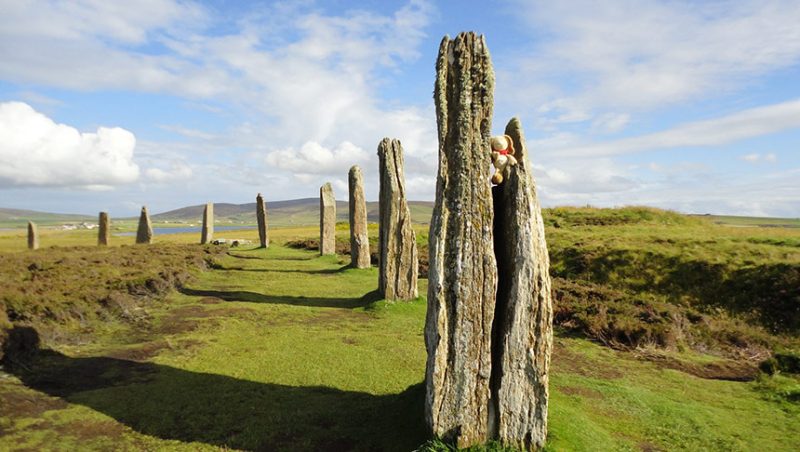
Orkney was our first stop with visits to Skara Brae, dating back to 3100BC followed by Ring of Brodga, also approx 4000 years old. Travelling forward a few thousand years, to world war 11, we saw Scapa Flow, the Churchill Barriers & the beautiful Italian Chapel – 2 old Nissan Huts joined together & decorated with odds & ends the prisoners of war could find – you would never guess the lamp shades were made of old bully beef cans & the “marble” was in fact painted onto the concrete surface! Finally a quick trip to the cathedral. Although it wasn’t so quick for some of the group who got locked in the cemetery & had to climb over the fence to escape!
Our departure from Orkney was marked by a piper, who played until the ship was well on its way. A nice little touch.
Shetland was our next port of call, part of the Norwegian kingdom until 1469, it still has close cultural ties to Scandinavia. Jarlshof is “one of the most remarkable archaeological sites ever excavated in the British Isles.” The site has been occupied almost continuously from 2500BC through to the modern day and shows the gradual transition from Neolithic, through the Bronze and Iron Ages and into the Viking and Scottish periods.
The highlight of the day was a visit to Sumburgh Head. Thousands of seabirds nest on these picturesque cliffs, including Razorbills, Guillemots, Northern Fulmars and Great Skuas, but by far the number one bird of the day was the Atlantic Puffin. (For info a puffin rookery is known as a puffinery, and puffin chicks are referred to as ‘pufflings’ – so no quibbles if I use either of those words in scrabble!)
Back on board for lunch I found an invite to dinner at the Captains Table! A free afternoon in Lerwick gave me the opportunity for a hairdo, manicure & the chance to buy a new outfit. Sadly I declined all of those & made do with my tunic & leggings (packed as thermals) & a shower! (Although I did manage to buy my Saturday Guardian). It was in fact the only night the captain held a special dinner, so I was chuffed to be included. The evening was topped off by watching Whisky Galore!
That night we crossed the North Sea oilfields, dotted with rigs and service vessels, really interesting to see. I was equally pleased that the crossing was smooth & clear, in fact it was like that for the whole trip, even crossing the Arctic!
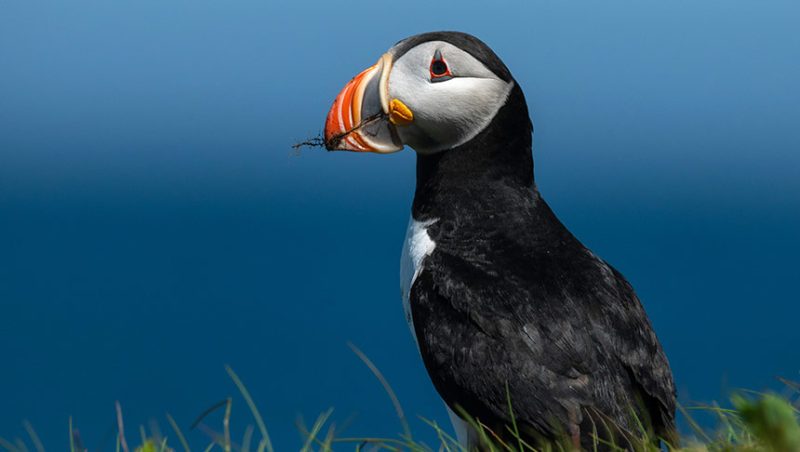
Runde Island was our first venture in zodiacs. All kitted out in our new parkas & wellies, not quite sure what to expect. We needed the hoods, not for warmth, but to stop being dive bombed! Plenty of action here, but most impressive were the sea eagles – 7 in total!
As we were now in Norway, the evening lecture centred on Norway in World War 11. Throughout the trip we had various lectures on Polar region, geology, birds, wildlife, history, photography etc etc, all illuminating and entertaining!
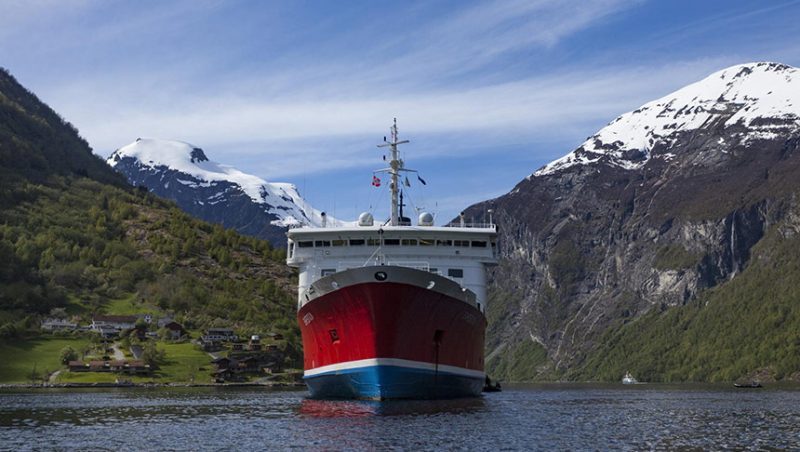
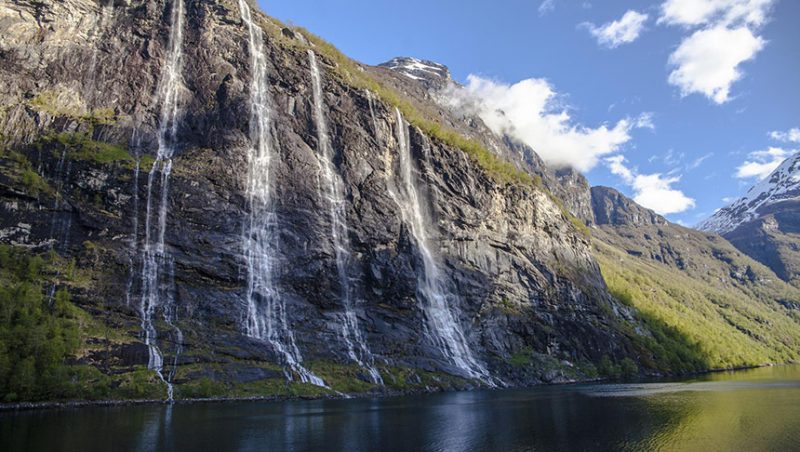
A world heritage site beckoned as we awoke in Geiranger Fjord. Famed for its beauty & featured in many photoshoots. The Seven Sisters waterfall was impressive, but as we climbed (in a bus) to the 1500m viewpoint, our ship was dwarfed by the spectacular mountains. Luckily we arrived early to beat the 3 huge cruise ships which were expected later, each boasting a capacity of 2.5-3K passengers, about to invade the village of 220 inhabitants!!
The afternoon was spent cruising through the amazing fjords, sunbathing on deck with temperatures almost topping 30degrees! Ice creams were brought out to cool us down! I had never considered bringing shorts, sunhat & suncream to the Arctic but wish I had! Also basking in the sunshine, were the White beaked dolphins & hump back whales which accompanied us on our journey.
There was a military theme for the next day, as we approached Monks Island (Trondheim) in the morning followed by Austratt in the afternoon, both home to military installations from 2nd World War. We found the visit to the 28cm gun instalment surprisingly interesting, as below ground we explored the living and working quarters of the 150 men who operated it. A stark reminder of Norway’s past.
Live music sounded out from the Polar Bear bar that night, with the crew band & Kathryn, resident guitarist/singer, all the old favourites, encouraging one & all to join in.
Torghatten is one of Northern Norway’s most well-known attractions and we were woken at 6:30am to experience it for ourselves. This ‘holed mountain’ is at the southeast end of the island of Torget and was formed during the Scandinavian Ice Age. The hole is 112 metres above sea level and made for an impressive hike from our landing site.
The highlight of the day was yet to come, as we reached the Arctic Circle, marked by a globe on a small island. The ship has never landed here before, so we were pleased to be allowed to do so. We were also pleased to see the crew & staff coming ashore too. It was a bit surreal to see the waiters in their bow ties & waistcoats clambering out of the zodiacs, but good that we could all toast our crossing in style! Apparently the tradition is to pour ice cubes down your back – I preferred this version
No more sunsets from here on, as it’s the realm of the midnight sun! Going to bed in bright daylight is very strange, despite being tired, your body believes its afternoon & not time to go to bed.
We all groaned at the 6 am wake-up call, but grateful in the end to have spent as much time as we could at Lofoten. This compact Archipelago is comprised of 5 main and 3 smaller islands joined by a network of tunnels, bridges and roads. Home to 24,000 people (and 24,000 sheep), it’s characterized by tidy little fishing villages with small pastel-red and yellow buildings, kittiwakes nesting on windowsills, wooden drying racks – hung with cod, sheltered inlets and pastoral farmland. Most dramatic is the backdrop of steep-faced mountains. All day long, we could see their razor-sharp profiles (some of them actual petrified trolls) against a bright blue sky. We toured the islands, visiting World Heritage Sites, museums, galleries and marvelling at the scenery, one of my favourite locations so far!

The warm weather continued & that night we had a BBQ on deck as we sailed through the beautiful but narrow Trollfjorden.
Just before breakfast the landscape was reflected in the mirror calm seas with the mountain peaks, snow fields, and the subtle colours of green from the forests to the meadows. Did you know that the human eye sees more tones of green than any other colour?
Our destination today was a hike to the Engen Glacier. Nice to have some exercise after indulging in so much delicious food! Managed to work off a few calories, but all the effort was wasted when we returned to hot waffles and coffee at the café. However the walk was spectacular – I’m running out of superlatives!
A lazy afternoon sunbathing on deck was interspersed by watching pods of pilot whales swimming by!
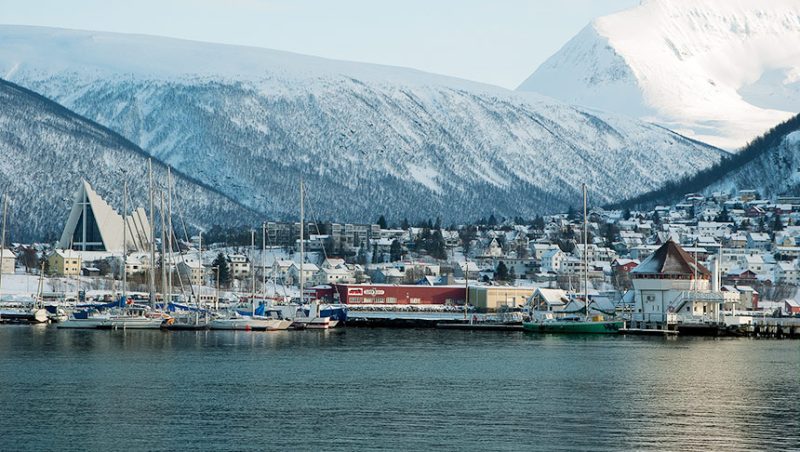
All good things come to an end. We were in Tromso at a re-fuelling station, in the industrial port for 4 & half hours & not allowed to leave the ship. We were amused by various lectures & scrabble, but glad when we could finally move to our berth. Unfortunately this was 3 miles out of town & we still couldn’t get off the ship. There was almost a mutiny, by 4pm buses arrived & we were allowed ashore. First stop, the polar museum, a timely reminder that we were about to make the crossing to the distant archipelago of Svalbard. It showed how different life was for the sealers, whalers and trappers compared with the warm and comfortable ship on which we travelled. The Arctic Cathedral was next, a masterpiece of Scandinavian architecture, with beautiful stained glass windows and a boat shaped organ. Then cable cars took us to a spectacular viewpoint 400m above the city. To help enjoy the vista, we were offered beer & reindeer burgers! All that remained was to return to the ship, bid farewell to Norway, tuck into a second dinner and look forward to seeing the remote and little-visited Bear Island tomorrow.
The chilled morning air signalled time to unpack the thermals and zip in the parka liners. There was a sense of anticipation as we headed further north into Polar Bear country. In our safety briefing we were advised that all trips ashore would be preceded by a scouting expedition, by the crew checking for polar bears. While onshore we would be protected by spotters with guns placed at vantage points. We would walk in small groups with gunmen alongside, and finally we were warned to avoid the mud! Apparently, the mud can be deep, squelchy with lots of suction, so much so that 1 man had to pulled out by the crew, leaving him naked from the waist down– quite a dangerous place!
In the evening, we celebrated the colour of the Arctic with a “White Nights” fancy dress party. It’s amazing what can be done with sheets, towels & a lot of imagination! (I’m sure the man in the mud would have been glad of some of it!)
We awoke to our first true Arctic experience, the scenery was spectacular as we glided into the monochrome world of Hornsund fjord, following whales darting in front of the bow. We flicked away as their flukes flourished infront of us!!!
It was time to get the zodiacs out & explore the ice. We crunched over the rough surface crashing into the odd small iceberg enroute to the seals. Next Beluga whales were spotted close to shore – 5-6 of them, a rare sighting! A clap of thunder heralded a carving from the glacier as it came crashing to the sea, just feet away. Exciting stuff.
We returned to the ship and made our way along Hornsund’s northern shores to continue our quest for bears. It wasn’t long before the call came, “Ladies and gentlemen, we have spotted our first Polar Bear of the trip”. For the next hour, we watched from a safe distance (0.5km) as a lone bear strode the shoreline before venturing out onto a small stretch of fast ice. Eventually it was time to move on, satisfied that we had gazed at one of nature’s most remarkable animals.
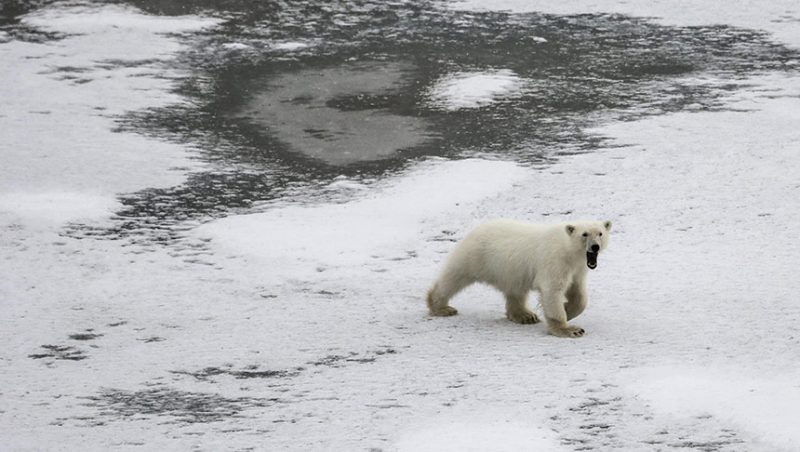
Bellsund was the next fjord. Here we walked along the shore (after the area had been thoroughly checked).The Reindeer ignored us. As we plodded through the snow, we spotted Polar Bear poo & footprints but not the real thing.
After another BBQ on deck we explored the fjord by ship & finally spotted a bear with 2 cubs. We watched the mother and cubs rolling in the snow & playing on the hillside. Then turned our attention to the walrus huddled together in a” thermotactic” group on the shoreline. After dinner we were surprised by the announcement we could get a closer look, the zodiacs were launched again at 10.45pm – pleased we hadn’t finished the bottle of wine!
Our last day was spent in Alkhornet trudging through the snow trying to spot Arctic foxes. By the end of the morning the ice was melting fast, much to the dismay of my shipmates, some of whom fell through the snow & ice and were stuck waist deep! They were helped out by the crew but some had to limp back barefooted, unable to retrieve their wellies! (At least it was only the wellies they lost)
In complete contrast, Barentsburg was the next and almost our last, Port of call. The ship came alongside to let us disembark, but later had to anchor in the fjord, because the pier was quite shallow, the tide was quickly dropping, the instruments belied the actual depth! This is a Russian coal mining settlement, home to around 400 Russians & Ukrainians (interesting), reminiscent of Siberia. It’s a bit bleak, there’s no tress, so posters of forests are displayed in the central square. Life isn’t too bad for miners and their families, they do have their own brewery – the world’s most northerly.
The farewell dinner was a jovial affair lots of photos and emails swapped.
We regrettably left the ship at 8am for a day in Longyearbyen. The town boasts the most northerly University, hospital, museum, art gallery etc etc as it is the last settlement before the North Pole. Cars are in the minority, as skidoos (with gun holsters) are far more practical. It is also one of the few towns with Polar bear warning signs, school children are escorted to school with armed guards! My guesthouse was 2 km outside the main town & I had to walk back………but all was fine!
My flight home was at 4.40am, I was worried about sleeping in, but no chance as I was awoken at 12.30 am with the heat of the sun on my face!
An amazing place!
For more information on wildlife and adventure holidays in the Arctic, speak to our expert team by calling 0800 195 3385, emailing info@wildfoottravel.websitepro.hosting or filling out our enquiry form. From fully bespoke itineraries and adventure cruises aboard the world’s best expeditions ships, to small-group tours to the edge of the earth; creating once-in-a-lifetime moments for you is at the heart of everything we do.
Myth 1
Penguins live in the Arctic. Not true! You will never see a polar bear and a penguin together, and polar bears do not eat penguins. Why? Because penguins do not live in the arctic!
Myth 2
The polar bear is a left pawed arctic animal. This popular myth is not correct and has never been corroborated by scientists in the field- in reality, the giant polar bear can use either paw with equal skill during hunting and swimming Continue reading
Simon & John from Wildfoot Travel spent a great weekend up near Edinburgh at the Scottish Birdfair.

Photo courtesy of Ipoh kia(CC No Derivatives)