 The Drake Passage Explained
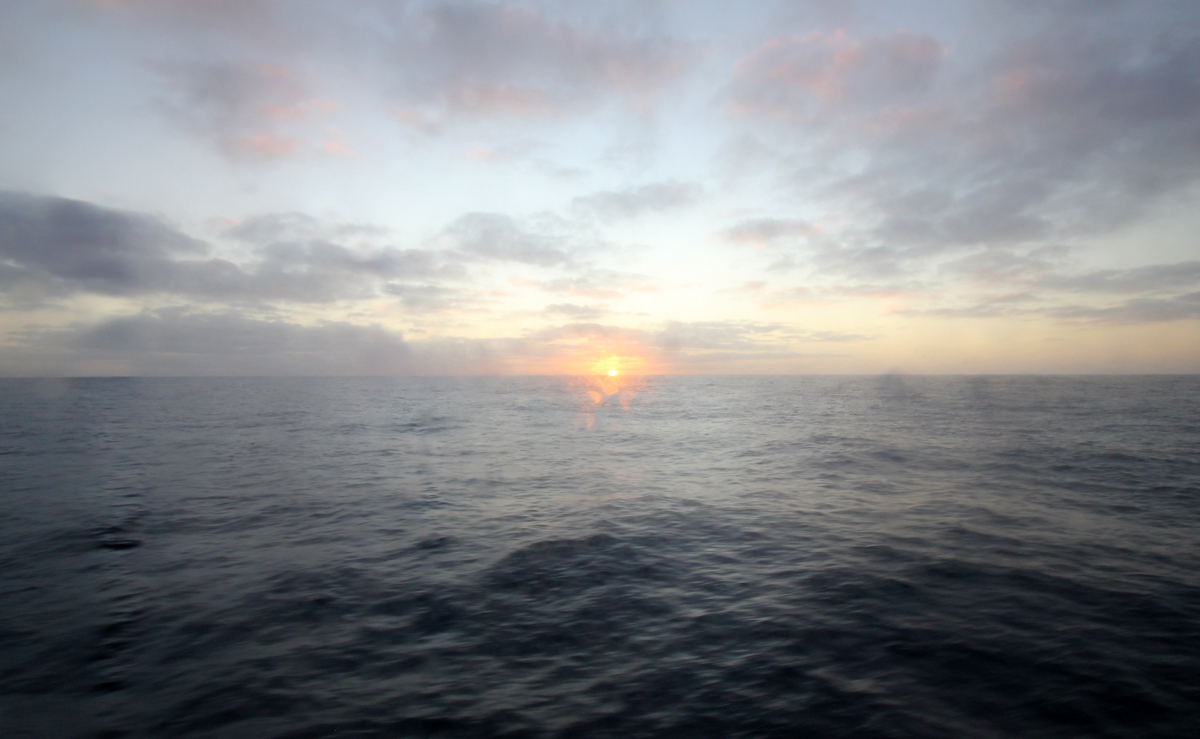
The horizon is the first thing to go. Six hours out of Ushuaia the Beagle Channel is behind you, the last smudge of South America has dropped off the stern, and there is nothing between the ship and Antarctica but 800 kilometres of the most talked-about water on earth. Someone on deck is already asking the expedition leader what the forecast looks like. They have spent a year planning this trip and they want to know about the Drake before they want to know about the penguins.
At Wildfoot Travel, three decades of guiding travellers to the world’s great wilderness destinations has taught us that the Drake Passage is the single thing people most want reassurance about before they book an Antarctic expedition.
Our specialists have crossed it many times over, in everything from converted research vessels to modern stabilised ships, and have had the full range of conditions: millpond calm, a steady roll, and the sort of weather that empties the dining room. One of our team has also flown over the top of it, which is now a genuine alternative for anyone who would rather not sail at all. Between us we have a reasonably unsentimental view of what the crossing involves.
Here is our honest, unfiltered guide to what the Drake Passage is, what it is actually like, and how to decide whether to sail it or fly over it.
What the Drake Passage Actually Is
The Drake Passage is the stretch of open sea between Cape Horn and the South Shetland Islands, the first scattering of land off the Antarctic Peninsula. At around 800 kilometres across, it is the shortest route to Antarctica from anywhere, which is why almost every expedition ship makes the crossing here.
Its character comes from the ocean that surrounds it. This far south there is no land to get in the way, so the Antarctic Circumpolar Current flows eastwards in an unbroken loop around the bottom of the world, the only current on earth that does. The Drake is the tightest point in that loop. More than 100 million cubic metres of water squeeze through every second, over a hundred times the flow of all the world’s rivers put together, and swell that has travelled thousands of kilometres unchecked arrives here with nowhere else to go. Today’s ships are steadier and better forecast than ever, but the sea is the same one sailors have always talked about.
The name is a bit of a historical accident, because Francis Drake never sailed through it. In 1578 a storm pushed him far south of the Strait of Magellan, cost him one of his ships and showed there was open water below South America. That was enough to get his name on the map. Spanish charts call it the Mar de Hoces, after Francisco de Hoces, who was blown south in much the same way in 1525 and has just as slim a claim. The first to round Cape Horn and sail the passage on purpose were the Dutch navigators Willem Schouten and Jacob Le Maire in 1616, and hardly anyone remembers them at all.
Drake Lake or Drake Shake: The Honest Odds
Two phrases come up on every voyage. A Drake Lake is a calm crossing, flat enough that people forget to be nervous. A Drake Shake is the other version. Both are real, and nobody can tell you in advance which one you’ll get.
What we can give you is the range. A calm crossing runs a swell of about a metre, and people spend it out on deck in a fleece looking faintly puzzled about what the fuss was. A typical crossing sits at three to four metres, which means you walk with a hand on the rail and the crew rigs the ropes along the corridors. Poor weather gives you seven or eight metres and a long day indoors. The twelve-metre conditions that make the news footage are rare rather than routine.
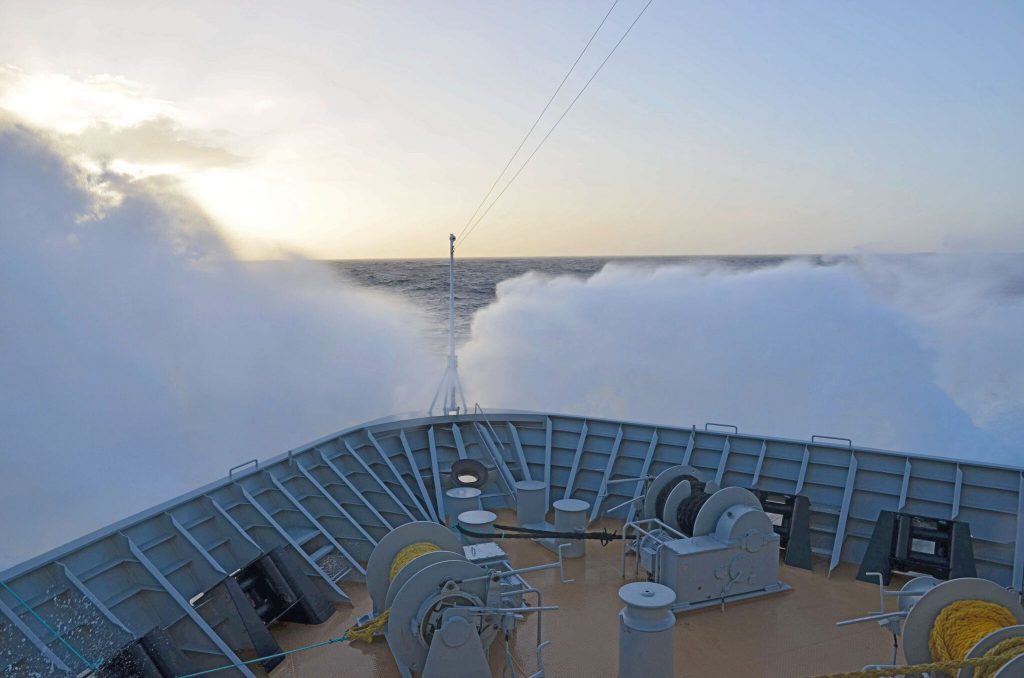
Most crossings take between a day and a half and two days in each direction, though a slower vessel or awkward weather can stretch that to three. Modern ships also route around the worst of the weather rather than straight through it, using forecasting that simply did not exist when the passage earned its reputation.
The honest summary is that a difficult crossing is uncomfortable rather than dangerous, that it is usually over within a day, and that a good proportion of travellers come back faintly disappointed that it wasn’t rougher. It is worth saying plainly that the ships doing this run are built for it and the crews cross it weekly throughout the season.
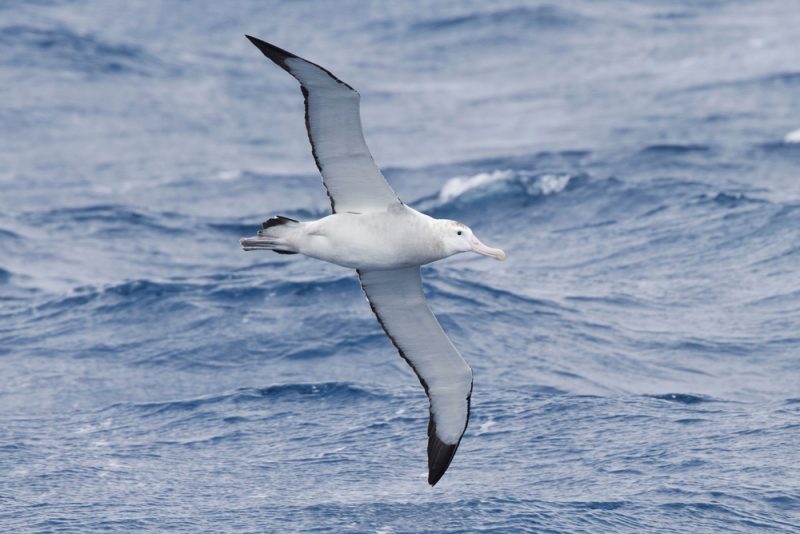
I’d really encourage anyone to sail from Ushuaia, even if you’re a little nervous about the crossing. I don’t have the best sea legs, but I have to say the days on the Drake Passage were a real highlight. Out on deck, it was phenomenal to watch several species of albatross soaring effortlessly in the wake of the ship. Some swooped past at head height, and seeing them glide so close was a real privilege. – James Turner, Wildfoot Travel
How Modern Ships Handle the Crossing
The ship matters more than the forecast. Stabilisers, hull design and sheer displacement make a substantial difference to how a given sea state feels from inside, and this is one of the clearest arguments for paying attention to the vessel rather than only the itinerary. Our guide to choosing the right small ship covers this in detail, but the short version is that an inverted bow design of the kind used on newer expedition vessels cuts through wave crests rather than riding over and slamming down into the trough, which removes the specific motion that causes most of the trouble.
Cabin position helps too. A cabin low in the ship and close to the middle moves considerably less than one high and forward, which is worth knowing when you’re choosing between categories rather than discovering it on the second night.
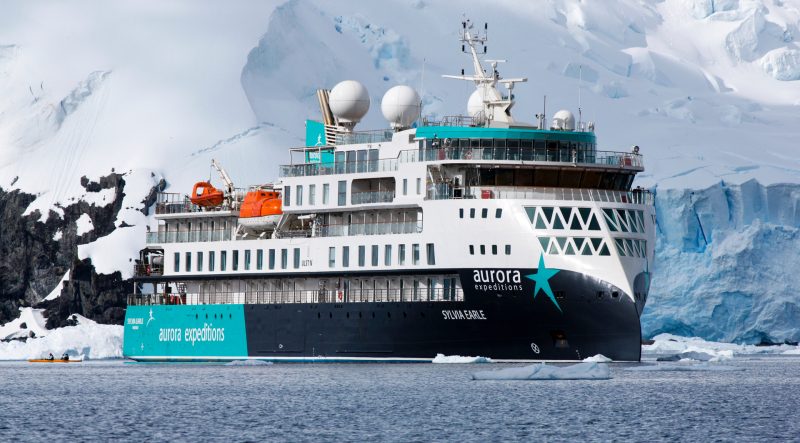
Above all, the captain’s first priority is always safety. If that means a slower route, a later arrival or waiting out a weather system, that is the call they will make, and it’s the right one.
Crossing the Antarctic Convergence
Somewhere in the middle of the passage the ship crosses a line that doesn’t appear on most maps but marks the real beginning of Antarctica.
The Antarctic Convergence, also called the Polar Front, is the belt where cold water flowing north from Antarctica meets and sinks beneath warmer sub-Antarctic water. It sits between roughly the 48th and 61st parallels south, shifts position with the season, and is only around forty to fifty kilometres wide. Crossing it, the sea temperature drops by something close to three degrees Celsius, from around five and a half degrees to below two.
That mixing drives an enormous amount of marine productivity, which is the reason the Southern Ocean supports the quantity of krill it does, and in turn the whales, seals and seabirds that feed on it. Biologically it is a more meaningful boundary than the Antarctic Circle. You can often feel it on deck as a change in the air, and the birdlife around the ship changes with it.
What You’ll See on the Crossing
Far from being wasted time between Ushuaia and the ice, the Drake is where many travellers feel the journey truly begins.
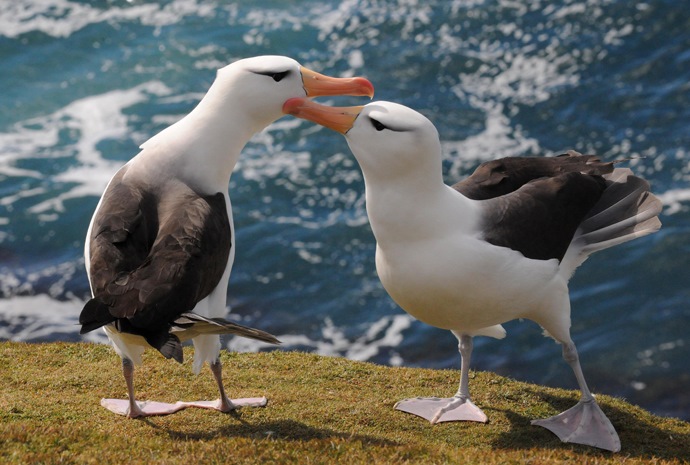
Seabirds find the ship almost immediately after leaving port and stay with it. South American species give way to true Southern Ocean birds, and the wandering albatross that shadows the stern for hours at a time is, for many people, the first moment the voyage feels real. Petrels, prions and shearwaters work the wave troughs alongside. Our Big Five guide covers the albatross in more detail, and the Drake is where you are most likely to meet one.
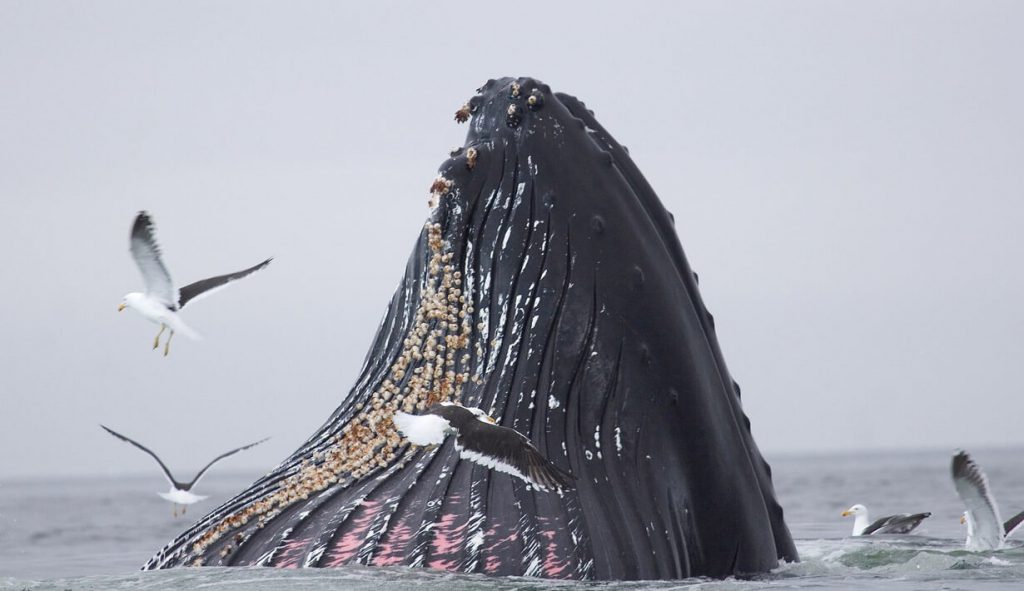
Whales are the other draw. Sightings are usually a distant blow rather than a breach, which is why binoculars earn their place in hand luggage. The bridge crew watch constantly and call sightings over the public address system, which produces a reliable scramble of people pulling on jackets. Expedition staff can routinely identify a species from the shape of a blow at a distance that seems implausible until you have watched them do it a few times.
This is also when the lecture programme runs. Most ships use the crossing for briefings on wildlife, ice, history and the landing rules, which means you arrive at the peninsula knowing what you’re looking at. More on what you can expect to see is in our guide to Antarctica’s Big Five.
The other thing the crossing produces, which no itinerary can promise you, is the group itself. Two days of shared motion turns a passenger list into a ship’s company.
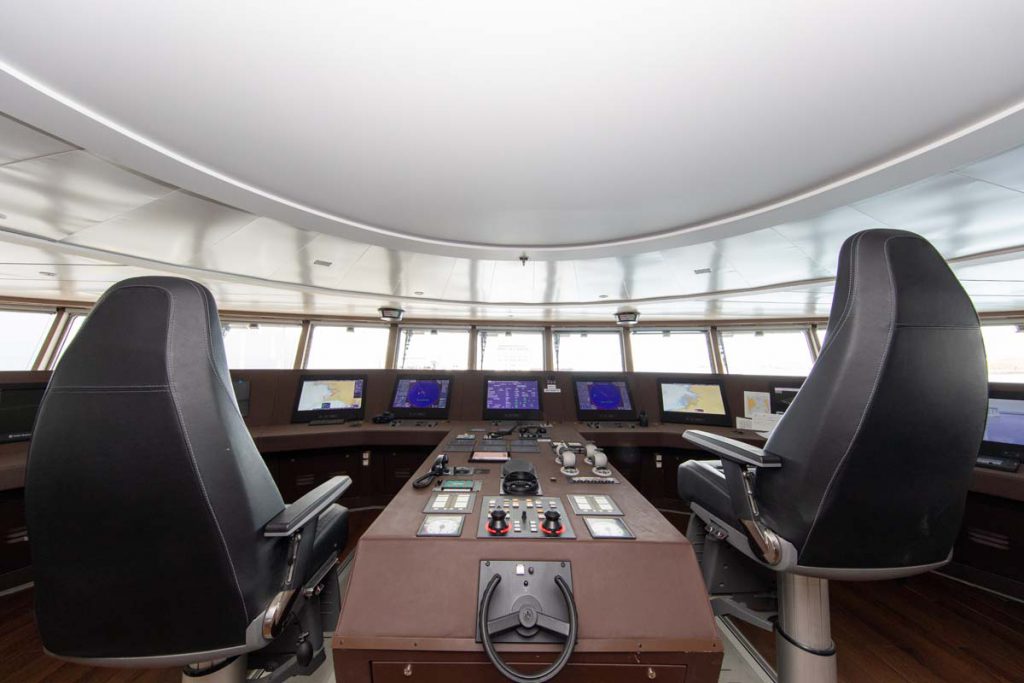
I felt that real friendships were born on the Drake, out of the shared fun of a little ‘rock and roll’ together. It really is a rite of passage, and for many people Antarctica has to be earned. There’s something special about following in the wake of the great explorers: Shackleton, Jean-Baptiste Charcot, Amundsen and the rest, who sailed these same fabled waters with none of the comforts we enjoy today. My big tip would be to get stuck into the lectures and soak up as much as you can from the expedition team in preparation for the days ahead. It’s also well worth spending some time on the bridge, watching the crew navigate a passage that has tested sailors for centuries. – James Turner, Wildfoot Travel
Flying the Drake: The Alternative
You no longer have to sail it. Air-cruise itineraries fly from Punta Arenas in Chile to King George Island in the South Shetlands, where you board the ship, and the flight takes somewhere around two to two and a half hours on a jet suited to short Antarctic runways.
The appeal is obvious. You remove two days of open ocean in each direction, you avoid the sea state entirely, and you spend a greater share of a shorter trip actually in Antarctica. For travellers who are prone to seasickness, short on annual leave, or simply unwilling to gamble four days on the weather, it solves the problem outright.
The trade-off is that you exchange one weather dependency for another. Flights go when conditions at King George Island allow, and that can mean waiting. One established air-cruise operator publishes its own record, which is the most useful guide we have seen: of 346 flights up to April 2025, 264 departed on the scheduled day and 26 actually left a day early, while 40 were delayed by a day, 13 by two days and three by three days. Only three were held up beyond the fourth day. The same operator will keep trying to fly you until early afternoon on day four, after which the trip is treated as interrupted and the cruise fare refunded in full.
In other words the odds are good but the tail is real, and the people who struggle with a flight delay are usually those who booked a tight connection home. Build in a buffer at the end and the risk becomes a minor inconvenience rather than a lost holiday.

Sailing or Flying: At a Glance
Everything above, summarised.
| Sailing the Drake | Flying the Drake | |
|---|---|---|
| Time each way | Around a day and a half to two days | Roughly two to two and a half hours |
| Departure port | Usually Ushuaia, Argentina | Punta Arenas, Chile, joining the ship at King George Island |
| Main risk | Sea state, uncomfortable at worst and usually over within a day | Weather delay at King George Island, occasionally of several days |
| Wildlife | Albatross, petrels and whales for two full days, plus the lecture programme | You miss the Southern Ocean seabirds almost entirely |
| Trip length | Longer overall, with more days at sea | Shorter, with a higher share of time in Antarctica |
| Cost | Lower entry point for a comparable standard of ship | Noticeably higher, reflecting the charter flight |
| Suits | Travellers who want the full passage and the birdlife with it | Nervous sailors, and anyone short on time |
Our Antarctica route options page sets out how each approach fits into a full itinerary, and the vessels guide covers which ships sail which route.
Managing Seasickness
Plenty of people who worry about seasickness before they go turn out to be fine, and today’s ships are a world away from the vessels that gave the Drake its reputation.
If you know you’re prone to it, speak to your GP or pharmacist well before you travel. Remedies suit different people in different ways, and some work best if you start them before you sail. There is also a doctor on board, but it pays to have a plan sorted at home.
Beyond choosing the right cabin, the practical steps are simple. Time on deck with your eyes on the horizon usually helps far more than lying in a dark cabin. And eating a little, even when you don’t feel like it, is generally better than an empty stomach. Expedition crews see this all season long and are neither surprised nor fazed by it.
The good news is that it doesn’t last. The crossing takes a couple of days, most people find their sea legs within a day or so, and things usually settle quickly once the ship reaches the shelter of the peninsula.
Frequently Asked Questions
How rough is the Drake Passage really? It varies enormously and can’t be predicted at the time of booking. Calm crossings see swells of about a metre, a typical crossing runs at three to four metres, and poor weather can bring seven to eight. The severe conditions that make the passage famous are genuinely uncommon, and modern ships route around the worst weather rather than through it.
How long does it take to cross? Most crossings take between a day and a half and two days each way. A slower vessel or difficult conditions can extend that to around three days.
Can I avoid the Drake Passage altogether? Yes. Air-cruise itineraries fly from Punta Arenas to King George Island in about two to two and a half hours and you join the ship there. It costs more and you trade the risk of rough seas for the risk of a weather delay, but it removes four days of open ocean from the trip.
Is the Drake Passage dangerous? For a modern expedition ship with an experienced crew, no. It can be uncomfortable in bad weather, but it isn’t hazardous. These vessels are purpose-built for the Southern Ocean, cross it repeatedly throughout the season, and safety always comes first, so the captain will adjust the route or timing whenever the weather calls for it.
What will I see while crossing? Seabirds throughout, including albatross, petrels and prions, and very often whales at a distance. The crossing is also when most ships run their lecture programme on wildlife, ice and Antarctic history.
What is the Antarctic Convergence? It is the belt where cold Antarctic water meets warmer sub-Antarctic water, sitting between roughly the 48th and 61st parallels south. The sea temperature drops by close to three degrees Celsius across it and the mixing supports the krill that underpins the whole Southern Ocean food chain. Many people regard it as the true boundary of Antarctica.
Which direction is rougher? Neither reliably. Conditions depend on the weather systems moving through at the time rather than on the direction of travel, so a calm southbound crossing is no guide to what you’ll get coming back.
Talk to Us
The Drake Passage is the part of an Antarctic voyage people most want to ask about and the part they most often end up glad they did. It is also, for a minority of travellers, a genuine reason to choose a different kind of itinerary, and there is no sense pretending otherwise.
We have sailed it in calm weather and in conditions that cleared the decks, and we have flown over it. We can tell you which ships handle it best, which cabins to ask for, which months tend to be kinder, and when flying is worth the premium.
Get in touch with the Wildfoot Travel team, or browse our Antarctica cruises to see what is sailing.